Best Interdental Brushes: Sizes, How to Use Them and Who They’re Best For
Quick answer: The best interdental brush for you is the largest one that passes through a particular gap gently and comfortably—without force, sharp pain or bending the wire. You may need different sizes in different parts of your mouth. If a brush catches, stop and try a smaller one; if even the smallest brush will not pass, use floss for that tight contact or ask your dentist or hygienist to help choose. Interdental brushes can be useful for open spaces and around braces, bridges or implants, but floss is often a better fit where teeth touch closely. No brand or size is right for everyone. Below, we combine the original review’s five product examples with a practical sizing guide. Its star scores are archived editorial ratings from 2016, not current customer ratings.
Affiliate disclosure: DentalsReview may earn a commission if you buy through a link in this article. The purchase price is not changed by that commission. The historical scores below were carried forward from the original review and do not represent a new comparative product test.
Quick picks by design
- Several gap sizes: TePe Original offers a color-coded range, including mixed packs. Have a professional help size it when possible.
- Many size choices: Piksters sells multiple brush sizes and mixed packs; size numbering is brand-specific.
- Handle-and-refill system: Oral-B’s system is a legacy product in the original guide; check that the current listing matches the handle/refill parts you need.
- Alternative brush/pick format: The Doctor’s BrushPicks and Denti-Brush wire-free are included as legacy options, not as current availability recommendations.
Interdental brush comparison
This comparison preserves the five products, affiliate links and image-based scores found in the prior review. The old article’s Amazon price, Prime, star and review-count widgets currently return blank cells on the live origin, so this guide does not make up those values. “Archived score” refers to the original DentalsReview graphic, last evidenced in the 2016 source material; it is not an Amazon rating.
¹Archived DentalsReview visual score from the original product sections, not a current customer star average, clinical effectiveness score or new hands-on test. Current retailer ratings, review counts and prices were unavailable in the live product feed when this page was revised.
How we chose these products
We retained the five examples and the score graphics from the existing buying guide, then rebuilt the comparison around details that help a reader decide whether a brush might suit a particular gap: size range, form factor and whether the listing contains the needed handle or refill. We did not run a new head-to-head test or verify current retailer stock, seller reviews or prices. A product ranking cannot identify the right size for your teeth. For evidence about cleaning tools, the Cochrane review found that results vary and much of the available evidence is low or very low certainty. The American Dental Association likewise describes floss and other interdental cleaners as options to choose based on a person’s spaces and needs.
Product notes
TePe Interdental Brushes
TePe Original uses a straight brush head and color-coded sizes. Its U.S. product range currently lists nine sizes, and TePe says a person may need more than one size for different spaces. The manufacturer recommends professional sizing where available; it says the bristles should fit snugly while the wire does not touch either neighboring tooth. Do not force the brush or continue if it hurts. A mixed pack can help compare sizes, but it does not replace a dentist’s advice when you have implants, restorations or gum problems.
Piksters Interdental Brushes

Piksters’ manufacturer describes a broad size range and sells mixed-size packs in some markets. This can be useful when spaces differ, but its color and number system is specific to Piksters; do not assume a number matches another brand’s size. Use the fit—not the number on the handle—to decide whether a brush can pass comfortably. Check the exact pack contents and market availability on the seller listing.
Oral-B Interdental Brush System

The original guide compared an Oral-B starter kit with cylindrical and tapered refills. Treat this as a legacy product listing: the exact system and refill compatibility may have changed. Before ordering, confirm that the package includes the handle or refill type you need and that its brush head fits the spaces a dental professional has identified.
The Doctor’s BrushPicks

This pick remains in the comparison because it appeared in the original five-product table. Product names and packaging can cover different formats, so inspect the current listing to confirm the working end, size and intended use. Do not treat the archived score as a current customer rating or evidence that this format suits every space.
Denti-Brush Wire-Free Interproximal Brushes

The old guide included a wire-free Denti-Brush design. Its historical description says it came in one size, which may not match a current version or listing. Check the package carefully, especially if you have a very tight contact, braces, an implant or a bridge. A wire-free design is not automatically the right size or a substitute for a brush your dentist has fitted.
How to choose the right size
Interdental spaces are not all the same. You may need a small brush at the front and a different size farther back. A dentist or hygienist can measure open spaces and show you a suitable brush. If you are choosing from a mixed pack on your own, treat it as a cautious fit check: stop if the brush does not slide through gently.
Brand size numbers and color codes are not universal measurements. For example, TePe’s size guide is specific to its products. If a wire touches or scratches a tooth, the brush hurts, or you see trauma, stop using that size and ask a dental professional.
How to use an interdental brush
- Choose a comfortable size. Use the brush fitted for that gap. If you do not know the size, ask a dentist or hygienist to show you.
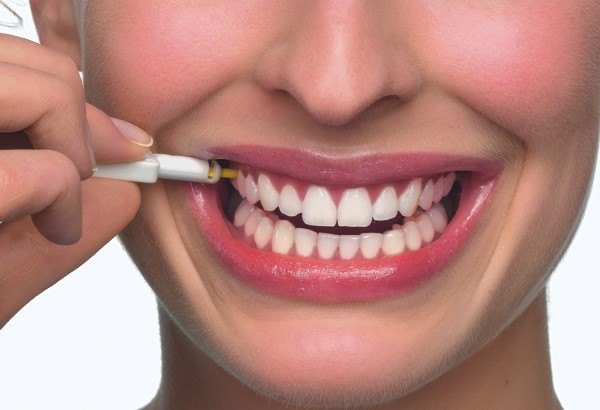
- Position it at the gumline. Hold the handle steadily and guide the tip between the teeth. Do not snap it down into the gum or force it through a tight contact.
- Move gently through the space. Once it fits, pass the brush in and out a few times without twisting hard or scrubbing the gums.
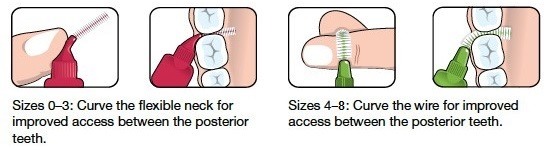
- Reach both sides where needed. Back teeth, braces and restorations can require a different angle or access from the cheek and tongue sides. Get a demonstration if the wire bends or access feels awkward.
- Rinse and inspect the brush. Follow the product’s own cleaning and reuse instructions. Replace it if the bristles are worn, the wire is bent or damaged, or the head no longer feels safe.
Once-daily cleaning between teeth is a common recommendation. The ADA says either floss or another interdental cleaner can be used once a day; the best time is one you can keep up with. Follow any different routine your dental professional gave you.
Braces, implants and bridges
Braces: An interdental brush may help reach around brackets and under an archwire, but the right shape and size depend on the appliance. Follow your orthodontist’s instructions and do not push a brush where it catches on a bracket or wire.
Implants: Use a brush intended for implant care and selected for the space. The ADA notes that some brushes have coated wire designed to avoid scratching implants. Ask your dental team which size and wire coating are appropriate around your restoration.
Bridges: A bridge creates areas that may need a threader, superfloss, a brush or another tool. Ask your dentist or hygienist to demonstrate access underneath the bridge. Do not bend or force a wire around a restoration unless you have been shown how.
Bleeding, soreness and possible trauma
A small amount of bleeding can happen when inflamed gums are cleaned, but it should not be assumed to be harmless or blamed on “getting used to” a brush. Check that the size is comfortable and that you are using a gentle motion. Stop if the brush causes sharp pain, cuts the gum, bends, or leaves soreness that does not settle. Persistent or repeated bleeding, swelling, tenderness or bad taste can be a sign that your gums need assessment; contact your dentist rather than scrubbing harder or waiting for a fixed number of days.
Interdental brushes versus floss
These tools fit different spaces. A brush can fill an open gap and may be easier around some braces, bridges or implants. Floss is thin and can pass through tight contacts where a brush will not fit. Many people need both tools in different areas. The ADA describes interdental brushes as an option for open spaces and floss as a choice for tight spaces. The Cochrane evidence comparing methods is limited and often low certainty, so broad claims that one tool is always better than another overstate what the research can show. A professional can help match the tool to each space.
Frequently asked questions
Should the brush be tight between my teeth?
It should fit snugly enough for its bristles to contact the space, but it should pass gently. Do not force it, push through pain, or allow the wire to scrape the teeth. If it binds or bends, stop and try a smaller size or use floss for that gap.
Can I use one size for my whole mouth?
Not always. Spaces differ, and a person may need more than one size. Size codes also differ by brand, so do not assume that matching numbers mean matching brush dimensions.
Are interdental brushes better than floss?
Neither is best for every space. A brush may suit a wider gap; floss may fit a tight contact. The right tool is the one that safely reaches the area and that you can use consistently.
Is bleeding normal when I start?
Bleeding may occur with inflamed gums, but persistent or repeated bleeding should be checked. Confirm the size and technique with a dentist or hygienist, especially if bleeding is accompanied by swelling, pain or gum recession.
How often should I replace an interdental brush?
Follow that brush’s instructions. Replace it when the bristles are frayed or the wire is bent, damaged or no longer feels safe. Reuse periods vary by product and should not be generalized from one brand to another.
Sources and product information
Clinical guidance: American Dental Association, Dental Floss/Interdental Cleaners; Ontario Dental Association, Brushing and Flossing; Cochrane review of home-use interdental cleaning devices; European Federation of Periodontology S3 guideline; and NHS primary-care advice on interdental brushes. Product details: TePe sizing guide, Piksters product information, and Sunstar GUM’s use guide. Manufacturer product descriptions are not independent comparative evidence.
Historical note: The five archived editorial scores and product links were retained from the original DentalsReview review. Current star ratings, prices, Prime status and retailer review counts were not available in the live Amazon table feed and are not represented here as current data.