Purpose-first buying guide Labels and products checked October 8, 2026
The best antiseptic mouthwash is the one that does the job you actually need. For an everyday plaque-and-gingivitis routine, start with a labeled essential-oil or CPC rinse. For a minor mouth sore, a short-term cleanser belongs in a different shopping basket. The biggest percentage on the bottle is not a useful shortcut between them.
Compare the bottles · How we chose · Buying checklist · Safety and stopping rules · Common questions
Compare the five buying options
The first three choices are daily-care rinses; the final two are temporary oral cleansers. This is a US-formulation guide with Amazon.com links. Shipping and country-specific formulas differ, so check your local bottle before use. A familiar brand name is not enough to identify the right product.
We show the exact pack attached to each link rather than a price that may be wrong by the time you read this. Compare the current offer, seller, bottle count and expiry information at the retailer. A multipack makes sense only after you know the formula suits you.
How we selected and compared these rinses
This is a desk-based buyer’s guide: we checked manufacturer information, US Drug Facts, professional guidance and the exact retailer listings. We did not taste-test these bottles, measure plaque reduction ourselves or reproduce Amazon customer ratings. There is no invented laboratory score behind the recommendations.
Our order of priorities is straightforward: a clear match between the intended purpose and the label; appropriate precautions; an understandable formulation; then practical differences such as alcohol content, dosing format and pack size. Clinical evidence informs the ingredient category, while a product label establishes what that particular bottle is sold to do. We do not turn an ingredient finding into a claim that one commercial bottle beats another.
Our shortlist covers three daily-care options and two temporary cleansers. Concentrated and botanical rinses need a separate assessment of their formulation, directions and evidence. For a wider survey, see our mouthwash comparison guide.
Daily plaque-and-gingivitis choices
Listerine Original: the straightforward essential-oil choice
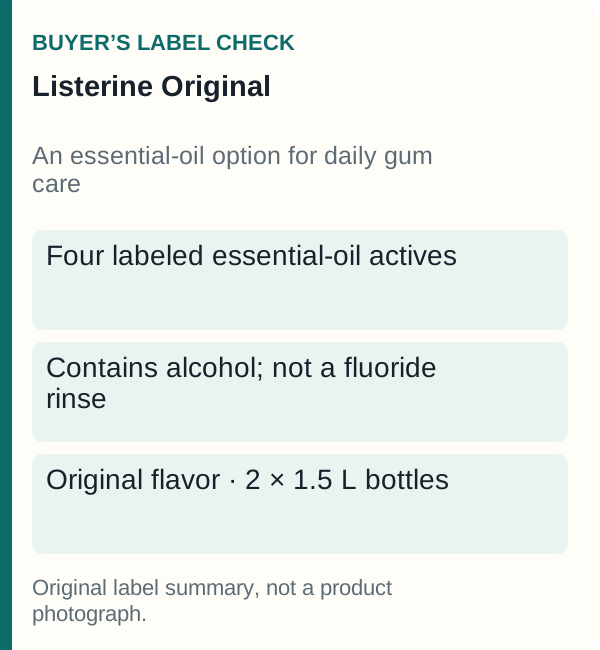
Choose Original when you want an established essential-oil formula with a labeled plaque-and-gingivitis purpose, and alcohol is acceptable to you. Its four actives are eucalyptol, menthol, methyl salicylate and thymol. The purpose is the selling point; a dramatic sensation is not an extra clinical benefit.
The trade-off is the alcohol-containing, intense-flavor formula. If that makes regular rinsing unpleasant, an alcohol-free CPC option is a more sensible next comparison than forcing yourself through it. Original also should not be treated as a fluoride anticavity rinse. Pick it for the right task, not for the broadest interpretation of “germ kill.”
- Why consider it: a clearly identified daily-use therapeutic category, with no dilution step.
- What you give up: an alcohol-free formulation and an anticavity fluoride indication.
- Skip it if: the formula aggravates discomfort, or the bottle’s age restriction excludes the intended user. Current US manufacturer directions exclude children under 12.
The linked listing is Original flavor, two 1.5 L bottles. That is a substantial first purchase if you have never used the formula; finding a smaller local bottle first may be the better decision.
Label sources: formulation, intended use and precautions.
TheraBreath Healthy Gums: the alcohol-free daily starting point
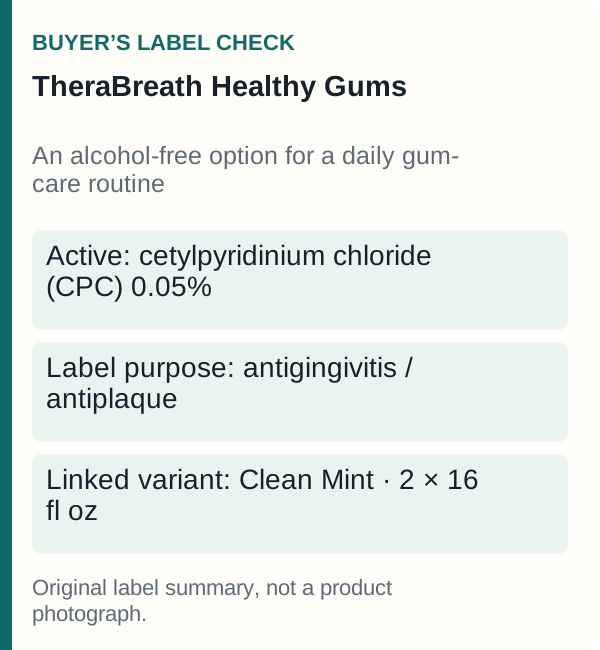
Healthy Gums is our practical alcohol-free starting point for this shortlist. Its Drug Facts identify CPC 0.05% and an antigingivitis/antiplaque purpose. Its alcohol-free CPC formulation gives buyers a useful alternative to Original’s essential oils.
Take care with the name: TheraBreath sells multiple mouthwashes and toothpaste. “Healthy Gums” and “Fresh Breath” are not interchangeable labels, and a bundle can contain more than one formula. The selected link is the Clean Mint Healthy Gums oral rinse, two 16 fl oz bottles.
- Why consider it: alcohol-free, with a daily gum-care indication and ready-to-use dosing.
- What to weigh: tolerance remains individual; alcohol-free does not guarantee that a rinse cannot irritate. CPC rinses can also cause staining, according to ADA guidance.
- Skip it if: you are trying to replace a prescribed course, or you need fluoride specifically for cavity prevention.
We have not ranked it above every CPC competitor on efficacy. It is the clearest first comparison here for someone who wants to move away from an alcohol-containing everyday rinse. Follow its own directions and warnings; persistent gum symptoms are not a reason to rinse more often.
Label sources: formulation, intended use and precautions.
Colgate Total Gum Health: another CPC option, with a pack-size catch
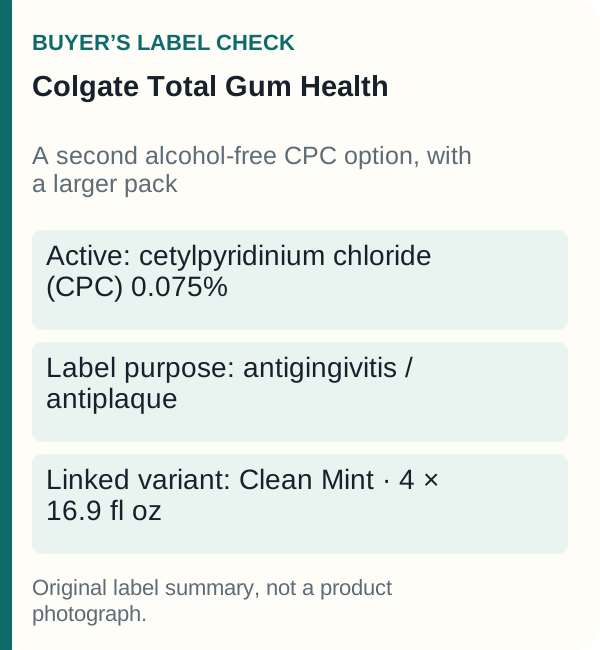
Colgate Total Gum Health gives you a second alcohol-free daily-care option. The matching US Drug Facts identify CPC 0.075% with an antigingivitis/antiplaque purpose. Compare it with Healthy Gums on the exact formula, tolerance and the offer you are actually buying, rather than treating 0.075% versus 0.05% as a winner’s podium.
The practical catch is the selected listing: four Clean Mint bottles of 16.9 fl oz / 500 mL each. That may suit an established household routine. It is less attractive as an experiment for someone who does not yet know whether they like the formula. Bottle count belongs in the comparison just as much as the active ingredient.
- Why consider it: a labeled alcohol-free CPC alternative for daily plaque-and-gingivitis care.
- Main limitation: a larger commitment in the linked pack, plus the usual need to check tolerance and label warnings.
- Skip the multipack if: this is your first trial, storage is limited, or symptoms still need diagnosis.
Colgate Total toothpaste, other Total mouthwashes and Peroxyl are different products. Match “Gum Health,” Clean Mint and the Drug Facts on arrival. A substitution with a familiar logo may still change the intended use.
Label sources: formulation, intended use and precautions.
Short-term mouth-sore cleansers
Colgate Peroxyl: choose it for the ready-to-use format
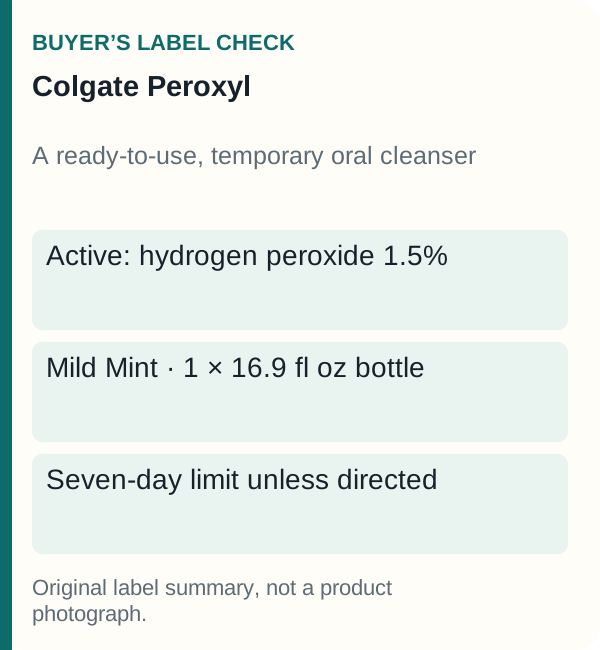
Peroxyl is the more straightforward format to compare when you specifically want a ready-to-use cleanser for minor oral irritation. It contains 1.5% hydrogen peroxide, and the selected product is the alcohol-free Mild Mint mouth-sore rinse. Its role is temporary cleansing; it is not a promise to diagnose or cure whatever caused the sore.
That boundary matters more than the large bottle. The label limits use to seven days unless a dentist or physician directs otherwise, and says to seek advice when symptoms fail to improve or irritation worsens. A short-term product is not a sensible way to build an indefinite daily rinse habit.
- Why consider it: ready-to-use format, a clearly named mouth-sore indication and a single-bottle listing.
- Main limitation: a short course with stopping rules, rather than routine antigingivitis use.
- Skip self-selection if: the lesion is unexplained, persistent or accompanied by concerning symptoms.
If choosing between this and Gly-Oxide, start with the format and the product-specific directions. We have not found a basis here for declaring one universally better at healing sores.
Label sources: formulation, intended use and precautions.
Gly-Oxide: the small-format alternative with different directions
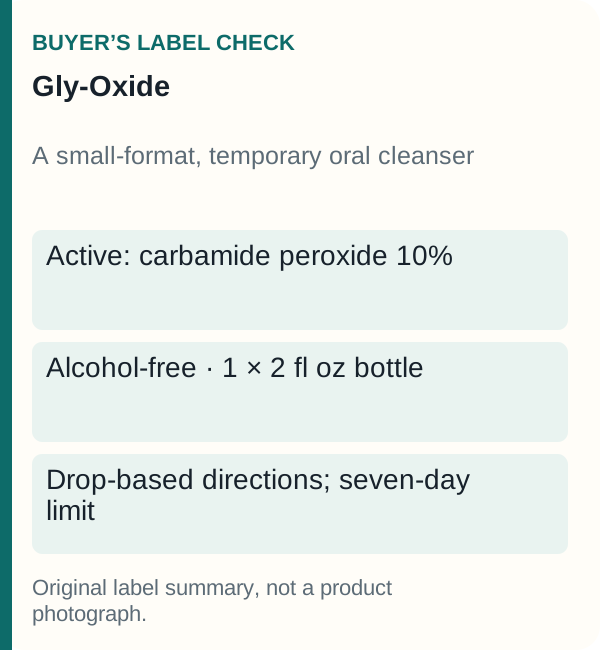
Gly-Oxide belongs alongside Peroxyl in the temporary-cleansing category, but it is not simply the same rinse in a smaller bottle. The Drug Facts identify 10% carbamide peroxide. Its directions distinguish direct application from a drop-based rinse method, so follow the bottle rather than borrowing Peroxyl’s capful routine.
The linked product is the alcohol-free 2 fl oz / 60 mL cleanser. The compact format may be useful when that particular product and method have been recommended for your situation. It does not make the bottle a travel-sized equivalent of an everyday antigingivitis rinse.
- Why consider it: a small bottle and a label that describes specific temporary cleansing uses.
- What to weigh: measuring drops and reading the appropriate application instructions adds a step.
- Stopping rule: no more than seven days unless a dentist or doctor directs otherwise.
Ten percent carbamide peroxide and 1.5% hydrogen peroxide describe different ingredients and formulations. Comparing those two numbers as though they were the same active is a poor buying decision. Choose on indication and directions, then ask for advice if the problem persists.
Label sources: formulation, intended use and precautions.
A smarter buying checklist
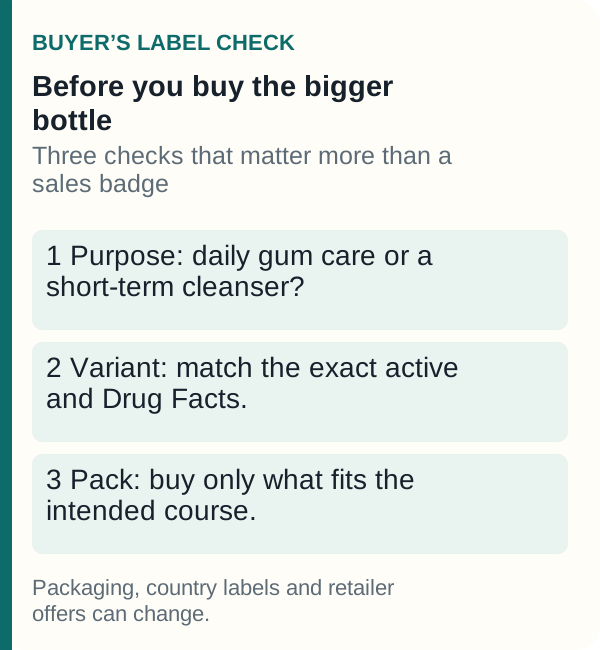
1. Decide whether you need daily care or a short course
Write down your goal before browsing. For ongoing plaque-and-gingivitis care, compare products with that indication. For a temporary cleanser, establish the reason and duration first. For cavity risk, fluoride is a separate consideration; for persistent bad breath, consider the cause instead of repeatedly switching mint flavors.
2. Compare the exact active, not just the brand
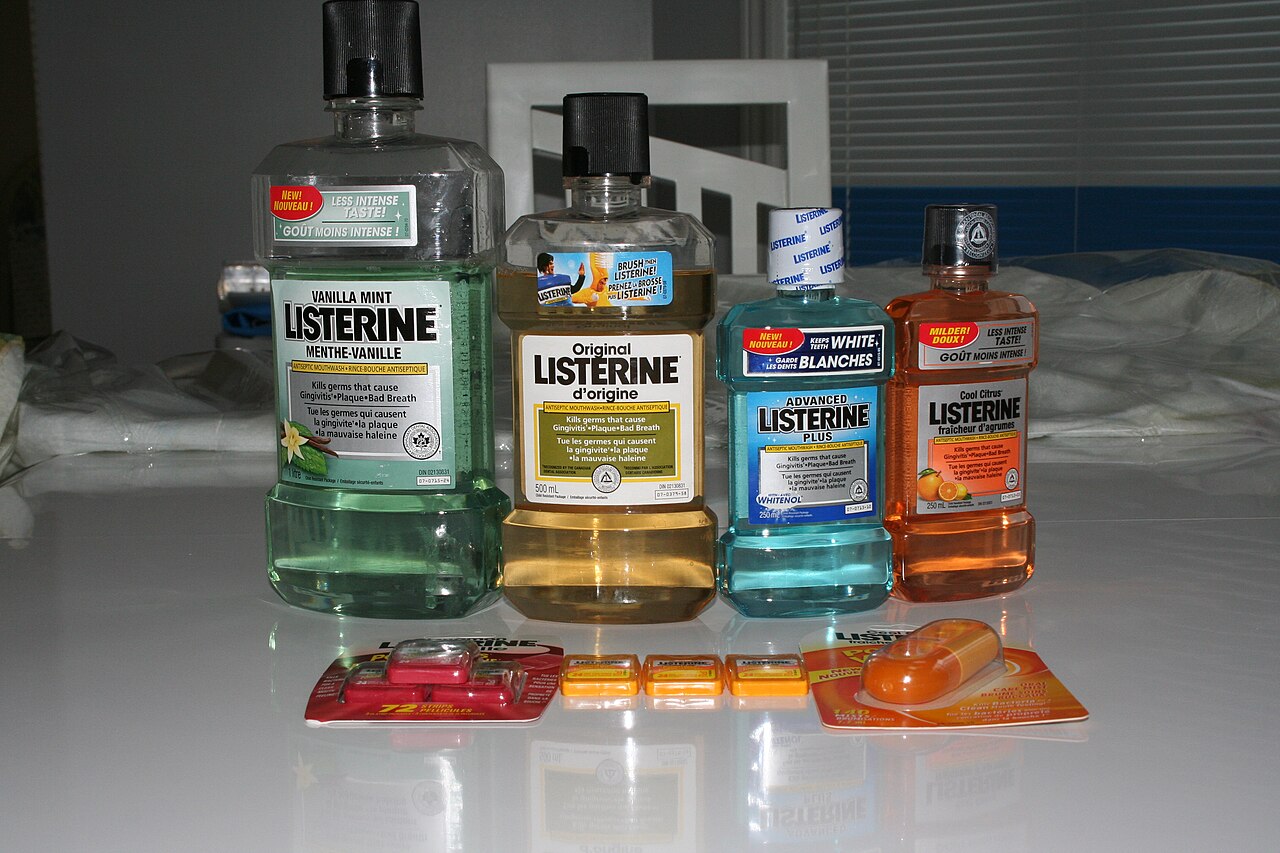

CPC, essential oils, peroxide and fluoride are not interchangeable shopping categories. “Alcohol-free” is a formulation feature, not a complete clinical claim. The current bottle’s active ingredient, purpose and instructions should agree with the listing. This is especially important when buying across borders or choosing between similarly named brand lines.
3. Compare cost per usable dose at checkout
For a ready-to-use daily product, divide the bottle volume by the labeled dose, then compare the live offer across the same pack size. For a concentrate or drop-based cleanser, that simple bottle-volume comparison may mislead. Add delivery costs, seller reliability and expiry information to your decision. We do not call a product “best value” without a defensible current comparison.
4. Keep the basics ahead of the bottle
Choose a rinse that fits around brushing and interdental cleaning, rather than replacing them. Our floss-pick guide covers another mechanical-cleaning option. NHS advice is to spit out excess fluoride toothpaste after brushing rather than immediately rinsing it away; a fluoride mouthwash can be used at a different time. Other therapeutic rinses may have their own sequencing instructions.
What about chlorhexidine, concentrates and herbal rinses?
Safety: when to stop shopping and seek advice
Arrange assessment for an unusual, worsening or recurrent lesion. NHS guidance says a mouth ulcer lasting more than three weeks needs checking; do not wait that long when it is increasingly painful, bleeding or otherwise concerning. Keep the bottle or a clear label photo available for the appointment.
Questions buyers ask
The purchase we would make for each job
You do not need all five bottles. A well-matched product, used according to its label alongside effective cleaning, is a better purchase than a shelf of overlapping promises. Return to the comparison table when you are ready to check the exact pack.