Accidentally swallowing one mouthful of mouthwash is unlikely to cause toxicity in most people, according to Poison Control. Swallowing more than that can be harmful, and the risk depends on the product, the amount, and the person’s age and size. If a child drank mouthwash, the amount is uncertain, or more than a small accidental swallow occurred, contact a poison centre promptly with the bottle nearby. Do not induce vomiting.

What happens if you swallow mouthwash?
A small accidental swallow often causes no symptoms. Depending on the product and amount, temporary nausea, stomach irritation, or vomiting can occur. A larger ingestion can cause more serious effects, including abdominal pain, dizziness, drowsiness, poor coordination, low blood pressure, slowed breathing, or loss of consciousness. No single symptom list can determine whether an exposure is safe; the product and dose matter.
Mouthwash is formulated for rinsing and spitting, not drinking. Ingredients differ between cosmetic and therapeutic rinses, prescription products, and specialty oral rinses. Some products contain ethanol or fluoride; others contain active ingredients such as chlorhexidine, hydrogen peroxide, methyl salicylate, cetylpyridinium chloride, or other antimicrobials and flavoring agents. The concentration and amount swallowed affect risk.
If the person is having trouble breathing, is unresponsive, has a seizure, collapses, or is difficult to wake, call emergency services now. For other exposures—including a child drinking mouthwash or an uncertain quantity—call a poison centre promptly for individualized guidance. A poison specialist can help decide whether home observation or urgent medical care is appropriate.
Why the ingredients matter
Do not treat “mouthwash” as one uniform chemical. An alcohol-containing rinse can expose someone to ethanol; a fluoride rinse has a different risk profile. Some products contain multiple active ingredients. Poison Control notes that larger amounts can cause toxicity from alcohol, fluoride, or antimicrobial ingredients, while MedlinePlus lists ethanol, chlorhexidine, hydrogen peroxide, and methyl salicylate among ingredients that may be harmful in an overdose.
Ethanol can cause alcohol intoxication or poisoning when enough is swallowed. Symptoms may include vomiting, drowsiness, poor coordination, and slowed breathing. The amount of ethanol varies by formula; a mouthwash bottle should never be treated as a beverage or used to estimate a “safe” drink.
Fluoride does not cause ethanol intoxication. A sufficiently large acute fluoride ingestion can cause nausea, vomiting, diarrhea, and potentially serious effects involving electrolytes, the heart, or kidneys. Other active ingredients can irritate the digestive tract or create different concerns. The poison centre can identify which ingredients matter for the specific product.
An alcohol-free label removes the ethanol exposure, but it does not make a rinse safe to swallow. Fluoride, peroxide, chlorhexidine, chlorine dioxide, and other ingredients can still cause symptoms in large enough amounts. Some oral rinses that are alcohol- and fluoride-free contain other active chemicals; “alcohol-free” is not a substitute for poison-centre advice.
A small accidental swallow
For many people, a single normal mouthful is unlikely to cause toxicity. Some may have brief stomach upset, but nausea or diarrhea is not inevitable and there is no reliable “one or two days” symptom timetable. Do not wait for symptoms to appear if a child drank mouthwash, a larger amount may be missing, or you are uncertain about what happened.
If it was a small accidental swallow and the person feels well, keep the product label and call a poison centre when the dose, formulation, or person’s risk is unclear. Follow the specialist’s instructions about whether to rinse the mouth, drink anything, or simply observe. Do not force fluids into someone who is very drowsy, vomiting, or unable to swallow safely.
Most importantly, do not induce vomiting unless a poison specialist or clinician specifically tells you to. Vomiting can create additional risks and does not reliably remove the exposure. Avoid home remedies or trying to neutralize the rinse with another substance.
A larger ingestion or overdose
Call a poison centre promptly if more than a small accidental amount was swallowed, a child drank from the bottle, the amount is unknown, or the person has symptoms. Keep the original container so you can read the product name, active ingredients, and concentration. Do not wait for a symptom checklist to become complete before seeking advice.
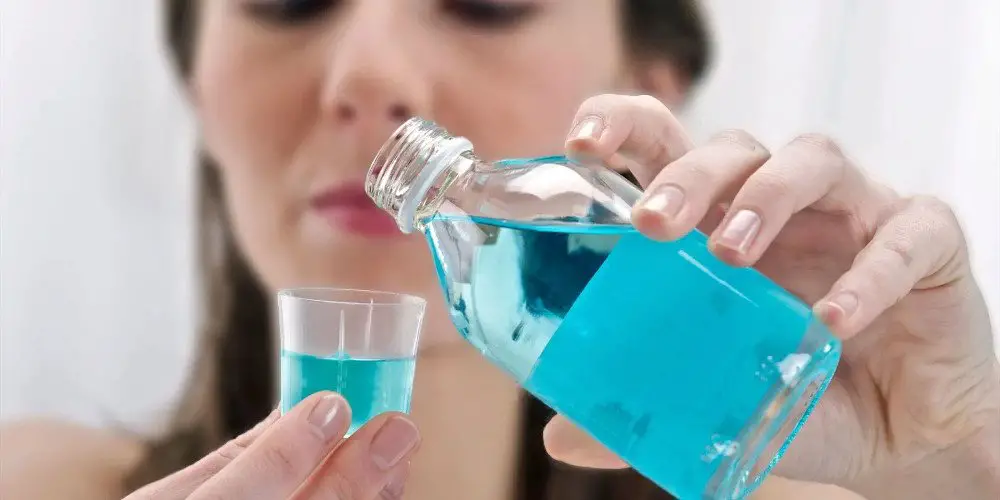
Possible symptoms after a significant ingestion can include vomiting, stomach pain, dizziness, sleepiness, headache, slurred speech, impaired coordination, low blood pressure, or changes in breathing. Serious ethanol poisoning may progress to unresponsiveness or slow breathing. Severe fluoride poisoning follows a different pattern and needs medical assessment. These are potential effects, not a prediction that each will occur.
Use emergency services for severe symptoms such as difficulty breathing, seizure, collapse, blue or gray color, or unresponsiveness. If a person is unconscious or cannot swallow normally, do not put anything in their mouth. Follow emergency dispatcher instructions while help is on the way.
Call poison control or a poison centre
Poison specialists can use the person’s age and weight, product formulation, estimated amount, timing, and symptoms to advise the next step. Keep the container with you and describe what happened plainly. Do not conceal the amount or delay a call because the person feels well; the centre can tell you whether observation is appropriate.
In the United States, call Poison Control at 1-800-222-1222 or use webPOISONCONTROL. In Canada, call 1-844-764-7669; in Quebec, call 1-800-463-5060. Elsewhere, contact your local poison information service or emergency medical number. If severe symptoms are present, use emergency services rather than waiting for an online response.
Have these details ready
- The person’s age and approximate weight.
- The product name, ingredient list, and strength or concentration on the label.
- The estimated amount swallowed and when it happened.
- Any symptoms, relevant health conditions, and other substances involved.
It is fine if you do not know the exact amount. Explain what you observed—for example, whether the cap was open, how full the bottle was before, and what may have spilled. A poison specialist can work with an estimate and ask follow-up questions.
Children and mouthwash
The American Dental Association generally advises against mouthrinse for children younger than 6 unless a dentist directs otherwise, because younger children may swallow rather than spit reliably. The label may set a different age range for a particular product. Older children should use a rinse only when they can follow the swish-and-spit directions and an adult can supervise as needed.
If a child drinks mouthwash or you cannot estimate how much is missing, call a poison centre promptly—even if the child appears well. Keep the bottle nearby and follow the specialist’s instructions. Do not assume that a small child is safe because the product is alcohol-free; other ingredients and the child’s size may matter.
For daily prevention, follow the dentist’s advice about brushing, fluoride toothpaste, and whether a rinse is useful for the child. Mouthrinse is an optional adjunct for some oral-health goals, not a replacement for brushing or cleaning between teeth. Our practical guides to oral hygiene and cleaning between teeth cover routine care.
When mouthwash is swallowed intentionally
Some mouthwashes contain ethanol, and products can be misused as a source of alcohol. If someone has alcohol use disorder or there is a risk of intentional ingestion, approach the situation without blame. First address immediate safety: if the person may have swallowed mouthwash, contact a poison centre; call emergency services for severe symptoms, impaired consciousness, or immediate danger.
For prevention, consider an alcohol-free rinse if a dental professional says mouthwash is appropriate, and store all mouthwash securely. An alcohol-free product still is not meant to be swallowed. If the person is seeking alcohol or repeatedly drinking non-beverage products, encourage support from a healthcare professional or local substance-use service. Avoid framing this as a character flaw or hiding the issue from clinicians who need accurate information to help.
Secure storage is a practical step for any household with children or anyone at risk of accidental or intentional ingestion. Use the original package, keep it out of reach and sight of children, and choose a child-resistant closure when available. Never pour mouthwash into a water bottle, drinking glass, or other container that could be mistaken for a beverage.
How to use and store mouthrinse safely
Follow the exact product label or the dentist’s instructions. Therapeutic mouthrinses differ in dose, frequency, length of use, and whether you should avoid food or drink afterward; there is no universal rule that every rinse should be used twice daily after meals. Use the measured amount, swish for the directed time, and spit it out. Do not swallow it to get a stronger effect.
Mouthrinse may add a benefit for a particular goal, such as fluoride delivery or control of certain oral conditions, depending on the formula. It does not mechanically scrape away hardened tartar (calculus) and cannot replace brushing, interdental cleaning, or professional dental care. If you are deciding whether a rinse fits your routine, see our guides to mouthwash options and choosing a mouthrinse, then check the label and ask your dentist about therapeutic claims.
- Measure only the labeled dose and swish and spit as directed.
- Keep the bottle in its original container and close the cap after use.
- Store it up and away from children; use a child-resistant closure where available.
- Do not transfer it into a beverage bottle or leave it beside drinking cups.
Keep a calm, consistent routine. If you or a child tends to swallow rinse, stop using it until you can check the label and get advice from a dentist. Our overview of routine dental check-ups explains when to raise questions about products in your oral-care routine.
Common questions
Takeaway
One mouthful of mouthwash is unlikely to cause toxicity in most people, but larger amounts can be harmful. Ethanol can cause alcohol poisoning; fluoride and other active ingredients have different effects. The right response depends on the actual product, amount, and person. Keep the bottle available, do not induce vomiting, and call a poison centre for a child’s exposure, a larger or uncertain amount, or symptoms. Use emergency services for severe symptoms. For everyday oral care, follow the product directions and spit the rinse out.