
There is no single best mouthwash for everyone. Choose a rinse for a specific goal: fluoride for added cavity protection, an antimicrobial rinse for plaque or gingivitis support, a breath-focused formula for temporary odor control, or a moisturizing rinse for dry-mouth symptoms. Many people with healthy teeth and gums do not need mouthwash at all. It can add to brushing with fluoride toothpaste and daily cleaning between teeth, but it cannot replace either one.
For a quick starting point, this guide compares ACT Total Care Fluoride for cavity prevention, Listerine Cool Mint for plaque and gingivitis support, TheraBreath Fresh Breath for breath-focused use, and Biotène Dry Mouth for temporary dryness relief. They serve different purposes, and persistent symptoms deserve a dental or medical evaluation rather than a stronger rinse.
As an Amazon Associate I earn from qualifying purchases.
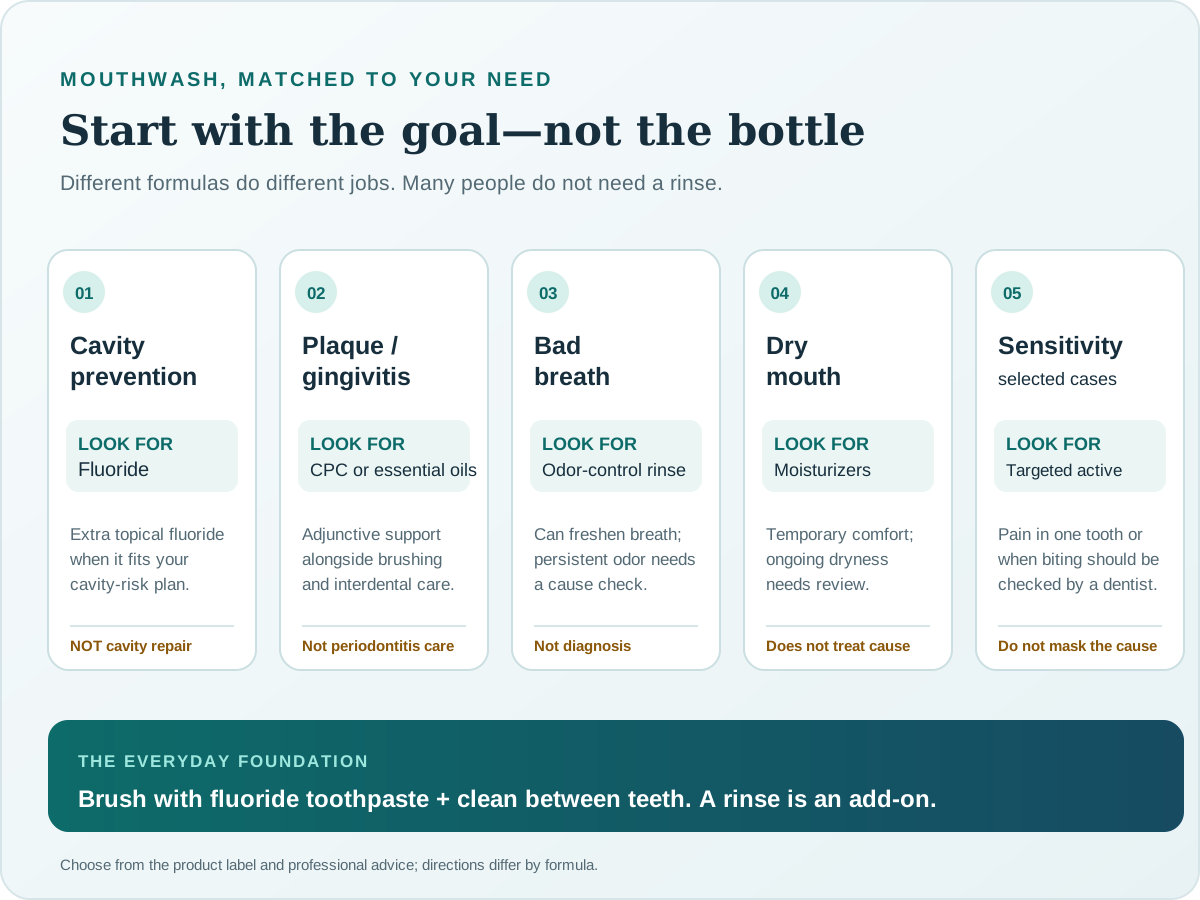
For sensitivity, we found a current manufacturer product page for Listerine Clinical Solutions Sensitive Teeth, which lists dipotassium oxalate monohydrate and cautions against use when another source of pain, such as decay, may be present. We could not confirm a current retailer offer for the candidate listing during this review, so it is not included as a purchase pick. A single painful tooth, pain when biting, or worsening sensitivity should be assessed by a dentist. A sensitive-teeth toothpaste guide may be a more practical starting point: compare toothpaste for sensitive teeth.
How we chose
We checked current manufacturer information and product directions, reviewed ingredient and purpose statements, compared each option with the American Dental Association’s guidance on mouthrinse, and checked the exact retailer listing identifiers before adding links. We grouped the products by the problem each is designed to address, rather than ranking unlike formulas together. We did not conduct laboratory testing or long-term hands-on testing. Manufacturer statements describe the company’s claims; the ADA’s general guidance and product-specific Seal information provide a separate reference point.
What mouthwash can do—and when you need it
Mouthwash is a liquid rinse used for breath freshening, delivery of an active ingredient, or short-term symptom relief. Cosmetic rinses mainly improve taste or mask odor for a while. Therapeutic rinses contain an ingredient intended to support a defined purpose, such as fluoride for cavity prevention or an antimicrobial ingredient for plaque and gingivitis support. Prescription or clinician-directed rinses have separate uses and directions.
If brushing with fluoride toothpaste and cleaning between your teeth are working well and you have no specific concern, mouthwash may be optional. If a dentist recommends one because of cavity risk, gum inflammation, dry mouth, oral surgery, or another issue, ask which active ingredient and product fits that situation. A rinse cannot remove established tartar, repair a cavity, treat periodontitis by itself, or replace brushing and interdental cleaning.
Use a product’s label or a clinician’s instructions for amount, timing, frequency, and age limits. There is no universal rinse schedule for every formula. The ADA advises that children younger than 6 generally should not use mouthrinse unless a dentist directs it, because they may swallow it. Older children should use only a product whose label fits their age and ability to spit reliably.
Current mouthwash picks by need
ACT Total Care Anticavity Fluoride Mouthwash — added cavity protection
Why it made the list: It is a straightforward fluoride-rinse option for someone whose dental professional recommends adding topical fluoride. Current ACT information identifies sodium fluoride as the active ingredient in its anticavity rinse. The selected retailer listing is the Fresh Mint 18 fl oz formula; check the bottle’s Drug Facts panel because product lines and formulations can vary.
Strengths: clear cavity-prevention purpose; fluoride active; alcohol-free listing. Limitations: an additional rinse is not necessary for everyone, and it does not treat a cavity or replace fluoride toothpaste. Do not assume every ACT formula has the same fluoride concentration or directions.
Listerine Cool Mint Intense Antiseptic — plaque and gingivitis support
Why it made the list: The manufacturer identifies this rinse as ADA accepted and lists the four essential oils eucalyptol, menthol, methyl salicylate, and thymol. The linked listing is a two-bottle, 1 L format. ADA guidance describes some essential-oil mouthrinses as an adjunct to brushing and cleaning between teeth for plaque and gingivitis control.
Strengths: a defined antiseptic purpose; current manufacturer product information; useful for people who want an additional antimicrobial rinse. Limitations: it contains alcohol and has an intense flavor. It is not a treatment for periodontitis and does not replace a dental cleaning or home plaque removal. Choose another formula if this one irritates your mouth.
TheraBreath Fresh Breath Oral Rinse, Mild Mint — breath-focused use
Why it made the list: The manufacturer lists sodium chlorite and positions this rinse for bad breath; it also identifies the Fresh Breath rinse as ADA accepted. The linked retailer format is a two-pack of 16 fl oz bottles, and the current manufacturer page lists Mild Mint among available formats.
Strengths: alcohol-free; milder mint flavor; a distinct breath-focused option. Limitations: a rinse may mask or reduce odor temporarily without addressing the cause. Ongoing bad breath can be associated with gum or dental disease, dry mouth, tongue coating, or another condition. If it persists despite routine oral hygiene, arrange an evaluation instead of relying on repeated rinsing.
Biotène Dry Mouth Oral Rinse — temporary dryness relief
Why it made the list: Biotène describes this alcohol-free, sugar-free rinse as a moisturizing formula intended to relieve dry-mouth symptoms. The manufacturer reports relief lasting up to four hours based on its cited clinical study. The linked listing is the Fresh Mint 33.8 fl oz bottle.
Strengths: designed for dryness rather than a strong antiseptic effect; alcohol-free; the intended use is easy to distinguish from cavity or gum rinses. Limitations: symptom relief does not explain why saliva is reduced or treat its cause. Persistent dry mouth can affect comfort and cavity risk, so discuss ongoing symptoms and medication questions with a dentist or clinician.
Safety and practical use
- Follow the exact label. Dose, timing, age limits, and whether to dilute vary by product. Do not assume that all rinses should be used after brushing or at the same frequency.
- Keep chlorhexidine clinician-directed. It has selected clinical uses and can cause staining or taste changes with use. Do not buy or use it as a casual substitute for professional advice; availability and prescription rules vary by location.
- Alcohol is not the therapeutic ingredient. Some antiseptic products contain alcohol as part of the formulation, while others do not. Comfort and tolerance vary; a burning sensation is not proof that a product works better.
- Use extra care with children. Mouthrinse should be kept out of reach of young children. For children under 6, ask a dentist before use; for older children, follow the precise label and supervise if needed.
- Do not improvise a peroxide rinse. If a peroxide-containing oral product is appropriate, use a formulated product according to its label or a clinician’s directions.
Frequently asked questions
Is mouthwash necessary if I brush and floss?
Not for everyone. A person with good plaque control and no specific dental concern may not need a rinse. It can be useful when a particular active ingredient or symptom-relief purpose fits a clinician’s advice.
What is the best mouthwash for cavities?
Look for an anticavity rinse with fluoride if your dentist recommends additional fluoride. It supplements a routine that includes fluoride toothpaste; it does not repair a formed cavity. See our fluoride mouthwash guide and mouthwash for cavities guide.
What mouthwash helps with gingivitis?
Some rinses with cetylpyridinium chloride or essential oils can support plaque and gingivitis control when added to brushing and interdental cleaning. Bleeding gums or suspected gum disease should be evaluated; mouthwash alone does not treat periodontitis. Read our antiseptic rinse guide and periodontal mouthwash guide.
Is alcohol-free mouthwash better?
It may feel more comfortable for someone who finds alcohol-containing products drying or irritating. Alcohol-free does not automatically mean more effective; compare active ingredients and purpose.
Can mouthwash fix persistent bad breath?
It may freshen breath or help with odor for a time, but persistent bad breath can signal a dental, gum, tongue, dry-mouth, or other health issue. If it continues, arrange an evaluation. See our bad-breath mouthwash guide.
Should I use mouthwash before or after brushing?
There is no one timing rule for every product. Check the label or ask your dentist, especially if you use a fluoride or prescription rinse, so it fits your routine without conflicting with product-specific instructions.
Sources
- American Dental Association, Mouthrinse (Mouthwash).
- American Dental Association, Home Oral Care.
- DailyMed, ACT Anticavity Fluoride Mint label.
- ACT, Anticavity fluoride rinse product information.
- Listerine, Cool Mint Intense Antiseptic product information.
- TheraBreath, Fresh Breath Oral Rinse, Mild Mint.
- Biotène, Dry Mouth Oral Rinse.