What alpha-ketoglutarate is in metabolism
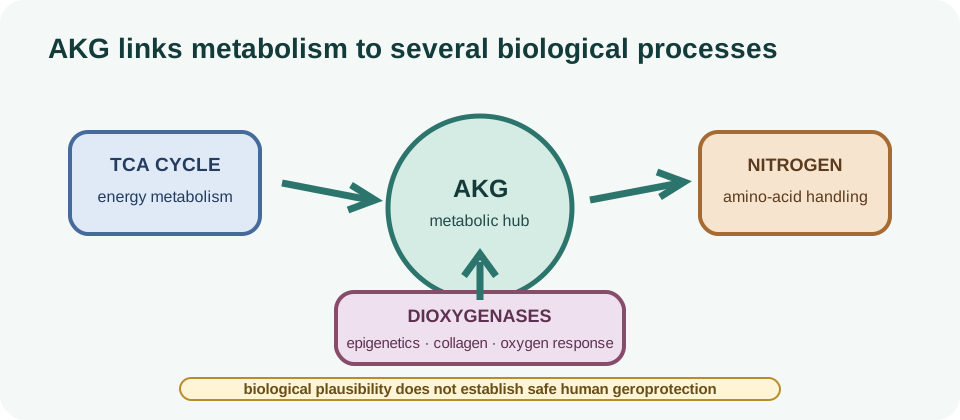
Alpha-ketoglutarate, or AKG, is an intermediate in the tricarboxylic-acid cycle, a central pathway for energy metabolism. It also participates in amino-acid and nitrogen handling and serves as a co-substrate for several dioxygenase enzymes. Those enzymes influence collagen-related chemistry, hypoxia responses and epigenetic regulation.
This positioning makes AKG unusually attractive in aging biology. It sits at the intersection of energy, redox state, amino-acid metabolism and chromatin regulation. But a central metabolic role also makes the intervention context-dependent. Changing a metabolite can affect multiple pathways, and a desirable result in one tissue may not translate to every organ.
The relevant compound also needs to be named. Some studies use AKG salts, including calcium alpha-ketoglutarate or CaAKG, while others discuss AKG more generally. Salt, sustained-release design, dose studied, absorption and tissue exposure can affect the experiment. A claim about one formulation should not silently become a claim about all AKG products.
AKG, dioxygenases and aging hypotheses
AKG-dependent dioxygenases include enzymes involved in DNA and histone demethylation, collagen maturation and cellular responses to oxygen. These links provide a plausible route by which AKG availability could influence gene regulation or tissue maintenance. They do not show that an oral supplement can safely tune those enzymes in a coordinated, beneficial direction in humans.
Age-related changes in metabolites are also difficult to interpret. A lower circulating or tissue level may reflect altered diet, activity, kidney function, illness, muscle mass or medication rather than a single correctable deficiency. Even if the change is causal in one model, restoring the average level may not recreate the timing or compartmentalization of normal physiology.
The mitochondrial dysfunction aging page and epigenetic aging page provide useful context: a pathway rationale is strongest when it predicts a measurable function and survives controlled testing. Mechanism is the start of the evidence ladder, not the final rung.
| Evidence level | What may be shown | What remains unresolved |
|---|---|---|
| Biochemical | AKG participates in metabolism and dioxygenase reactions. | whether supplementation improves human aging. |
| Animal | lifespan, frailty or tissue changes in a model. | human dose, effect size and safety. |
| Clock study | methylation age or another biomarker changes. | healthspan, causality and clinical benefit. |
| Randomized trial | predefined biomarker and functional outcomes can be compared. | durability, generalizability and eventual clinical outcomes. |
Mouse lifespan and healthspan evidence
A 2020 Cell Metabolism study reported that CaAKG extended lifespan and compressed morbidity in aging mice. The paper is important because it included survival and health-related measures rather than only a molecular marker. As with every animal longevity result, the study’s strain, sex, diet, housing, formulation, exposure and control design determine how far the finding can travel.
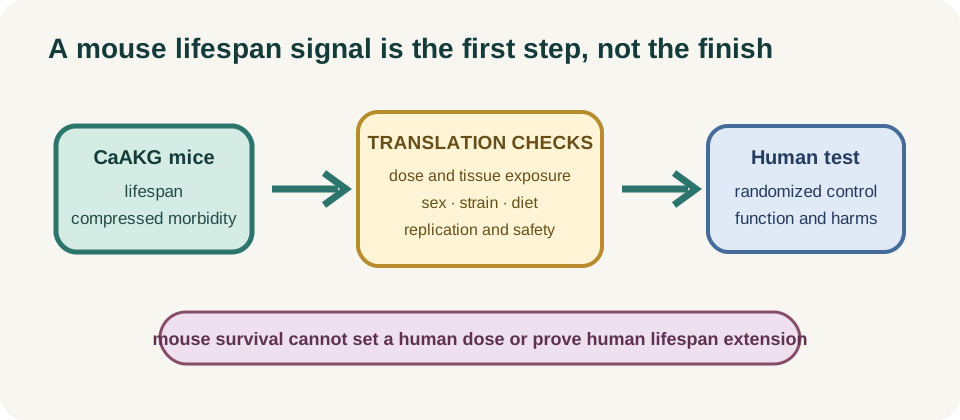
Animal lifespan findings are hypothesis-generating for humans. Mice metabolize compounds differently, have shorter life courses and are studied under controlled conditions that do not reproduce human comorbidity or polypharmacy. Even a replicated mouse result would not establish an effective or safe human regimen.
Sex-specific findings deserve attention. If effects differ between male and female animals, that may reveal biology or simply reflect study power and design. It is a reason to test the interaction, not a reason to select a commercial dose. Exposure in the target tissue also matters more than a nominal amount mixed into food or water.
Why mouse exposure does not translate directly to people
Nominal dose is only one part of an animal intervention. Researchers also need to know how much compound reaches circulation, which tissues are exposed, how quickly it is cleared and whether the calcium salt changes the pharmacology. Food intake, body size, metabolism and housing can alter the effective exposure. A human trial cannot be designed responsibly from a mouse amount alone.
The animal endpoint also matters. A mouse may show improved frailty, metabolic resilience or survival while the same compound has no measurable effect on a human clock or function. Conversely, a human biomarker may change without a clinically meaningful benefit. The translation question is therefore a chain of linked tests, not a single dose conversion. Researchers need pharmacokinetic measurements, tissue-relevant biomarkers, a prespecified human population and a control group that can separate the compound from background changes in diet, activity and medical care. They should also decide in advance which outcomes are primary, how missing data will be handled and how long participants will be followed after exposure ends. A result that appears only in a short-term methylation score may be useful for planning a larger trial, but it cannot establish that AKG has altered the trajectory of disease, disability or survival. This is particularly important when the intervention is marketed using a biological-age number, because the number can sound more clinically definitive than the underlying model warrants.
Sex, age and health status can modify both biology and risk. Very old animals may have a different baseline than middle-aged trial participants selected by a methylation criterion. A result in one sex may reflect a true interaction or limited power. Replication should include independent laboratories, both sexes where feasible and transparent reporting of adverse findings.
These limits do not make the mouse result unimportant. They define what the result can support: a rationale for controlled human research, not a reason to assume human lifespan extension. A careful evidence map keeps animal survival, human biomarker response and human clinical outcome in separate columns.
| Question | Why it matters | If unanswered |
|---|---|---|
| What is the exposure? | tissue concentration may differ from nominal dose. | human dose selection is uncertain. |
| Who responded? | sex, age, strain and baseline health can modify effects. | generalization is unsafe. |
| What improved? | survival, frailty, clock and function are different endpoints. | the claim may overreach the data. |
| Was it replicated? | independent confirmation reduces model-specific chance findings. | confidence remains provisional. |
The 2021 Rejuvant biological-age report
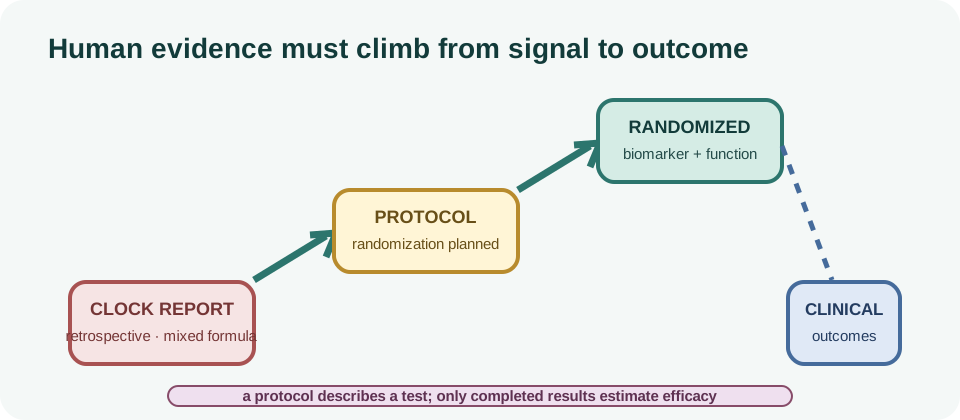
The most publicized human AKG result came from a 2021 report on Rejuvant, a commercial formulation containing alpha-ketoglutarate and vitamins. The report described an average eight-year reduction in biological aging after an average of about seven months of use, measured with a TruAge DNA-methylation test. That headline must be read with the study design attached.
It was retrospective and did not randomize participants against placebo. The formulation contained multiple ingredients, so the effect of CaAKG could not be isolated. The sample was small, the result used a biomarker rather than a clinical outcome, and the affiliations included TruMe, Ponce de Leon Health and related commercial interests. These facts do not prove that the score change was false, but they prevent it from establishing efficacy.
There are additional statistical concerns. People who choose a product and return for a second test may differ from non-users. Extreme baseline scores can move toward average on retesting. A clock can also change because of assay variation, cell composition or an unmeasured exposure. The right summary is interesting uncontrolled signal, not an eight-year rejuvenation effect.
Why a biological-age clock is not proof of longevity
DNA-methylation age can be useful for research, but a clock is a model trained for a target. The biological-age-test canonical explains why chronological-age accuracy, health-risk prediction, repeatability and surrogate validity are separate questions.
A biomarker can respond to an intervention without mediating its clinical benefit. A shift may reflect inflammation, blood-cell composition, nutrition, stress, regression to the mean or measurement noise. For a clock to function as a surrogate endpoint, intervention-induced change would need to reliably predict a change in patient-important outcomes across trials and populations.
That is why a younger methylation result should be paired with function, safety and durability. It may support target engagement or hypothesis generation. It cannot by itself show that someone will live longer, develop fewer diseases or remain healthier.
What the ABLE randomized trial is designed to test
The ABLE study protocol describes a double-blind placebo-controlled randomized trial of 1 g sustained-release CaAKG versus placebo in 120 healthy adults aged 40–60 years with a DNA-methylation age older than their chronological age. The intervention period is six months with three months of follow-up. The primary outcome is change in DNA-methylation age from baseline to the end of intervention.
Secondary outcomes include inflammatory and metabolic blood measures, handgrip and leg-extension strength, arterial stiffness, skin autofluorescence and aerobic capacity at multiple time points. This is a more informative design than the Rejuvant report because it includes randomization, placebo, a defined formulation and prespecified outcomes.
It is still a protocol, not an efficacy result. A recruitment or feasibility publication can show that enrollment is possible or describe participant characteristics; it cannot tell us whether CaAKG changes the primary endpoint or improves function. The longevity clinical-trials hub explains why the distinction between a trial plan and a trial result matters.
What ABLE can and cannot answer
If ABLE is completed as designed, it can test whether one CaAKG formulation changes a prespecified methylation-age endpoint more than placebo in a selected middle-aged population. It can also provide exploratory information about strength, aerobic capacity, arterial stiffness and blood markers. That would be useful human evidence, while still leaving longer-term disease and survival questions for later trials.
It will not automatically establish lifespan extension. A six-month methylation result may need longer follow-up, replication, different populations and outcome linkage. The selection of people with older methylation age may improve the chance of detecting a change, but it can limit generalizability to people whose clock is not older than their chronological age. It also cannot answer whether a score change alters diagnosis, treatment decisions or everyday independence.
The decisive interpretation will depend on effect size, uncertainty, missing data, adherence, adverse events, clock choice and whether functional outcomes move in a coherent direction. A statistically significant clock result with no functional signal would remain a biomarker finding rather than a geroprotector verdict.
Historical human uses, calcium salts and safety
AKG compounds have been used in nutritional, sports or medical-nutrition contexts, but those uses do not establish anti-aging efficacy. A calcium salt also contributes calcium, which can matter for people with kidney disease, disorders of calcium metabolism or interacting medicines. The form used in a study should be recorded rather than generalized.
Possible tolerability issues include gastrointestinal symptoms and effects related to the formulation or dose. Product quality, contamination, labeling accuracy and co-ingredients add uncertainty. People with chronic disease, pregnancy, kidney problems, a history of calcium disorders or multiple medications should consult a qualified clinician or pharmacist before using a supplement.
What would justify calling AKG a geroprotector?
A convincing geroscience result would need a controlled human trial with a validated formulation, adequate duration, baseline-status measurement, adherence monitoring and a prespecified clinical or functional endpoint. Methylation age could be included, but it should not be the only outcome. The trial should report safety, subgroup effects, durability and whether the signal replicates.
For commercial investigation, ask whether a claim is about AKG, CaAKG or a multi-ingredient formula; whether participants were randomized; whether the control was credible; whether the result was a biomarker or a health outcome; and whether conflicts of interest were disclosed. The answer to “does it make you younger?” is not meaningful until “younger” has a reproducible definition.
- separate metabolic plausibility from clinical efficacy;
- keep mouse lifespan findings in the animal evidence tier;
- do not treat the Rejuvant clock report as randomized proof;
- read ABLE recruitment and protocol papers as design evidence;
- distinguish AKG from CaAKG and combination formulas;
- require functional outcomes and safety before a geroprotector label.
Evidence verdict
AKG deserves serious study because it links energy metabolism, nitrogen handling and dioxygenase-dependent regulation. CaAKG mouse data provide an interesting lifespan and morbidity signal. The Rejuvant report provides a hypothesis but cannot isolate CaAKG or establish that a clock change equals rejuvenation.
ABLE is the key human test described in the current evidence map: 120 selected middle-aged adults, sustained-release CaAKG, placebo control, six months of intervention and functional secondary outcomes. Until its randomized results are available and independently interpreted, recruitment or feasibility information should not be described as efficacy.
The responsible conclusion is mechanistically compelling, preclinically promising and human-longevity unproven. Follow the AMPK and aging page and the supplements and molecules hub for updates, while keeping the evidence boundary explicit. If ABLE reports a biomarker change, the next questions will be whether the result exceeds measurement noise, whether functional outcomes move with it, whether harms are acceptable and whether an independent study reproduces the finding. Those questions matter more than a product label, an isolated clock score or a conversion of mouse survival into a human promise for clinical translation.
- mouse lifespan is not human lifespan;
- a younger methylation score is not healthspan proof;
- a combination formula is not isolated CaAKG evidence;
- a protocol is not a result;
- the next decisive evidence is controlled human function and safety.