What berberine is and why it entered longevity discussions
Berberine is an isoquinoline alkaloid found in several plants, including species of Berberis and Coptis. It has a long history in traditional medicine and is now sold in variable supplement formulations. Its broad pharmacology has attracted attention in glucose regulation, lipid metabolism, inflammation, gut biology and cellular stress signaling.
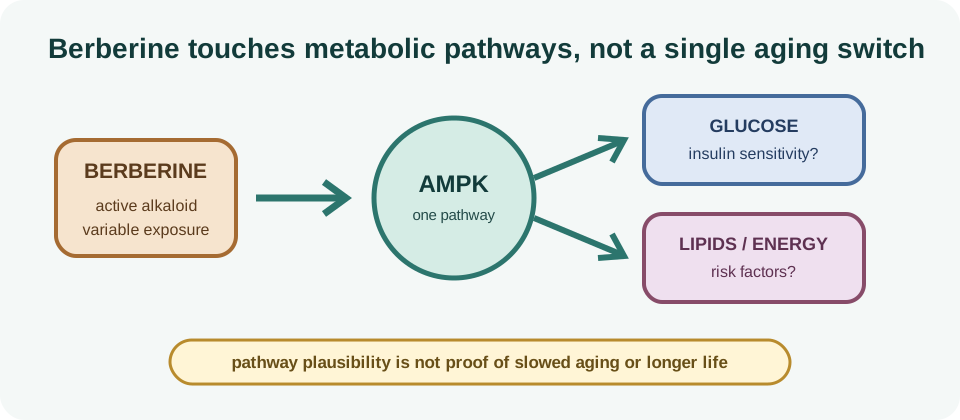
Longevity discussions often begin with an attractive chain: berberine influences AMPK, AMPK is involved in nutrient sensing, and nutrient-sensing pathways are relevant to aging. That chain is a hypothesis, not a lifespan result. A pathway can be important while the dose, tissue exposure or clinical effect of an oral product remains uncertain.
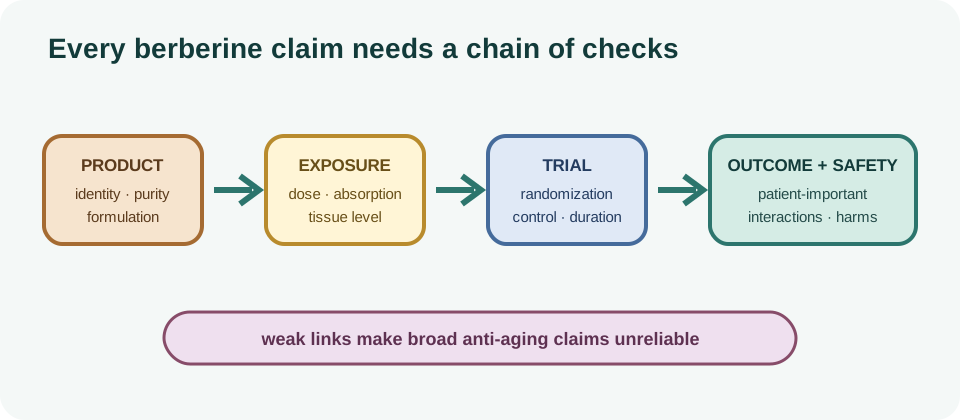
Berberine also has low oral bioavailability, but low systemic exposure does not mean low biological activity or low interaction risk. Gut-local effects, metabolites, transporter effects and concentrated exposure in susceptible people can still matter. The product, dose studied, formulation and co-medications must remain visible in any interpretation.
AMPK is a plausible mechanism, not an aging endpoint
AMPK is an energy-sensing kinase that responds to cellular energy balance and coordinates pathways involving glucose uptake, lipid metabolism and mitochondrial adaptation. Berberine is reported to influence AMPK-related signaling, along with other pathways that may affect metabolism and inflammation. These findings help explain why researchers study the compound.
They do not show that supplementing berberine safely reproduces every effect of exercise, caloric restriction or metformin. Pathways operate in tissue and dose contexts, and changing one node can have countervailing effects elsewhere. A cellular marker or animal result cannot be promoted into a human geroprotector label without controlled outcomes.
The AMPK and aging page describes the pathway-level evidence, while the metformin and longevity page keeps a prescription drug and a supplement in separate evidence categories. Berberine may be a useful metabolic research compound even if the longevity hypothesis never proves clinically useful.
| Claim level | What is being measured | What remains unresolved |
|---|---|---|
| Mechanism | AMPK, glucose, lipid or inflammatory signaling. | meaningful benefit in people. |
| Risk factor | glucose, insulin resistance, lipid, weight or blood pressure. | slower biological aging or fewer clinical events. |
| Clinical outcome | symptoms, disease events, function or quality of life. | generalization across populations and products. |
| Longevity | healthspan, disability or survival. | no established human evidence. |
Human evidence for glucose and insulin resistance
Human berberine trials have examined fasting glucose, glycated hemoglobin, insulin resistance and related metabolic outcomes, especially in type 2 diabetes and metabolic-syndrome populations. Some studies report improvements, but trial quality, formulation, background treatment, duration and baseline risk vary. A risk-factor effect can be clinically relevant without being evidence that aging has been slowed.
The 2025 overview of 54 systematic reviews found associations across many chronic-disease outcomes. Its central caution is as important as its breadth: only one included review was rated high quality by AMSTAR-2, while most were low or very low quality, and many outcomes received low-certainty GRADE ratings. A large review count is not the same as a large independent evidence base because the same primary trials can be reused across reviews.
For diabetes, the clinical question is glucose management under medical supervision. Berberine should not replace prescribed treatment, monitoring or individualized care. The longevity question is separate and remains unanswered: no glucose improvement has been validated as proof that berberine extends life.
Lipids, obesity and blood pressure
Berberine has also been studied for cholesterol, triglycerides, body weight, waist measures, blood pressure and fatty-liver-related outcomes. Effects are often modest and heterogeneous. They may be more relevant in people with a defined metabolic problem than in healthy adults seeking an anti-aging effect.
A 2026 systematic review and meta-analysis focused on obesity indices. That synthesis can clarify average changes in weight-related measures, but it cannot convert those changes into a lifespan claim. Weight, waist circumference and lipid values are intermediate outcomes. Their importance depends on magnitude, durability, adverse effects and whether they improve disease events or function.
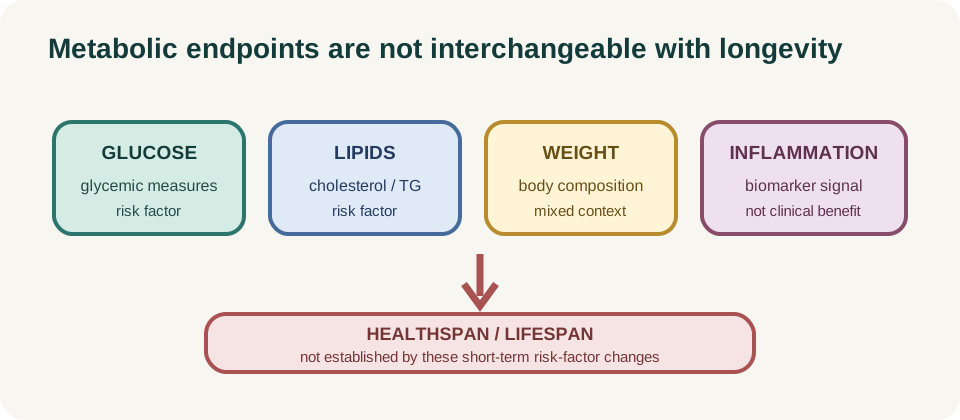
Risk-factor improvement is worth studying because it can reduce conventional disease risk. It is not proof that a compound modifies the fundamental rate of aging. The GLP-1 and longevity page uses the same boundary for weight-loss medicines: metabolic benefit and geroscience benefit are not interchangeable labels.
How to read the current evidence without overclaiming
The 2025 overview of systematic reviews is useful because it maps the breadth of berberine research across chronic conditions. It identified 54 systematic reviews and associations with many outcomes, including diabetes, cardiovascular disease, dyslipidemia, obesity, metabolic syndrome, gastrointestinal disorders and fatty-liver-related outcomes. That breadth shows sustained scientific interest, but it does not mean that every outcome has the same certainty or that the reviews represent independent evidence.
Methodological quality was a major limitation. Only one review in the overview was rated high quality with AMSTAR-2, while many were rated low or very low. The authors also found overlap among primary studies, meaning multiple reviews may repeat the same small trials. GRADE ratings were frequently low. A headline such as “berberine improves dozens of outcomes” should therefore be translated into a more careful statement: some trials suggest benefits in selected chronic-disease endpoints, but confidence varies and the evidence does not establish a longevity effect.
The 2026 obesity meta-analysis provides a more focused synthesis of randomized evidence for weight-related indices. Its question is narrower and potentially useful for estimating average effects on body weight or related measures. But a meta-analysis does not remove heterogeneity in products, doses studied, treatment length, background diet, baseline body size or adherence. A statistically significant average change can be small, short-lived or clinically uncertain. It must be separated from outcomes such as diabetes complications, cardiovascular events, disability and survival.
Effect size also needs context. A mean difference describes an average, not a guaranteed response for an individual. Confidence intervals show precision, while heterogeneity shows how consistently the studies point in the same direction. Publication bias, selective reporting and poor blinding can make an apparent benefit look larger. The most persuasive future work would use standardized preparations, credible placebo controls, prespecified primary outcomes, transparent adverse-event reporting and long enough follow-up to test durability.
For aging research, the key question is whether berberine changes a meaningful trajectory rather than one risk factor. A trial could measure glucose, lipids and inflammation as mechanisms, but it would need functional, disease or survival outcomes to support a geroprotective claim. A lower weight or improved glycated hemoglobin may be valuable care in its own right; it should not be relabeled as biological-age reversal.
- check whether the same primary trials appear across reviews;
- separate statistical significance from clinical importance;
- inspect heterogeneity, confidence intervals and publication bias;
- keep products, doses studied and populations explicit;
- require outcomes beyond metabolic risk factors for longevity claims.
What the 2025 evidence overview really tells us
The overview of systematic reviews is useful as a map of where berberine has been studied. It reported associations across cardiovascular, diabetes, gastrointestinal, metabolic, obesity and other outcomes. It also documented overlap among reviews and widespread limitations in methods and reporting.
This is a breadth-versus-quality problem. Multiple reviews can create an impression of overwhelming evidence when they share the same small or biased primary studies. The answer is not to ignore all findings; it is to lower confidence, identify the better-controlled trials and keep the clinical population attached to the result.
Future work should use standardized products, credible placebo controls, transparent randomization, clinically meaningful endpoints and longer follow-up. It should report adverse effects and interactions as carefully as laboratory benefits. A supplement with broad pharmacology cannot be evaluated only by its most favorable biomarker.
Why metabolic improvement is not slowed aging
Berberine can influence risk factors that are associated with age-related disease. That is a plausible reason to study it in people with diabetes, dyslipidemia or metabolic syndrome. But aging is a multidimensional process involving immune, vascular, musculoskeletal, neural, epithelial and other systems. Improvement in one domain does not establish a global change in aging rate.
A geroprotective claim needs a prespecified target population, an intervention that can be reproduced, adequate follow-up and outcomes such as function, disability, disease events, quality of life or survival. Biomarkers can help explain a result, but they cannot substitute for it. The longevity clinical-trials hub explains why a metabolic trial and a geroscience trial are not the same design.
There is currently no clinical evidence that berberine extends lifespan. Animal, cellular and pathway studies can motivate research, but they should not be presented as human longevity proof.
Is berberine “natural metformin”?
The comparison is scientifically loose. Metformin is a standardized prescription medicine with regulated manufacturing, a defined clinical indication, established dosing conventions and a large safety-monitoring system. Berberine supplements vary in purity, salt, formulation, labeling and batch quality. The two compounds may influence overlapping pathways without having the same pharmacokinetics, potency or clinical evidence.
Metformin itself is being studied for aging, but its geroscience status is still distinct from its approved uses. Berberine cannot borrow metformin’s clinical legitimacy by analogy. Conversely, a metformin-related mechanism does not automatically make a retail berberine product a safe substitute.
People with diabetes, cardiovascular disease, kidney disease or polypharmacy need a clinician’s review. Self-switching between a prescribed medicine and a supplement can create loss of control, duplicated effects or unexpected interactions. Natural is not a pharmacology category.
Bioavailability, formulation and product variability
Berberine is poorly absorbed orally, and commercial products attempt to alter exposure through salts, complexes or delivery systems. A higher blood concentration may increase target engagement, but it may also change adverse effects and interaction potential. “Enhanced absorption” should therefore be treated as a pharmacokinetic claim, not an effectiveness guarantee.
Standardized clinical preparations and variable retail supplements are not interchangeable. A trial using a named product, laboratory assay and defined dose studied cannot validate every capsule sold under the same ingredient name. Labels may also include other botanicals or metabolic ingredients that complicate attribution.
When evaluating a study, record the chemical form, assay, dose studied, treatment length, food instructions, adherence, comparator and adverse-event monitoring. Product quality is part of the intervention, not a footnote.
Gastrointestinal effects and drug interactions
Gastrointestinal symptoms are among the most practical limitations of berberine. Nausea, constipation, diarrhea, abdominal discomfort and appetite changes can affect adherence and can be mistaken for a sign that a product is “working.” They can also be more consequential in older adults, people with frailty or people taking medicines with a narrow therapeutic window.
Berberine and Berberis extracts have been reviewed for effects on cytochrome P450 enzymes and transporters such as P-glycoprotein. In vitro, animal and pharmacokinetic findings do not all predict a clinically important interaction, but they justify caution. Low oral bioavailability does not eliminate interaction risk because intestinal enzymes and transporters can be affected.
Particular concern is appropriate with cyclosporine and other narrow-therapeutic-index medicines, anticoagulants, glucose-lowering drugs, blood-pressure medicines, immunosuppressants and medications metabolized through affected pathways. The exact risk depends on the drug, dose, formulation, patient and monitoring. A pharmacist or clinician should review the complete medication list before use, including over-the-counter products and occasional medicines.
| Question | Why it matters | Safe interpretation |
|---|---|---|
| Which medicines are taken? | enzymes and transporters can alter exposure. | check the full list with a pharmacist. |
| Is the drug narrow-index? | small concentration changes can matter. | avoid unsupervised supplementation. |
| Is glucose already treated? | combined effects may increase low-glucose risk. | do not change therapy without monitoring. |
| What product is being used? | formulation and quality alter exposure. | trial evidence may not transfer to retail products. |
Evidence verdict: metabolic supplement, geroscience hypothesis
Berberine has a credible metabolic rationale and human literature for glucose, lipids, weight-related measures and other risk factors. The 2025 evidence overview is broad but also reports major quality limitations and overlap. The 2026 obesity meta-analysis may refine weight-related estimates, but neither synthesis establishes slowed aging.
AMPK and related mechanisms are hypotheses. They should not be confused with a validated aging endpoint, and no clinical evidence shows that berberine extends lifespan. The compound’s low bioavailability, variable formulations, gastrointestinal effects and interaction potential make simplistic “natural metformin” messaging particularly unhelpful.
The appropriate next step is better controlled research: standardized preparations, clinically relevant populations, transparent safety monitoring, long enough follow-up and outcomes beyond surrogate metabolic markers. Until then, the responsible conclusion is metabolically interesting, clinically context-dependent and longevity-unproven. Follow the inflammaging page and the supplements hub for evidence-ranked updates, and review future claims against randomized human outcomes.
- separate AMPK plausibility from human aging outcomes;
- interpret glucose, lipid and weight effects as risk-factor evidence;
- keep standardized trials distinct from variable retail products;
- treat low bioavailability as different from low interaction risk;
- require medical review for polypharmacy or narrow-index drugs.