Definition and history of inflammaging
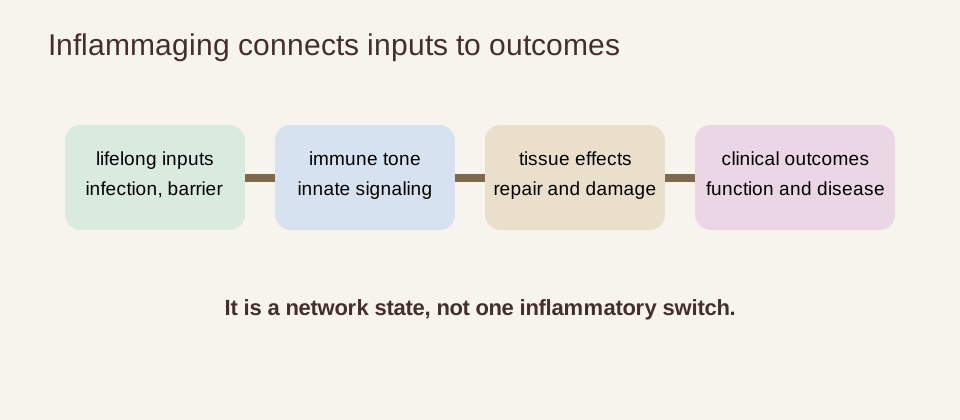
Inflammaging is commonly used for a persistent, low-grade inflammatory state that becomes more common with age. The concept emerged from observations that older adults often have higher circulating inflammatory signals and that chronic inflammation is linked with cardiovascular disease, frailty, diabetes, neurodegeneration and other age-related conditions.
The term is useful when it describes a pattern, but it can mislead when treated as a diagnosis. People of the same chronological age can have different infection histories, adiposity, physical activity, sleep, medication exposure, socioeconomic conditions, tissue damage and immune responses. The 2025 Nature Aging review emphasizes this heterogeneity and frames inflammaging as an individual trajectory shaped by lifelong exposures.
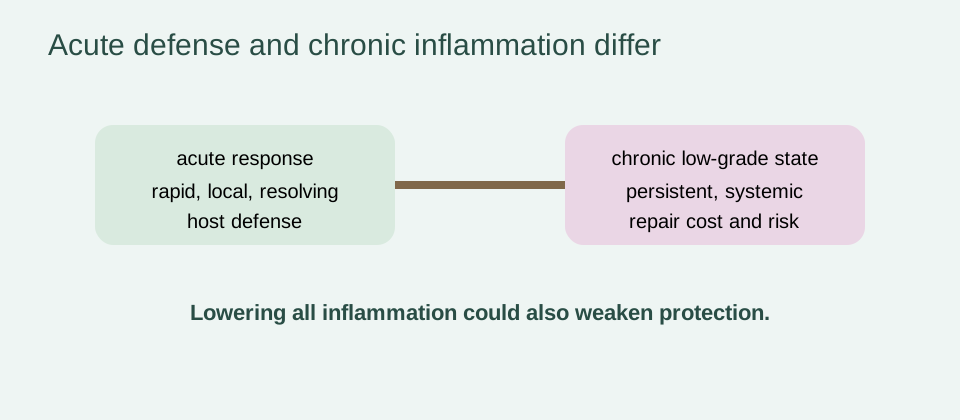
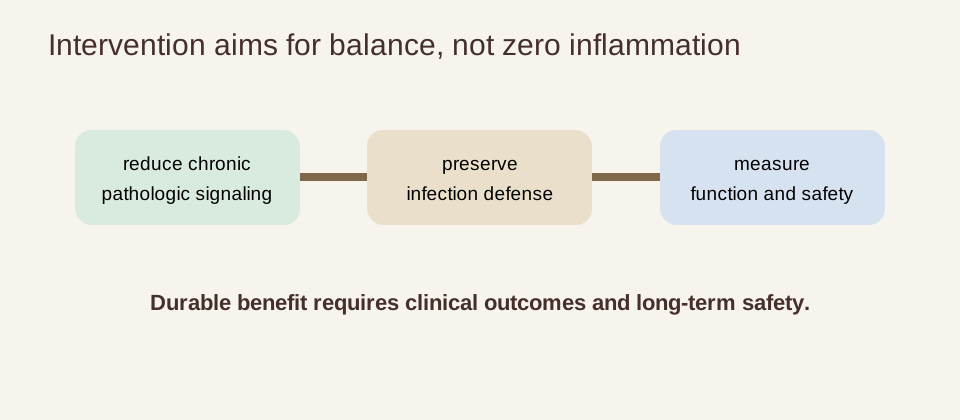
Normal immune activation is protective. Inflammation helps control infection, repair injury and coordinate adaptation. The geroscience question is therefore not how to eliminate inflammation, but how to reduce maladaptive chronic signaling while retaining rapid, effective defense.
Why aging is not simply generalized inflammation
Inflammation can be local or systemic, acute or chronic, adaptive or damaging. An older person may have low-grade vascular inflammation, impaired vaccine response and an exaggerated response to another stimulus at the same time. These are not captured by one universal “inflammation level.”
Inflammatory signals also have different sources and kinetics. A transient rise after exercise or vaccination is not equivalent to persistent elevation during untreated infection or metabolic disease. A low value can be reassuring in one setting and uninformative in another. Timing, symptoms and clinical context matter.
Age-related immune change is often discussed alongside immunosenescence. Reduced thymic output, altered innate signaling and less coordinated adaptive responses can coexist with basal inflammatory activation. These processes may interact rather than represent opposite ends of one scale. The immune-aging page covers that relationship.
That interaction creates a practical tradeoff: an intervention that reduces one inflammatory signal may leave immune response, vaccine response or tissue repair unchanged. Research should therefore measure both chronic inflammatory tone and protective immune function, rather than treating a lower marker as a universal success.
Core biomarkers and their limits
C-reactive protein, or CRP, is an acute-phase protein produced in response to inflammatory signaling. Interleukin-6 and tumor-necrosis-factor-family signals participate in immune and metabolic regulation. Composite panels can add information, but every marker has biological variation, assay variation and disease-specific meaning.
A raised CRP can reflect infection, injury, obesity, autoimmune disease, smoking, periodontal disease or another active process. A normal CRP does not exclude tissue-specific inflammation or an immune defect. Repeated measurements may improve signal, but they do not turn a marker into a validated biological-age test.
Inflammatory clocks and composite scores are research tools that combine many features to estimate an aging or disease-related target. They may predict multimorbidity or frailty in a study population. Prediction is not proof that lowering the score will lower risk. The biological-age test guide explains this surrogate boundary.
Interpretation should also consider whether the sample was taken during an infection, after exercise, during a medication change or after a recent procedure. A single result may be a snapshot of a temporary state. Longitudinal studies can improve inference, but repeated observation still does not replace randomization when the claim is that lowering inflammation improves aging.
| Measure | Typical use | Do not infer alone |
|---|---|---|
| CRP | systemic acute-phase signal | whole-body biological age or cause |
| IL-6 | immune and metabolic signaling | that chronic inhibition is universally beneficial |
| TNF-family signal | inflammatory pathway activity | one disease mechanism in every person |
| Composite inflammatory clock | risk or aging-pattern prediction | that lowering the score improves survival |
Senescent cells and the SASP
Cellular senescence is a durable growth-arrest state that can arise after DNA damage, oncogene activation, replicative stress or other insults. Senescent cells can secrete inflammatory and remodeling factors collectively called the senescence-associated secretory phenotype, or SASP. The composition of the SASP varies by cell type and stimulus.
Senescent cells may help prevent damaged cells from dividing and can participate in wound repair. Persistent accumulation, however, may alter nearby cells and tissue function. This is why senescence is connected to inflammaging without being identical to it.
The cellular-senescence page and human senolytics evidence page separate mechanistic plausibility from human efficacy. Senolytics have not proven systemic anti-inflammaging benefit in healthy humans, and removing cells indiscriminately could create risks.
Innate immune activation, NLRP3 and damaged-DNA signaling
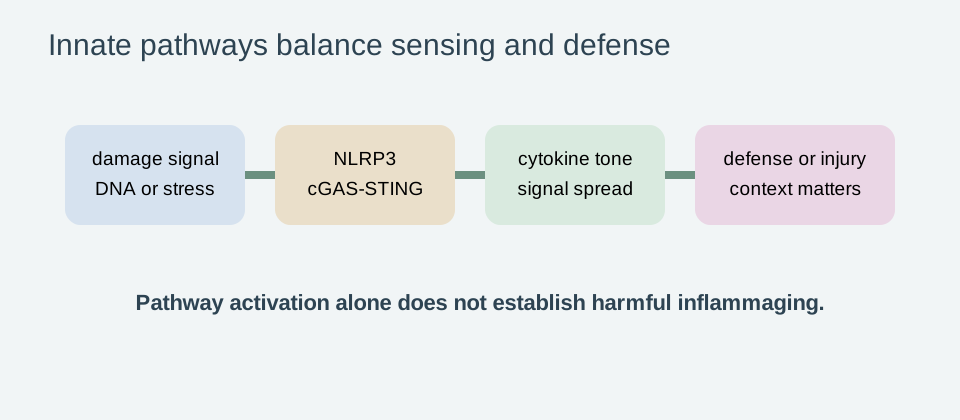
The innate immune system detects danger signals and can activate inflammatory programs such as NF-κB and the NLRP3 inflammasome. NLRP3 responds to diverse cellular stressors and can promote maturation of inflammatory cytokines. The pathway is therefore a plausible node connecting metabolic stress, damaged organelles and tissue injury.
cGAS–STING signaling detects DNA in the wrong cellular compartment and can connect genomic damage, mitochondrial stress and innate immunity. These pathways are valuable research targets, but their protective roles matter. Excess inhibition could impair pathogen defense or tumor surveillance.
A 2026 review of inflammaging beyond biomarkers discusses these nodes alongside JAK/STAT and other signaling routes. Reviews organize mechanisms; they do not demonstrate that an over-the-counter inhibitor safely changes human aging.
Mitochondrial dysfunction, adipose tissue and metabolic inflammation
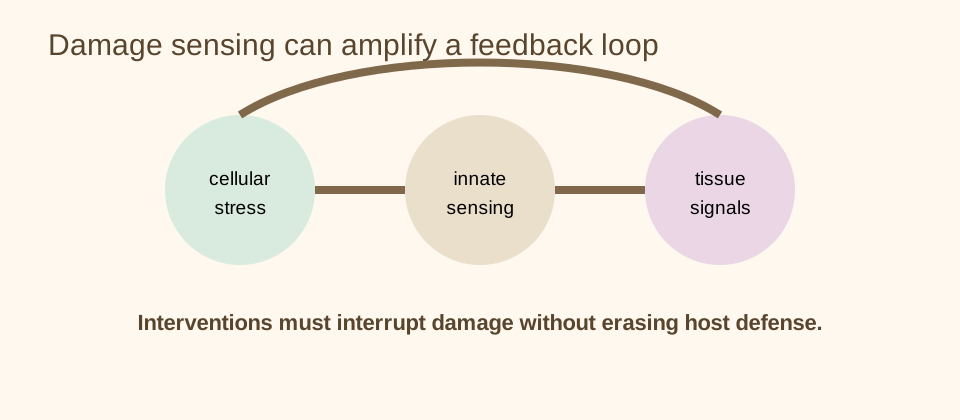
Damaged or stressed mitochondria can release signals known as danger-associated molecular patterns, or DAMPs. These signals can activate innate immunity and amplify local or systemic inflammation. Mitochondrial dysfunction is therefore a plausible upstream contributor to inflammaging, but it is not the only one. The mitochondrial dysfunction page describes the wider network.
Adipose tissue is an endocrine and immune organ. Excess visceral adiposity can alter adipokines, recruit immune cells and increase metabolic inflammation. Weight, insulin resistance, sleep, diet and physical activity can move together, making it difficult for observational studies to assign the effect to one cytokine or one tissue.
Metabolic therapies may lower inflammatory signals while treating diabetes or obesity. That can be clinically important. It still does not establish a general anti-aging effect, and treatment decisions should follow the indication, benefits, adverse effects and patient context.
Microbiome, barrier integrity and environmental exposures
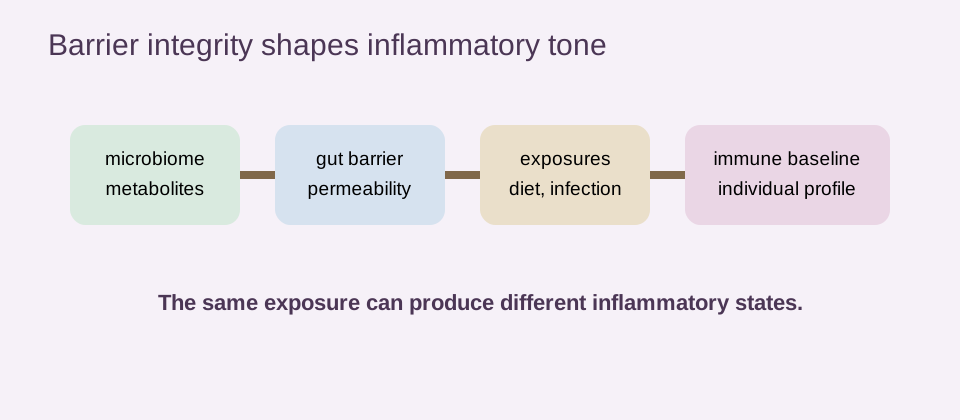
The gut barrier and microbiome can influence immune tone through microbial metabolites, epithelial integrity and immune education. Age, diet, medication, infection and illness can change the microbial ecosystem. Associations between microbial composition and inflammation are difficult to interpret because diet and health status affect both.
Barrier disruption is not limited to the gut. Vascular, pulmonary and other tissue barriers can change with age and disease. Pollution, smoking, chronic infection and socioeconomic stress can add inflammatory exposures. The 2025 precision-inflammaging framework explicitly emphasizes environmental and social factors rather than reducing the phenotype to a supplement deficiency.
Probiotics, fiber, dietary patterns and other interventions may have defined health effects, but a microbiome change is not proof of reduced biological aging. Trials need a clear intervention, a reproducible microbial or inflammatory endpoint and a patient-important outcome. Results should also report antibiotic exposure, baseline diet, gastrointestinal disease and adherence because each can alter the measured ecosystem.
Clonal hematopoiesis and interacting immune aging
Clonal hematopoiesis occurs when blood-forming cells acquire mutations that allow a clone to expand without meeting the criteria for a blood cancer. Some clones are associated with inflammatory signaling and higher risks of cardiovascular disease or hematologic progression. This makes clonal hematopoiesis a possible contributor to age-related inflammatory heterogeneity.
It is not a universal explanation for inflammaging. Clone type, size, tissue context, smoking, metabolic disease and other factors influence risk. A person’s inflammatory profile can also reflect immune aging, infection history, senescent cells and tissue damage at the same time.
Immunosenescence and inflammaging should therefore be studied together. Lowering inflammation without restoring immune competence could leave an older adult more vulnerable to infection or weaken vaccine responses. The immune-aging evidence map keeps these tradeoffs visible.
Clonal hematopoiesis is also a reminder that precision may require genetic and cellular profiling. Two people with the same CRP can have different clone burdens, immune histories and causes of inflammation, so the same anti-inflammatory strategy may not have the same expected benefit or risk.
Precision-inflammaging frameworks and workshop priorities
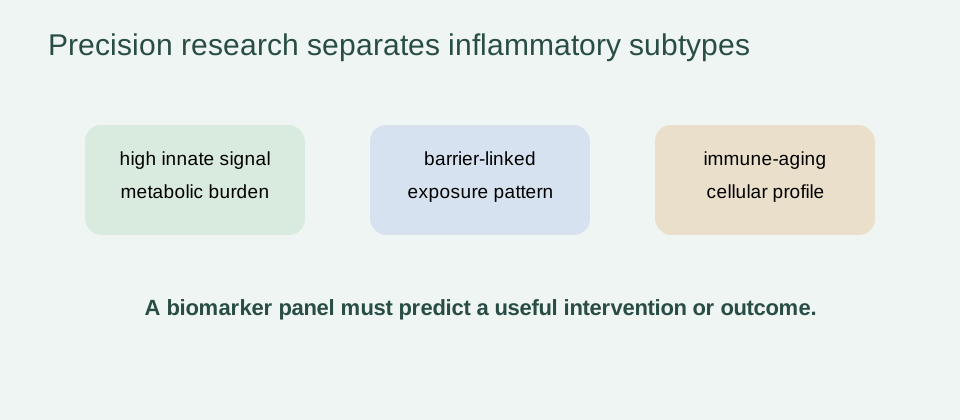
The 2025 Nature Aging review proposes precision metrics and interventions because inflammatory aging is not uniform. An inflammatory clock may capture one risk profile better than another, but it still requires calibration, validation and proof that changing it changes outcomes.
An NIH/NIA workshop on mechanisms, markers and intervention strategies similarly frames inflammaging as a research program spanning molecular mechanisms, measurement and translation. The 2026 Journal of Immunology workshop report adds a current synthesis of mechanisms and translational gaps. These sources support a cautious agenda rather than a single universal therapy. The research hub tracks how emerging evidence is refreshed, while longevity clinical-trial guidance keeps biomarker findings separate from patient-important outcomes.
Priority research includes longitudinal multi-omic measurement, tissue-aware biomarkers, immune-function testing, causal genetics, subgroup-specific trials and active monitoring of infection and cancer outcomes. Better measurement should narrow interventions, not justify indiscriminate immune suppression.
Interventions and why lower CRP is not proof of slower aging
Intervention categories include treatment of inflammatory disease, weight and metabolic management, physical activity, dietary patterns, sleep improvement, senotherapeutics and experimental pathway modulation. A disease therapy should be judged by its indication and clinical outcomes. A geroscience therapy needs evidence that it improves function, disease burden or survival across an appropriate population.
CRP can fall when an intervention works through many routes, including reduced adiposity or treated infection. That is potentially useful, but the marker may not mediate the clinical benefit. A drug can lower CRP and cause harm elsewhere, while a lifestyle intervention can improve function without producing a large biomarker change.
Chronic NSAID or immunosuppressive use should not be adopted for longevity. These medicines can carry gastrointestinal, renal, cardiovascular or infection risks, and immune suppression can impair cancer surveillance. The omega-3 evidence page, metformin page and GLP-1 page show why adjacent interventions need outcome-specific evidence.
For the same reason, a lifestyle intervention should be evaluated as a package rather than sold as a cytokine-lowering trick. Better sleep, physical activity, diet, smoking cessation and treatment of diagnosed disease can improve several pathways together, but the relevant endpoint remains function and health, not a single laboratory number.
Evidence verdict and research priorities
Inflammaging is a useful convergence concept for chronic low-grade inflammation, immune dysregulation, senescence, mitochondrial stress, adipose dysfunction, barrier change and environmental exposure. It is not one disease, one cytokine or one inevitable state of normal aging. Its usefulness depends on keeping those upstream causes visible rather than letting the label replace diagnosis.
CRP, IL-6, TNF-family signals and inflammatory clocks can describe risk or biology, but none is a validated stand-alone inflammaging test. Senescent-cell, NLRP3, cGAS–STING, metabolic and microbiome findings help identify mechanisms while preserving the distinction between association, target engagement and clinical efficacy.
The responsible conclusion is precision anti-inflammaging research is promising, while a universal anti-inflammatory longevity therapy is unproven. Future studies should identify the upstream cause, measure immune competence as well as inflammatory tone, select tissue-aware biomarkers, and report function, disease events, infection, cancer surveillance and survival where appropriate. This is a higher bar than showing that a single cytokine fell after an intervention, with transparent uncertainty and pre-registered analysis plans for each studied population.
- do not label all inflammation harmful;
- do not use CRP as a biological-age diagnosis;
- separate disease treatment from aging treatment;
- avoid chronic NSAID or immunosuppressive self-treatment;
- report protective immune tradeoffs with every intervention.