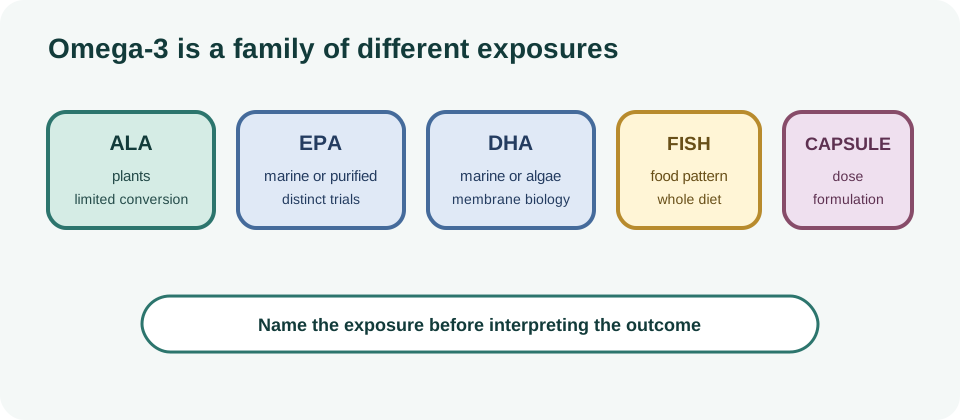
EPA, DHA and ALA are not interchangeable
EPA and DHA are long-chain marine omega-3 fatty acids. ALA is a plant omega-3 found in foods such as flax, chia, walnuts and some vegetable oils. The body can convert ALA into EPA and DHA, but conversion is limited and variable. A dietary pattern rich in ALA is therefore not automatically equivalent to a capsule supplying EPA and DHA.
EPA and DHA also behave differently in membranes and signaling pathways. EPA contributes to a family of lipid mediators and is the active ingredient in some prescription products. DHA is especially abundant in neural and retinal membranes and has its own tissue-distribution questions. A mixed EPA/DHA supplement cannot be assumed to reproduce a purified-EPA trial.
The amount on a fish-oil label may describe total oil rather than the combined EPA and DHA content. Concentration, oxidation, triglyceride or ethyl-ester form, capsule stability and adherence all influence the intervention. Before interpreting a result, identify the actual fatty acid exposure rather than using “omega-3” as if it were a standardized drug.
Fish, blood omega-3 and supplements are three questions
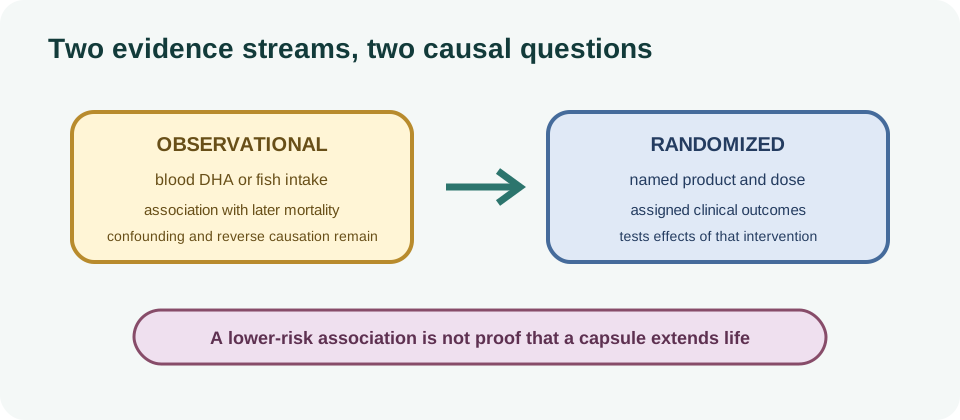
Fish consumption is a food-exposure question. It includes protein, minerals, vitamin D, selenium, iodine and a broader dietary pattern, while also replacing another food. A blood omega-3 measure is a biomarker question: it reflects intake, absorption, metabolism, tissue exchange and time since the last exposure. A supplement trial is an intervention question in which a named preparation is assigned against a comparator.
These streams can point in the same direction without being causally identical. People who eat fish may exercise more, smoke less, have higher income, use different cooking methods or replace processed meat with seafood. People with illness may change their diet or start supplements. A blood-level association can therefore reflect health status, behavior, reverse causation or a combination of factors.
Randomized supplementation can address some confounding, but it may test a dose and formulation that do not resemble usual diet. It can also recruit a population whose baseline risk, statin use and background diet differ from a general wellness audience. The supplements hub keeps these evidence questions distinct.
Why omega-3 is linked to longevity biology
Omega-3 fats are structural components of cell membranes and substrates for lipid mediators involved in inflammation resolution, vascular function and immune signaling. EPA and DHA can influence triglyceride metabolism and the physical properties of membranes. These mechanisms provide a plausible connection to cardiovascular health and aging-related disease.
Inflammation, vascular disease, arrhythmia, neurodegeneration and muscle function all matter to healthy aging, but a pathway connection does not establish a net lifespan effect. One intervention may reduce triglycerides while increasing a rhythm risk in a particular population. A lipid mediator may change without reducing disability. Mechanisms help explain results; they do not replace outcome trials.
The inflammaging page explains why lower inflammatory tone is not always equivalent to better resilience. The body uses inflammatory signals for infection control, repair and adaptation. The desired clinical effect is not “zero inflammation,” but a healthier balance in a defined context.
| Term | Typical source | Do not assume |
|---|---|---|
| ALA | flax, chia, walnuts and plant oils | equivalent EPA/DHA exposure |
| EPA | marine foods or purified products | same outcome as mixed fish oil |
| DHA | marine foods, fish oil or algae products | mortality association is causal |
| Fish oil | variable EPA/DHA supplement | equivalent to a prescription formulation |
Observational omega-3 status and mortality
A 2024 analysis of circulating DHA in the UK Biobank reported inverse associations between higher DHA levels and all-cause, cardiovascular, cancer and other-cause mortality. The investigators also combined the findings with a pooled analysis of 17 prospective cohorts. Such large prospective evidence is valuable because it tests a measured biological exposure against later outcomes.
It remains observational. People with higher DHA may differ in diet, health behavior, socioeconomic conditions, medication, physical activity and illness burden. Blood levels can be influenced by metabolic health and prior disease, not just by a supplement. Even careful statistical adjustment cannot guarantee that every relevant confounder was measured or correctly modeled.
The correct conclusion is that higher circulating DHA status is associated with lower mortality in these cohorts. It is not that raising DHA with a capsule has been proven to extend life. The distinction becomes especially important when the randomized supplement literature is mixed.
Randomized cardiovascular evidence varies by formulation and risk
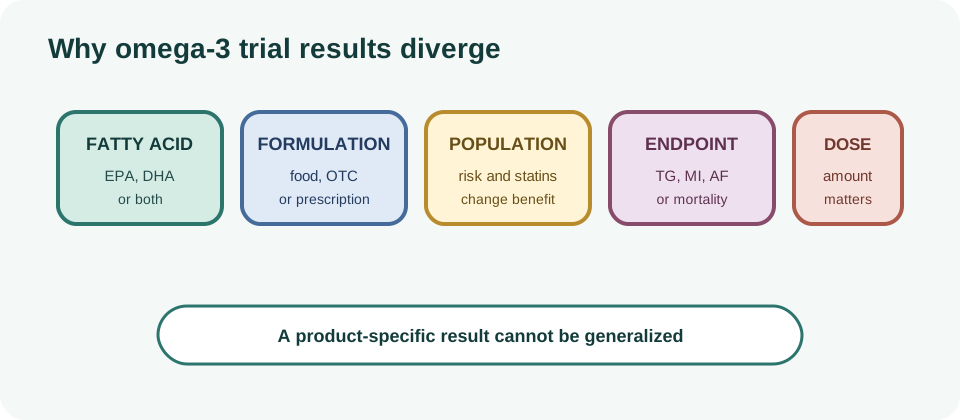
Randomized omega-3 trials have produced different results across primary prevention, established coronary disease, high triglycerides, recent myocardial infarction and heart failure. Background statin use, comparator oil, dose, duration, adherence and the exact EPA/DHA formulation all matter. A favorable result from one prescription product cannot be assigned to every over-the-counter fish-oil capsule.
A meta-analysis of randomized trials in coronary artery disease provides disease-specific context, but it does not create a general longevity effect. Other large syntheses have found little or no meaningful reduction in broad cardiovascular events or all-cause mortality for common supplementation strategies. The most relevant interpretation depends on whether the question is triglyceride lowering, cardiovascular event prevention, secondary prevention or lifespan.
Meta-analysis can increase precision while still combining unlike interventions. Heterogeneity is not a technical footnote when the products and populations differ. It is a signal that the average result may not apply to a particular formulation or patient group.
| Feature | Examples | Interpretation effect |
|---|---|---|
| Fatty acid | EPA, DHA, EPA+DHA or ALA | changes biology and outcome expectations |
| Preparation | fish oil, ethyl ester, prescription EPA, food | changes dose, purity and exposure |
| Population | healthy adults, CAD, high triglycerides, post-MI | changes baseline risk and absolute benefit |
| Endpoint | triglycerides, MI, AF, mortality or cognition | one positive endpoint does not prove another |
EPA-only versus EPA+DHA
Recent cardiovascular meta-analyses have found different patterns for purified EPA and mixed EPA/DHA therapies. A 2025 analysis reported more robust cardiovascular-mortality reduction with purified EPA and only a modest reduction with mixed EPA/DHA when compared with standard preventive therapy. The finding is formulation-specific and should not be used to market ordinary fish oil as equivalent to a prescription EPA product.
Why products differ is still debated. EPA and DHA have different membrane and lipid effects, and the comparator, dose, statin background and trial population may influence the result. A meta-analysis can identify a pattern without proving one universal mechanism. Prescription indication and regulatory quality also matter.
The practical rule is simple: do not merge EPA-only outcome trials with mixed fish-oil evidence. If a product is being discussed for cardiovascular risk, the exact ingredient, dose and clinical indication must be named. Longevity claims require an even higher bar because mortality benefits cannot be inferred from a formulation’s effect on triglycerides or one vascular endpoint.
Mortality findings in coronary-disease meta-analyses
Mortality is a patient-important outcome, but it is difficult to interpret when trials differ in disease severity, background care and formulation. A coronary-disease meta-analysis can show whether the intervention changed deaths in people with established disease. It cannot establish that a healthy person without coronary disease will live longer after taking the same nominal dose.
Even when a pooled analysis reports a statistically significant cardiovascular effect, absolute benefit depends on baseline risk. A high-risk patient may experience a different benefit-risk balance from a low-risk adult. The same trial can also show no effect on all-cause mortality while changing a narrower endpoint. “Cardiovascular benefit” and “longer life” should never be used as synonyms.
The most defensible summary is that omega-3 has clinically relevant, indication-specific cardiovascular evidence. It does not have a general-purpose human lifespan-extension result. The longevity clinical-trials page explains why mortality, function and surrogate outcomes must be reported separately.
The DO-HEALTH 2025 epigenetic-aging analysis
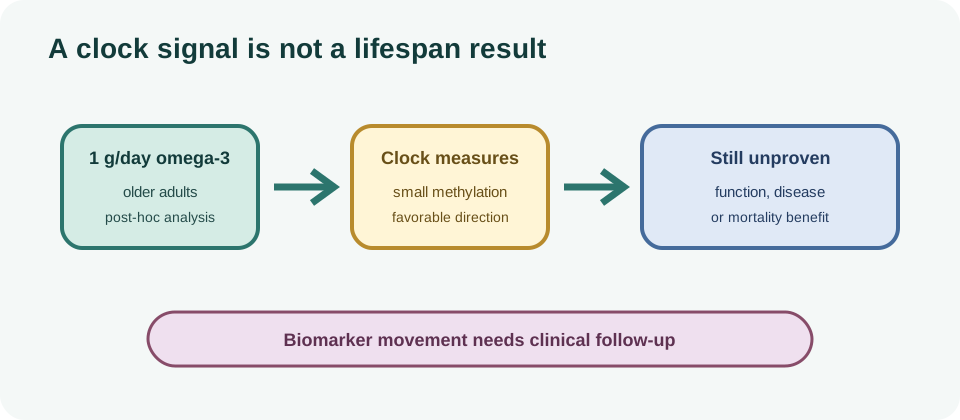
The DO-HEALTH analysis examined 777 older adults from a randomized trial and assessed four next-generation DNA-methylation measures over three years. Participants had been assigned to omega-3 at 1 g/day, vitamin D, a home exercise program or combinations. The published analysis reported that omega-3 alone slowed PhenoAge, GrimAge2 and DunedinPACE, while the interventions had additive effects on PhenoAge.
This is an important aging-biomarker result because it connects a randomized intervention framework with repeated molecular measurements. But the clock analysis was post hoc, and the study was not designed to establish that omega-3 extended lifespan. A methylation clock is a composite biomarker with a model-specific target. A small change in its rate does not equal a literal number of extra years.
Interpretation also requires attention to magnitude, confidence intervals, the four-clock pattern and the original clinical outcomes. A clock can respond without predicting a meaningful improvement in disability, cognition, falls, cardiovascular events or death. The biological-age test guide and epigenetic-aging page explain why biomarker responsiveness is not the same as surrogate validation.
Falls, frailty, cognition and other aging outcomes
Omega-3 has been studied in falls, frailty, cognition, mood, muscle and physical performance, but results are not uniform. The intervention may interact with exercise, protein intake, vitamin status, baseline deficiency, neurovascular disease and medication. A study in older adults with low intake or specific risk may not apply to a healthy general population.
Functional outcomes deserve priority over broad anti-aging language. Walking speed, grip strength, falls, activities of daily living and cognition are meaningful, but each requires a suitable design and enough follow-up. A short change in a questionnaire or inflammatory marker cannot establish prevention of disability or dementia.
The brain-aging page and CoQ10 evidence page illustrate the same principle: a plausible tissue mechanism must be tied to an outcome that matters and replicated in the population where the claim is made.
Atrial fibrillation is an important safety signal
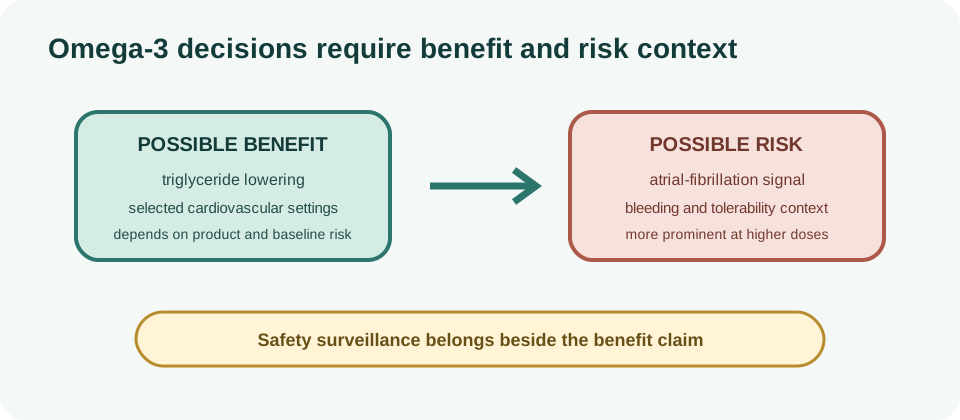
Atrial fibrillation is a common arrhythmia that can cause symptoms and increase stroke risk. Randomized omega-3 cardiovascular trials have raised concern that AF risk may increase with treatment, particularly at higher doses and in people who already have substantial cardiovascular risk.
The latest updated meta-analysis included 35 trials and 114,592 individuals. Its conclusion was that higher-dose EPA/DHA treatment was associated with increased AF risk in higher-risk populations, while the signal was not apparent in the same way at lower doses. The precise absolute risk depends on baseline risk, dose, formulation and how AF was detected. A pooled relative-risk statement is not a personalized prediction.
Earlier meta-analyses also reported a dose-response pattern. Together, the evidence supports making AF visible whenever high-dose omega-3 is discussed. It does not mean every fish meal or low-dose supplement causes AF, nor does it erase a clinically justified prescription indication. It means that dose and context belong in the benefit-risk conversation.
- identify the EPA and DHA amounts, not only total oil;
- check whether the person has cardiovascular disease or prior AF;
- review anticoagulants, antiplatelets and other medicines;
- separate prescription indications from general supplement claims.
Dose, baseline risk and medication considerations
“Omega-3 dose” should mean the amount of EPA and DHA, not merely the weight of fish oil. Higher-dose prescription regimens are not interchangeable with a general supplement, and a dose studied for triglyceride lowering is not a general wellness target. The appropriate exposure depends on the indication and a clinician’s assessment.
Omega-3 can also matter for bleeding risk, especially alongside anticoagulants or antiplatelet medicines, although the clinical effect varies by dose and context. Product oxidation, contaminants, gastrointestinal effects and adherence can affect tolerability. People with known AF, bleeding disorders, upcoming surgery or complex medication regimens should seek individualized clinical advice.
This page intentionally does not provide a personal dose recommendation. The correct next step for a treatment question is review of the person’s cardiovascular risk, triglycerides, rhythm history, medicines and the exact product. A longevity claim is not a substitute for that evaluation.
Fish versus supplement framing
Fish can be part of a healthy eating pattern, but a dietary recommendation is not automatically a capsule recommendation. Food brings a matrix and replaces other foods; supplements concentrate specific fatty acids and may use a different chemical form. Algae products may supply DHA, EPA or both, again with a separate evidence base.
Environmental contamination and sustainability can matter for food choices, while oxidation and quality control matter for supplements. These practical issues do not answer the longevity question, but they reinforce why “omega-3” is too broad a label for a single verdict.
The honest public-health message is narrower than “take fish oil to live longer.” Omega-3 has established research value for defined cardiovascular and triglyceride questions. It may be appropriate in selected clinical contexts, but neither fish nor a supplement has been proven to extend human lifespan.
Evidence verdict
Omega-3 fatty acids have substantial human evidence, but the evidence is intervention-specific. EPA, DHA and ALA are not interchangeable. Fish intake, circulating DHA, mixed fish oil and purified EPA answer different causal questions. Observational cohorts can show that higher omega-3 status is associated with lower mortality, but that does not prove that supplementation extends life.
The DO-HEALTH analysis adds a small, favorable DNA-methylation clock signal after 1 g/day omega-3 in older adults, but it was post hoc and does not validate a lifespan effect. Cardiovascular meta-analyses remain mixed by formulation and baseline risk. The latest AF synthesis makes the safety trade-off prominent: higher-dose EPA/DHA treatment in higher-risk people can increase AF risk.
The responsible conclusion is clinically relevant omega-3 evidence for selected outcomes, human longevity unproven. A future geroscience trial would need a named preparation, measured EPA/DHA exposure, adequate randomization and blinding, prespecified functional and disease endpoints, mortality or disability follow-up where appropriate, and active AF and bleeding surveillance. A younger clock, lower triglycerides or a fish-consumption association alone cannot carry the claim.
For updates, follow the supplements hub, the research hub and the clinical-trials evidence guide. The verdict should change only when a well-controlled study shows durable, clinically meaningful benefit that outweighs the formulation-specific risks.
- name EPA, DHA or ALA before interpreting the result;
- separate food, blood-level and supplement evidence;
- treat clock changes as biomarkers, not rejuvenation;
- keep EPA-only and mixed EPA/DHA outcomes separate;
- include AF risk whenever higher-dose therapy is discussed.