What urolithin A is
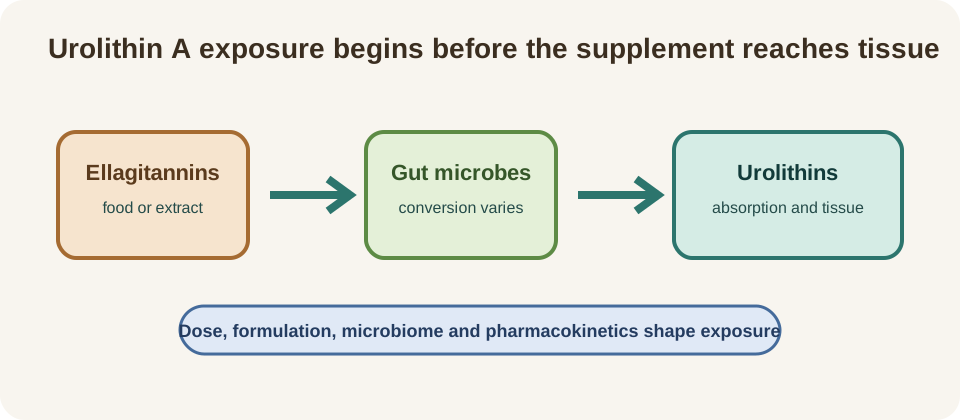
Urolithin A (UA) is a metabolite produced when some gut microbes transform ellagitannins and ellagic acid found in foods such as pomegranate, berries and nuts. It is also manufactured directly for use in supplement studies. The compound is often described as a mitophagy activator because preclinical work suggests it can influence mitochondrial turnover and quality-control pathways.
That description should not be confused with a guaranteed effect from eating a particular food. Microbial composition, intestinal transit, diet, age and health status influence whether a person produces urolithin metabolites and which forms appear. Direct UA supplementation can create a more standardized exposure than food, but a studied capsule is not the same intervention as a pomegranate serving.
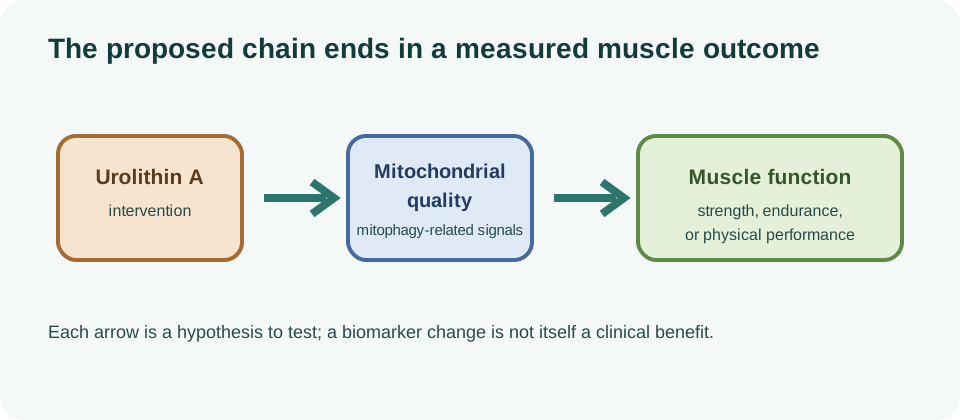
The important question for mitophagy and aging is not whether UA has an attractive mechanism. It is whether a defined exposure changes completed mitochondrial quality control in a relevant tissue and improves a meaningful human outcome.
How gut microbes produce urolithins
Ellagitannins are hydrolyzed in the digestive tract to ellagic acid and then transformed by specific microbial communities into urolithin intermediates and, in some people, UA. This conversion is not universal. People can differ in microbial genes, abundance, diet, intestinal environment and transit time, producing different metabolite profiles from the same food.
Human studies therefore distinguish a food source, a measured plasma UA concentration and a standardized supplement. A product can be described as containing UA without proving that it will produce the same tissue exposure in every user. Conversely, failure to detect a food-derived metabolite does not prove that the broader diet has no health value.
Why endogenous production varies
Age, antibiotic exposure, habitual diet, gastrointestinal health and other host factors may influence conversion. These variables complicate observational comparisons and make it risky to infer that people who produce more urolithins will necessarily age more slowly. Randomized intervention designs can control exposure more effectively, but they still need adequate sample size and outcome follow-up.
| Exposure | What can be measured | What remains uncertain |
|---|---|---|
| Ellagitannin-rich food | dietary intake and sometimes urinary or plasma metabolites. | individual microbial conversion and tissue exposure. |
| Direct UA supplement | administered dose and circulating UA-related metabolites. | equivalent mitophagy response in every tissue. |
| Cell or animal UA model | controlled molecular and mitochondrial responses. | human muscle, disease or longevity benefit. |
Mitophagy and mitochondrial-quality-control mechanism
Mitophagy is selective autophagy directed at mitochondria. Damaged or surplus organelles are recognized, marked or captured, transported through autophagic machinery and delivered to lysosomes for degradation. The process operates alongside fission, fusion, proteostasis, repair and biogenesis.
UA is often presented as a way to “recycle damaged mitochondria,” but a molecular marker cannot prove that the entire sequence completed. A change in Parkin, PINK1, mitochondrial proteins or a transcript signature may indicate pathway engagement, altered mitochondrial content, compensation or stalled degradation. Flux and tissue function remain separate questions.
The dedicated mitochondrial dysfunction page explains why mitochondrial aging is a systems problem. UA should be judged by what it changes in the studied population, not by converting a plausible pathway into a whole-body rejuvenation claim.
Early human safety and biomarker work
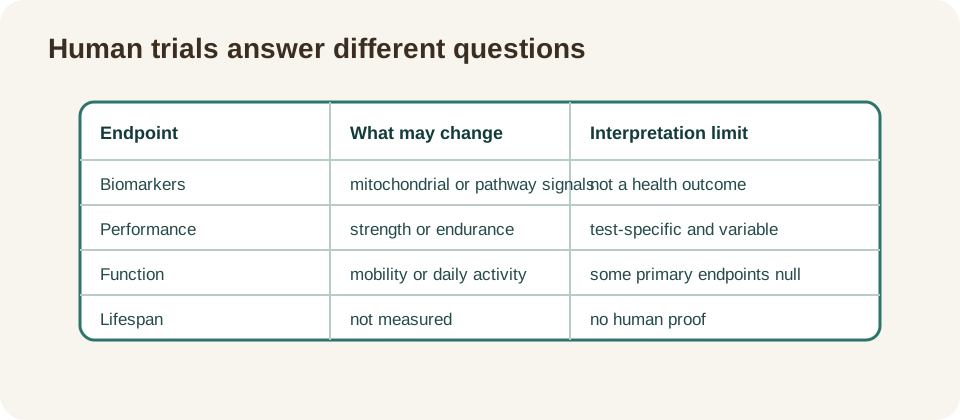
Early human studies established that oral UA can be detected in circulation and helped characterize short-term tolerability. They also explored mitochondrial-related biomarkers, gene expression, muscle proteins, acylcarnitines, inflammatory measures and exercise-related outcomes. These studies are useful for dose selection and target-engagement hypotheses, but they are not equivalent to long-duration aging trials.
A biomarker can move for several reasons. The intervention may alter mitochondrial turnover, fuel use, inflammation, training response or tissue composition. Without a prespecified functional endpoint, it is not possible to know whether the change benefits the person. Without longer follow-up, it is not possible to establish durability or lifespan effects.
Safety interpretation has the same boundary. “Well tolerated” describes the participants, product, dose and observation period actually studied. It does not guarantee safety for people with kidney disease, liver disease, pregnancy, complex medication regimens, frailty or a different product formulation.
Middle-aged adult randomized trial
The 2022 Cell Reports Medicine trial enrolled untrained, overweight, middle-aged adults and randomized participants to placebo, 500 mg UA or 1,000 mg UA daily for four months. The study reported improvements in selected muscle-strength and aerobic-endurance measures, along with changes in plasma acylcarnitines, C-reactive protein and muscle proteins related to mitochondrial metabolism and mitophagy.
The prespecified peak-power primary endpoint was not significantly improved. That detail matters because a trial can report secondary or within-group signals while failing to meet its primary endpoint. The study is therefore evidence for selected muscle and biomarker findings under its protocol, not proof of a generalized physical-performance or anti-aging effect.
The trial also disclosed substantial commercial involvement: the sponsor was Amazentis, the developer associated with the Mitopure product, and several authors were employees, board members or scientific advisers. Sponsorship does not invalidate the findings, but independent replication and transparent endpoint reporting are important when a commercial product is being evaluated.
| Trial feature | Reported evidence | Interpretive boundary |
|---|---|---|
| Population | untrained, overweight middle-aged adults. | does not represent every older or diseased adult. |
| Doses studied | 500 mg and 1,000 mg daily for four months. | not a personalized dosing recommendation. |
| Primary endpoint | peak power did not significantly improve. | cannot be replaced by a favorable secondary result. |
| Other signals | selected strength, endurance and mitochondrial-related measures. | does not establish lifespan extension. |
Older-adult randomized trial
A separate randomized clinical trial studied older adults and focused on muscle endurance and mitochondrial-health measures. Its contribution is different from the middle-aged study because population, baseline function, endpoints and statistical power determine what a result means. A muscle-endurance change cannot automatically be generalized to cognition, independence, cardiovascular events or survival.
This is an important reading habit for supplement evidence: identify the primary endpoint first, then distinguish between between-group results, within-group changes, exploratory measures and mechanistic biomarkers. A study may be promising without proving that the product improves every outcome associated with aging.
The 2024 systematic review of human UA studies summarized five studies involving 250 healthy individuals and described mixed functional outcomes alongside mitochondrial or autophagy-related signals. That synthesis supports continued testing while preserving uncertainty about the consistency and size of benefits.
What the 2024 systematic review adds
A systematic review is useful for showing whether an individual result is representative. The 2024 review found a small human literature: five studies and 250 healthy participants. It reported mixed effects on functional outcomes, with some signals in mitochondrial or autophagy-related biomarkers. The small number of studies and different protocols limit precise estimates of benefit.
Small evidence bases are vulnerable to selective reporting, random error, different formulations, varied exercise status and short follow-up. A review can organize those limitations, but it cannot remove them. Readers should look for convergence across independent groups and for endpoints that matter outside the laboratory.
What the 2026 randomized-trial meta-analysis adds
The 2026 Frontiers in Nutrition systematic review and meta-analysis is the most current synthesis listed in the production brief for randomized UA muscle-health trials. Its role is to estimate the pattern across trials rather than spotlighting one product study. The appropriate interpretation remains bounded by the included populations, protocols, endpoint definitions and study quality.
Even a pooled improvement in a selected muscle measure would not establish human lifespan extension. Conversely, a null pooled result would not prove that no subgroup can benefit. Meta-analysis is strongest when trials are sufficiently comparable, outcomes are prespecified and heterogeneity is reported rather than hidden behind a single summary number.
For readers comparing UA with creatine and longevity, the comparison should use the outcome actually tested. Creatine evidence may center on strength, lean mass or cognition under defined programs; UA evidence centers more on mitochondrial and muscle-health hypotheses. Neither becomes a lifespan intervention simply because the mechanism sounds relevant to aging.
2025/2026 immune-aging evidence
The newer human evidence base also includes a randomized trial examining immune-aging-related phenotypes and metabolism. This broadens the research question beyond muscle, but it does not erase the need for tissue specificity. Immune-cell phenotype, inflammatory markers and metabolic state are informative outcomes; they are not interchangeable with fewer infections, better vaccine protection, reduced disease events or longer survival.
When a study expands into immune biology, it is especially important to distinguish cell-state markers from clinical protection. A change in an immune-cell assay may indicate altered activation, metabolism or differentiation. The next question is whether that change improves a validated response under a defined challenge and remains safe over time. The related inflammaging page provides context for that evidence ladder.
Which outcomes are consistent, and which are not?
The most consistent finding is biochemical and mechanistic: UA reaches the circulation and can change selected mitochondrial-related measures in studied humans. Some trials also report improvement in muscle strength or endurance. These results support the idea that UA is biologically active and worth testing.
Less consistent are broader physical-function outcomes, including walking performance, peak power, ATP-related measures and other endpoints that depend on baseline status, training, protocol and statistical design. A study can show a favorable biomarker and a null primary outcome. That pattern is not a contradiction; it is a reminder that target engagement and clinical efficacy are separate layers.
There is no evidence that UA extends human lifespan. Biological-age claims require validated measures and longitudinal outcomes, not only mitochondrial protein expression or an exercise test. The permanent article should be updated as new trials arrive, but the current conclusion should remain narrow.
A related question is whether any muscle benefit survives when training, nutrition and ordinary activity are measured carefully. Because these factors can change independently of supplementation, future trials should record them prospectively and distinguish a product effect from a changed exercise stimulus or baseline imbalance.
Doses studied are not recommendations
Human trials have studied different UA preparations and daily amounts. The middle-aged randomized trial reported 500 mg and 1,000 mg daily for four months; those are doses studied in that protocol, not instructions for self-treatment. Product labels, purity, formulation, participant characteristics and adherence can differ from a published trial.
A dose-response pattern in a biomarker or muscle measure does not establish the dose that is safest or most useful for another person. Nor does a higher dose automatically produce more completed mitophagy. Any future dose claim should identify the population, formulation, duration, comparator, endpoint and adverse-event monitoring.
- label the amount as a dose studied, not a recommended dose;
- separate food-derived ellagitannins from direct UA supplementation;
- state the trial duration and population;
- report primary and exploratory outcomes separately;
- avoid implying that a biomarker determines an individual’s need.
Product quality is another practical variable. Study results apply to the tested formulation and manufacturing controls, not automatically to every product using the same ingredient name. Independent testing, accurate labeling and transparent adverse-event reporting remain relevant when a supplement is considered outside a research setting.
Those controls are part of responsible interpretation, especially when evidence is still emerging.
Industry sponsorship and conflict-of-interest context
Several major UA trials involved Amazentis, the commercial developer associated with Mitopure. The middle-aged RCT’s disclosure included employees, board members and scientific advisers of the sponsor. Industry involvement can provide resources and product standardization, but it increases the importance of independent replication, transparent preregistration and complete reporting of primary endpoints.
Conflict-of-interest disclosure is not a verdict that a study is wrong. It is context for weighing precision, replication and external validity. A positive result should be considered alongside sample size, attrition, analysis plan, comparator, endpoint hierarchy and whether an independent team observes the same effect.
Does urolithin A slow biological aging?
That claim is not established. UA can influence biomarkers and selected muscle outcomes in human trials, but biological aging is not one biomarker and muscle performance is not lifespan. A biological-age test or mitochondrial protein signature may be useful for research without being validated as a surrogate for mortality, disability, dementia or quality of life.
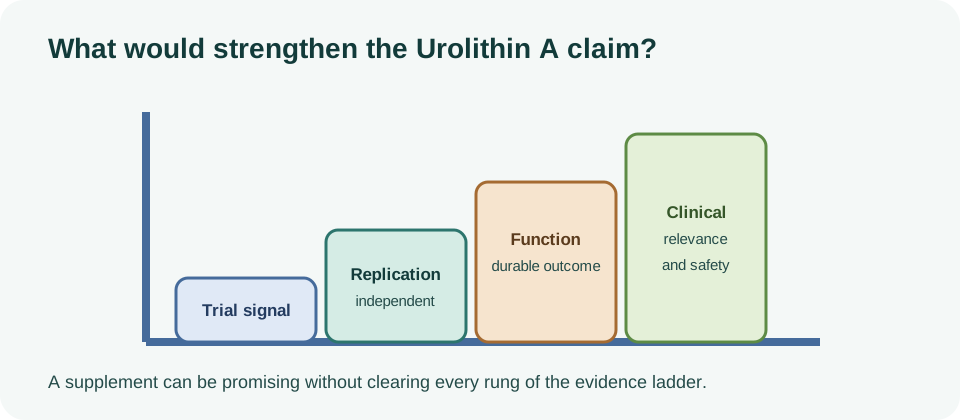
To support a slower-aging conclusion, studies would need long follow-up, validated outcomes, adequate power, independent replication and a clear causal chain from exposure to tissue mechanism to patient-important benefit. No current UA trial provides that complete chain.
Surrogate measures can still be valuable when they explain how an intervention might work, but they should be labeled as surrogates. A stronger muscle signal is encouraging if it is reproducible and clinically meaningful; it does not automatically predict fewer falls, preserved independence or a longer life.
The more accurate description is “a mitochondria-targeted postbiotic with promising but endpoint-specific human evidence.” That wording is less dramatic than “rejuvenates mitochondria,” but it is more useful to readers and more resilient as new research arrives.
Evidence verdict and next questions
Urolithin A is a credible translational intervention rather than a purely theoretical supplement. Human randomized trials have tested it in middle-aged and older adults, and selected muscle, endurance and mitochondrial-related findings are encouraging. The evidence is not uniformly positive, the primary endpoint matters, commercial sponsorship should be visible and broader healthspan or lifespan benefits remain unproven.
The next studies should clarify whether changes in mitophagy-related measures reflect completed flux, whether benefits replicate independently, which populations respond, and whether effects persist after treatment. They should include safety follow-up and outcomes that matter to daily function, not only molecular signals.
Researchers should also compare UA with an appropriate control under conditions that measure diet, physical activity, baseline fitness and adherence. If a benefit depends on exercise or nutritional status, that interaction should be prespecified rather than discovered after multiple exploratory analyses. Replication in diverse populations will help determine whether the current findings are broadly useful or concentrated in a narrow trial setting.
Until that evidence exists, the most defensible reader-facing conclusion is that UA may support selected mitochondrial and muscle-related outcomes in some studied adults. It should not be marketed as a proven anti-aging treatment, a guaranteed mitophagy enhancer or a substitute for clinical care.
- measure tissue and pathway engagement with appropriate flux-aware methods;
- predefine the primary functional outcome;
- distinguish between-group, within-group and exploratory findings;
- replicate results outside the commercial developer’s network;
- test durability and safety before making longevity claims.