Supplements and molecules · evidence reviewed September 2026
What glycine is and why it matters biologically
Glycine is the smallest amino acid and a normal component of human proteins, metabolites and signaling systems. It is abundant in collagen and is used to make glutathione, creatine, heme, purines and other compounds. It can also act as an inhibitory neurotransmitter in some neural circuits and participates in one-carbon metabolism. Those roles make glycine relevant to many tissues, but they also make broad “anti-aging” language difficult to interpret.
The body obtains glycine from food and can synthesize it from other molecules. A person’s circulating concentration reflects production, intake, tissue use, kidney handling, activity, illness and measurement timing. A low plasma value may be associated with a health pattern without proving a correctable deficiency or identifying who would benefit from supplementation.
Longevity research asks a narrower question than general physiology: does changing glycine exposure improve function, delay disease or extend life in people? That question requires controlled intervention evidence. A pathway can be real while a supplement claim remains unproven.
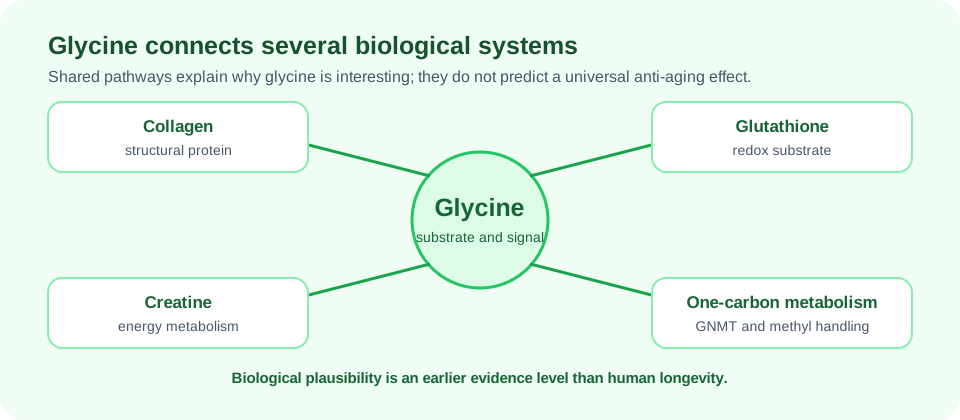
Glycine in collagen, glutathione, creatine and one-carbon metabolism
Collagen contains a high proportion of glycine, where its small side chain helps the triple helix pack tightly. That does not mean oral glycine automatically rebuilds connective tissue: collagen turnover depends on total protein, other amino acids, vitamin cofactors, mechanical loading, age and tissue condition. Glycine is a substrate, not a complete repair program.
Glycine is also one of the three amino acids in glutathione, together with cysteine and glutamate. In some settings, glycine availability can constrain glutathione synthesis. However, antioxidant biology is not a simple “more is better” system. Redox signals also participate in normal adaptation, and raising a precursor does not guarantee improved tissue function.
In creatine synthesis, glycine contributes carbon and nitrogen alongside arginine and methionine. This connects glycine to muscle and brain energy metabolism, but effects of creatine and longevity cannot be attributed to glycine merely because the molecules share a pathway. One-carbon metabolism adds another layer: glycine can accept a methyl group through glycine N-methyltransferase, producing sarcosine and influencing methionine-related metabolism.
- Structural role: collagen and connective tissue architecture.
- Redox role: substrate for glutathione synthesis.
- Energy role: precursor contribution to creatine synthesis.
- Methylation role: interaction with methionine and one-carbon pathways.
| Glycine connection | Biological rationale | Human longevity limit |
|---|---|---|
| Collagen | Important structural amino acid in connective tissue. | Does not prove restored strength, mobility or skin aging. |
| Glutathione | One substrate used in antioxidant production. | Does not prove correction of tissue redox imbalance. |
| Creatine | Participates in precursor metabolism. | Effects of creatine cannot be assigned to glycine alone. |
| GNMT | Links glycine to sarcosine and methyl-group handling. | Mechanistic plausibility is not a human aging intervention. |
Why glycine became a longevity candidate
Glycine became a longevity candidate through a combination of dietary restriction biology, animal experiments and metabolic reasoning. Methionine restriction can extend lifespan in several model organisms, and glycine can participate in pathways that clear methionine or alter its downstream metabolism. Glycine is also abundant in tissues affected by aging and may influence inflammation, redox balance and autophagy.
The attractive hypothesis is that glycine could mimic some consequences of methionine restriction without imposing a severely restricted diet. That is a useful idea to test, not a conclusion. Different organisms may respond through different mechanisms, and a pathway that changes lifespan in a mouse may not be the pathway limiting health in older humans.
Interventions Testing Program mouse lifespan findings
A 2019 Interventions Testing Program study fed an 8% glycine diet to genetically heterogeneous mice at three independent sites. The investigators reported a small but statistically significant lifespan increase in both sexes, with overall estimates commonly summarized as approximately 4% to 6%. The study also reported longer maximum lifespan and a possible reduction in pulmonary adenocarcinoma deaths among treated females, while the pathology survey did not show a significant increase across the evaluated lesions.
This is meaningful preclinical evidence because it used genetically heterogeneous animals, both sexes and independent sites. The effect was modest, and the diet concentration was a mouse protocol, not a human recommendation. The result also does not identify whether glycine acted through methionine metabolism, food intake, body weight, tumor biology, another pathway or a combination.
Even a reproducible mouse lifespan effect does not provide a safe conversion to human years. Mice age faster, have different metabolism and are exposed to a controlled diet. Human trials must use human doses, monitor safety and measure clinically important outcomes rather than infer lifespan from a mechanistic marker.
| Finding | Evidence value | Human limitation |
|---|---|---|
| 4%–6% lifespan increase | Supports a small preclinical longevity signal. | Cannot be converted into years of human life. |
| Both sexes | Reduces a sex-specific interpretation. | Does not establish human subgroup benefit. |
| Three sites | Provides independent experimental replication. | Does not remove species and dose differences. |
| Pathology findings | Helps assess late-life disease patterns. | Does not establish human safety or prevention. |
Possible relationship to methionine metabolism
Glycine N-methyltransferase, or GNMT, uses glycine as a methyl acceptor and produces sarcosine. This reaction can influence the balance of S-adenosylmethionine and related one-carbon metabolites. Because dietary methionine restriction extends lifespan in some model organisms, researchers have proposed that glycine may reproduce part of that signal by changing methionine handling.
That explanation remains incomplete. Methionine metabolism connects to protein synthesis, methylation, redox biology, liver function and nutrient sensing. A change in one metabolite can have different consequences depending on tissue, diet and physiological state. The mechanism should therefore be treated as a testable model, not as proof that more glycine is universally beneficial.
The recent literature also includes work on mitochondrial one-carbon metabolism and aging-related dysfunction. These findings can identify pathways for future experiments, but mechanistic or animal evidence must remain separate from controlled human outcomes. The broader mitochondrial dysfunction and aging context helps keep that boundary visible.
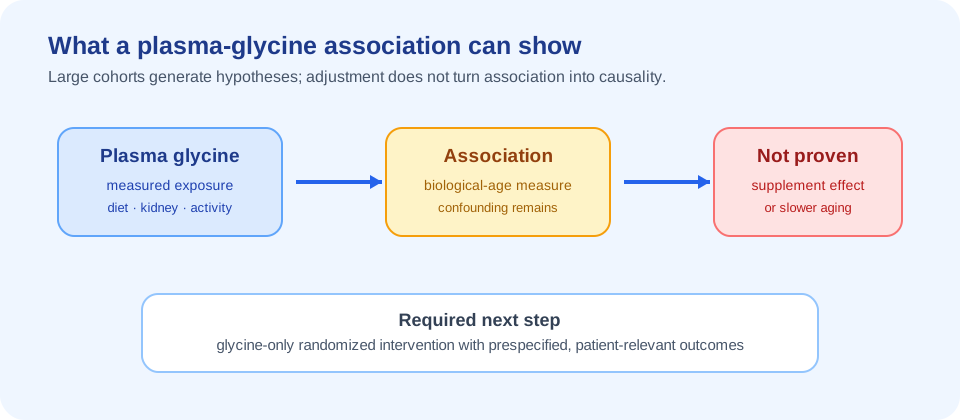
2026 evidence linking plasma glycine with biological-aging measures
A 2026 UK Biobank analysis examined plasma glycine in relation to biological-aging measures, primarily residuals based on the Klemera-Doubal Method. The study reported associations involving glycine, redox-inflammatory pathways, sex and dietary patterns. Large observational datasets can reveal patterns that deserve study, but they cannot establish that glycine caused slower aging or that supplementation would reproduce the association.
Plasma glycine may be a marker of diet, metabolic health, kidney function, inflammation, activity or other correlated exposures. Statistical adjustment can reduce some confounding but cannot convert an observational result into a randomized intervention. The direction and shape of an association may also vary across subgroups.
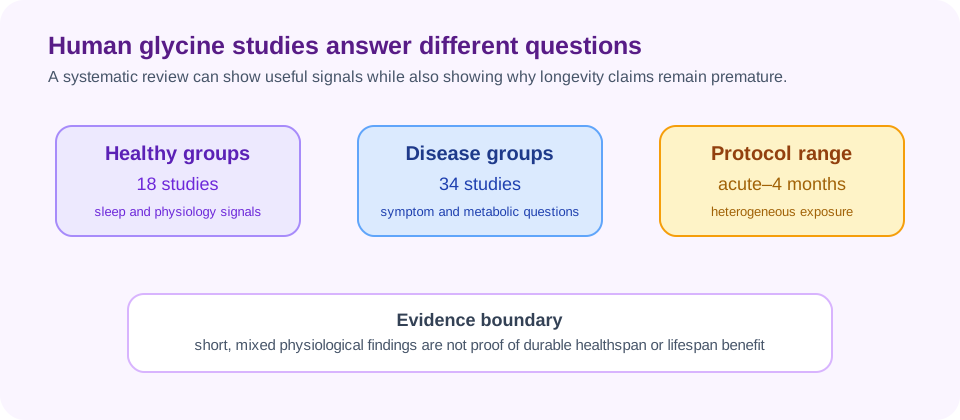
Human supplementation evidence across physiological systems
A 2024 systematic review summarized glycine administration across eleven physiological systems in healthy and diseased adults. The review included 18 studies in healthy populations and 34 in diseased populations; protocols ranged from acute exposure to as long as four months. The authors described heterogeneous findings and called for larger, longer, better-designed studies focused on aging-related prevention or treatment.
The review’s most positive signals were often in nervous-system outcomes, including sleep in healthy participants and psychiatric symptoms in clinical populations. That is not the same as evidence of geroprotection. Small samples, short follow-up, heterogeneous populations and risk of bias limit what can be concluded about durable healthspan.
Human research is still valuable when it identifies feasible outcomes and tolerability. A trial can show that a dose changes sleep latency, a metabolic marker or a symptom score without showing that glycine slows the aging process. Each result should be labeled by its actual endpoint.
Sleep and neurobehavioral evidence
Glycine has attracted sleep interest because small human studies have reported changes in subjective sleep quality, sleep onset or next-day measures. The systematic review found longer-term sleep improvements in healthy populations, but also noted small sample sizes and high risk of bias. These signals may justify larger sleep trials; they do not establish dementia prevention, neural rejuvenation or lifespan extension.
Neurobehavioral results can be especially sensitive to expectancy, practice, baseline sleep debt, psychiatric diagnosis, concurrent treatment and the choice of questionnaire. Objective measures and preregistered primary outcomes are important. A person may experience a useful symptom change even when a broad anti-aging claim is unsupported.
The appropriate comparison is not “glycine works” versus “glycine does nothing.” It is: which population, which outcome, what duration, what comparator and what level of certainty? That framing keeps a promising sleep signal useful without inflating it.
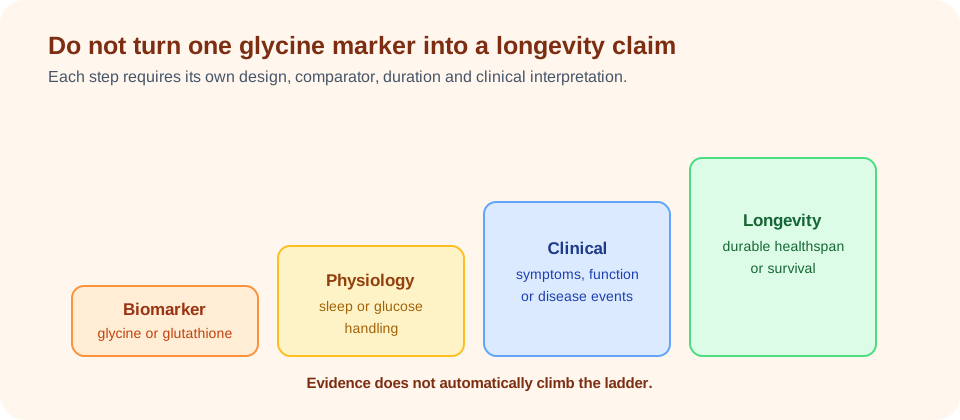
Metabolic effects in small human studies
Glycine has been studied in adults with metabolic disease and in other physiological contexts, sometimes with outcomes involving glucose regulation, oxidative stress, inflammation or endothelial function. Results may be biologically interesting, but the studies are often small and short. A laboratory improvement should not be described as prevention of diabetes, cardiovascular disease or accelerated aging unless the trial was designed to test that outcome.
Metabolic responses can depend on baseline glycine, diet, body composition, insulin sensitivity, kidney function, medication and the presence of other amino acids. This is one reason a result from a combined nutritional intervention cannot be assigned to glycine alone. It is also why a future trial should report baseline characteristics and co-interventions clearly.
- Biomarker: indicates a biochemical change.
- Physiological endpoint: measures a function such as sleep or glucose handling.
- Clinical endpoint: measures symptoms, events, disability or quality of life.
- Longevity endpoint: requires long follow-up and appropriate survival or healthspan design.
Why GlyNAC evidence cannot be attributed to glycine alone
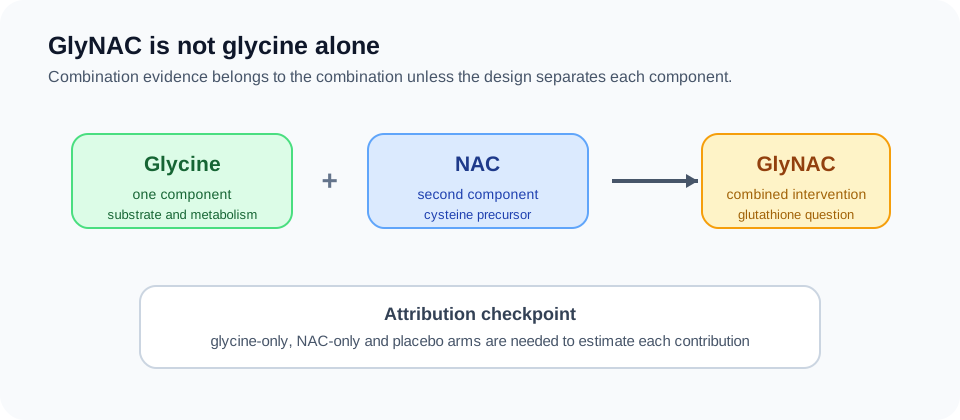
GlyNAC combines glycine with N-acetylcysteine, a cysteine precursor. The combination is designed to support glutathione production and has been studied in older adults and disease-related contexts. Reports have described changes in glutathione, oxidative stress, mitochondrial function, inflammation, insulin resistance, muscle strength, cognition and body composition.
Those findings are relevant to the combination being tested. They do not establish the independent effect of glycine, because NAC contributes a separate substrate and biological activity. Without glycine-only, NAC-only and placebo comparisons, the contribution of each component cannot be cleanly separated.
This distinction is not a technicality. A combined intervention may be useful while a single ingredient remains under-proven. Readers should follow the dedicated GlyNAC evidence page for combination-specific claims and keep it separate from conclusions about glycine alone. The same discipline applies to inflammaging claims built from multicomponent studies.
Doses studied in humans — reporting, not recommendation
Human glycine studies have used different amounts, schedules and durations. Some examine a single exposure, while others use repeated administration for days or months. The 2024 systematic review found that healthy and diseased populations were studied under varied protocols, which makes a single “longevity dose” unjustified.
A research dose is defined by the question, participant group, formulation, timing and monitoring plan. It is not automatically suitable for someone with kidney disease, liver disease, pregnancy, medication use, sleep disorder or metabolic illness. A retail powder also introduces quality and labeling questions that a controlled trial may not share.
When reviewing a dose claim, check whether the study measured adherence, included a placebo, prespecified a primary endpoint, followed participants long enough and reported adverse events. This page reports doses as study details only; it does not recommend an amount, loading phase or supplement plan.
Safety and context
Glycine occurs in food and has been used in short human studies, but natural occurrence does not guarantee that concentrated supplementation is appropriate for everyone. Risk depends on amount, duration, formulation, co-ingredients, medical conditions, medicines and product quality. Short trials may not detect rare or delayed harms.
People with kidney or liver disease, diabetes, complex medication regimens, pregnancy or breastfeeding considerations, or unexplained new symptoms should seek individualized advice before using concentrated amino-acid supplements. Supplementation should not replace evaluation, prescribed treatment, adequate protein and energy intake, or a rehabilitation plan.
Adverse-event reporting is part of efficacy evidence. A trial that reports a change in a marker but gives little information about tolerability is incomplete for real-world decisions. Future glycine studies should include dose-response data, organ-function monitoring when relevant, product verification and longer follow-up.
What glycine has not been shown to do
Glycine has not been shown in a completed long-term human trial to extend lifespan, reverse epigenetic or biological age, prevent dementia broadly, eliminate sarcopenia or reliably restore an age-related deficiency. The mouse result cannot be converted into a human lifespan estimate, and a plasma association cannot be converted into a supplement prescription.
A useful result may still be narrower: better sleep in a selected population, a metabolic signal, improved glutathione availability or a defined functional outcome. Narrow findings are not failures. They become misleading only when they are presented as proof of a universal anti-aging effect.
The research agenda should prioritize glycine-only randomized trials in well-defined populations, with placebo comparison, clinically meaningful primary outcomes, baseline-status analysis, safety surveillance and follow-up long enough to distinguish transient physiology from durable health benefit.
Evidence verdict and research gaps
Glycine is a serious research candidate because it connects to collagen, glutathione, creatine, methionine metabolism and redox biology, and because a genetically heterogeneous mouse study found a small lifespan increase in both sexes. The evidence becomes much less direct in humans. A systematic review found heterogeneous, usually short studies, and the 2026 plasma analysis was observational rather than interventional.
GlyNAC findings should remain attributed to the combination, not silently converted into glycine-only evidence. Similarly, a biomarker association should be treated as a clue rather than proof that raising glycine changes biological age. These distinctions make the conclusion more cautious but more useful.
The next decisive studies would be adequately powered glycine-only randomized trials with prespecified primary outcomes, clinically meaningful function or disease measures, baseline-status stratification, transparent adherence and longer safety follow-up. Until then, glycine belongs in the evidence map as an under-proven geroscience molecule—not as a validated human anti-aging intervention.