Supplements and molecules · evidence reviewed September 2026
What GlyNAC is
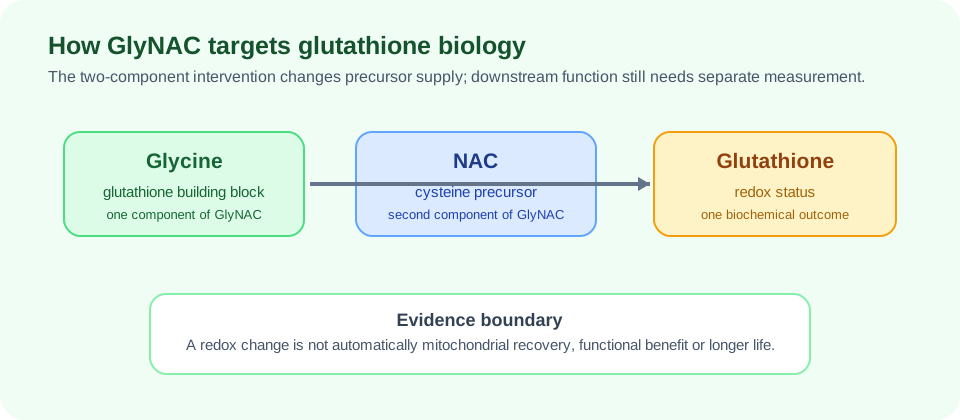
GlyNAC is the name commonly used for a combination of glycine and N-acetylcysteine, or NAC. Glycine is an amino acid and a substrate for glutathione synthesis. NAC is a cysteine precursor that can supply cysteine, another glutathione building block. Glutathione is an intracellular tripeptide involved in redox balance and protection against oxidative damage.
The combination is not the same as glycine alone, NAC alone, or dietary protein. It changes two precursor inputs at once and is usually studied as a packaged protocol with a defined ratio, dose, duration and monitoring plan. Results therefore belong first to GlyNAC as tested, not automatically to either ingredient in isolation.
GlyNAC has attracted aging interest because older adults in some studies show lower glutathione status, higher oxidative-stress markers, mitochondrial changes, insulin resistance, inflammation and impaired physical function. These are plausible targets, but a change in a marker or short-term task is not identical to slower aging, lower disease incidence or longer life.
Why glycine plus NAC is used to support glutathione synthesis
Glutathione is made from glutamate, cysteine and glycine. Cysteine availability can be limiting in some physiological conditions, while glycine availability may also constrain synthesis in older adults or during increased demand. NAC is used as a cysteine precursor because it can be converted to cysteine after absorption. Glycine supplies the other amino-acid component.
This biochemical rationale does not mean the body is universally deficient in either substrate. Glutathione production is regulated by absorption, transport, enzyme activity, tissue demand, redox state, nutrition, disease and medication. More precursor may increase production in one subgroup and have little effect in another.
It is also possible for redox interventions to have context-specific effects. Reactive oxygen species can damage cells at high levels, but redox signals also participate in normal exercise adaptation and immune signaling. A trial must therefore measure the outcome that matters rather than infer benefit from a single “antioxidant” label.
- Glycine contributes one glutathione building block.
- NAC provides a cysteine precursor.
- Glutathione status is one biochemical outcome.
- Function, symptoms and disease events are separate outcomes.
| Layer | Question | What a positive result means |
|---|---|---|
| Substrate | Do glycine and cysteine availability change? | The intervention reached a biochemical pathway. |
| Glutathione | Does redox status or glutathione production change? | A molecular effect may be present. |
| Physiology | Do mitochondria, glucose handling or inflammation change? | A defined physiological signal deserves replication. |
| Function | Do strength, gait, cognition or quality of life improve? | A potentially meaningful health outcome, if robust. |
| Longevity | Does disease-free or total survival improve? | Requires a much larger and longer trial. |
Glutathione synthesis and aging
A foundational 2011 stable-isotope study reported deficient glutathione synthesis and oxidative stress in older adults and examined dietary cysteine and glycine supplementation. This work helped establish why precursor availability might matter in aging research. It did not test whether GlyNAC extends lifespan or prevents age-related disease over the long term.
Glutathione is measured in different compartments, including whole blood, red blood cells, muscle and other tissues. A change in one compartment may not represent every organ. Reduced and oxidized glutathione ratios also depend on assay methods, sample handling, timing and the physiological state of the participant.
The broader mitochondrial dysfunction and aging literature uses glutathione and oxidative stress as mechanistic clues, but those clues need a functional bridge. GlyNAC may be a useful way to test that bridge; it should not be described as having already crossed it.
Early human precursor studies
Before the larger GlyNAC discussion, human studies showed that glycine and cysteine availability can influence glutathione biology and that older adults may have different redox profiles from younger adults. These studies are important for feasibility and mechanism, but they are not interchangeable with randomized aging trials.
The human literature includes healthy volunteers, older adults and people with metabolic or chronic disease. Protocols vary in dose, formulation, duration, adherence, background diet and outcome measurement. Some studies test acute changes after a dose; others examine repeated supplementation. A single positive result cannot represent all of these settings.
When evidence is sparse, the most useful conclusion is often a research specification: identify the target population, measure baseline glutathione demand, use a placebo, separate primary from exploratory outcomes and follow participants long enough to test durability.
2023 randomized older-adult GlyNAC trial
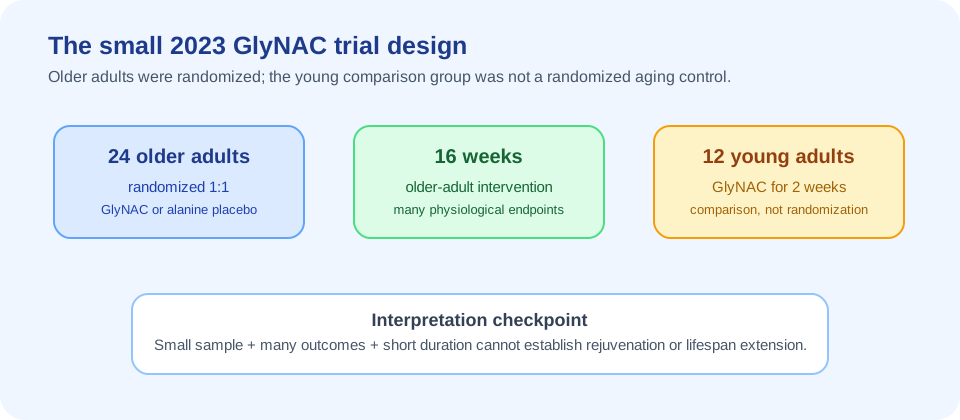
A randomized clinical trial reported in the Journal of Gerontology A studied 24 older adults and 12 young adults. The older adults were randomized to GlyNAC or an isonitrogenous alanine placebo for 16 weeks; the young adults received GlyNAC for two weeks as a comparison group. The investigators assessed glutathione, oxidative stress, mitochondrial fatty-acid oxidation, inflammation, insulin resistance, endothelial function, physical function, body composition and blood pressure.
The trial reported that GlyNAC, but not placebo, improved or corrected several measured abnormalities in older adults, including glutathione deficiency, oxidative stress, mitochondrial and metabolic measures, and selected physical-function outcomes. The breadth of outcomes makes the study hypothesis-generating and clinically interesting.
Its limits are equally important. The randomized older-adult sample was only 24 people, many outcomes were measured, and the young adults were not a randomized comparator for aging effects. The study duration was 16 weeks. This design cannot establish lifespan extension, durable disease prevention or broad rejuvenation, and it cannot identify whether glycine, NAC or their interaction caused each signal.
What changed: glutathione, oxidative stress and mitochondrial measures
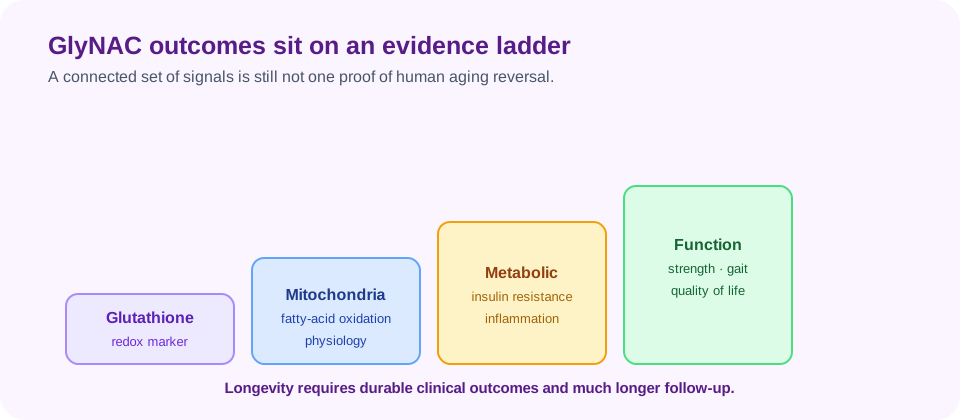
The reported changes are best understood as a connected set of physiological signals rather than a single proof of “rejuvenation.” Improved glutathione status could reduce oxidative stress in a participant with high demand. That may influence mitochondrial substrate oxidation or endothelial function, which may in turn affect insulin sensitivity and exercise capacity. Each link remains a hypothesis unless measured directly and reproduced.
“Aging hallmarks” is also a broad label. A study can measure several hallmarks and show movement in them without demonstrating that the participant’s biological age, frailty trajectory or survival changed. The term should describe the measured biology, not imply a clinical endpoint that was not tested.
For a practical evidence review, record the direction, size, uncertainty and time course of each outcome. If a result is exploratory or secondary, say so. If there is no prespecified primary clinical endpoint, avoid presenting the most favorable marker as the trial’s decisive finding.
Physical-function and metabolic endpoints
Physical function gives redox and mitochondrial hypotheses a more meaningful test. Gait speed, muscle strength, a six-minute walk or a daily-activity measure can matter to independence. Yet even functional tests have learning effects, measurement error and dependence on motivation, baseline fitness and concurrent exercise. A short improvement should not automatically be called prevention of sarcopenia or frailty.
Metabolic outcomes such as insulin resistance, glucose production, blood pressure or body composition are similarly specific. A change can be useful for cardiometabolic research without proving prevention of diabetes, cardiovascular events or accelerated aging. The relevant comparison is the change beyond placebo under the protocol actually delivered.
- Gait and strength are closer to healthspan than a pathway marker.
- Insulin sensitivity and endothelial measures remain physiological endpoints.
- Body composition may include water and measurement-method effects.
- Disability, hospitalization, disease events and survival require longer follow-up.
How large and reliable were the effects?
Effect size is only one part of reliability. A small trial can produce a large estimate by chance, especially when many outcomes are examined. Confidence intervals, missing data, adherence, blinding, prespecified endpoints and correction for multiple comparisons help show how much trust to place in a result.
Replication matters because the main positive GlyNAC trials have been connected to a relatively concentrated investigator and research network. That does not invalidate the studies. It does mean independent groups, different populations and transparent protocols are especially important before broad claims are made.
Clinical importance also matters. A statistically significant change may be too small to affect daily life, or it may be meaningful but not durable. The article’s evidence ledger should therefore separate statistical signal, clinical magnitude, certainty, duration and external validity.
| Check | Why it matters | Question to ask |
|---|---|---|
| Sample size | Small samples produce imprecise estimates. | How many were randomized and completed? |
| Primary endpoint | Protects against selective emphasis. | Which outcome was prespecified as decisive? |
| Comparator | Separates intervention from time and expectation. | Was placebo indistinguishable and adequate? |
| Funding and conflicts | Shows incentives and generalizability context. | Who designed, supplied and analyzed the intervention? |
| Replication | Tests whether the signal travels. | Has an independent team reproduced it? |
Independent or alternative GlyNAC dosing study in healthy older adults
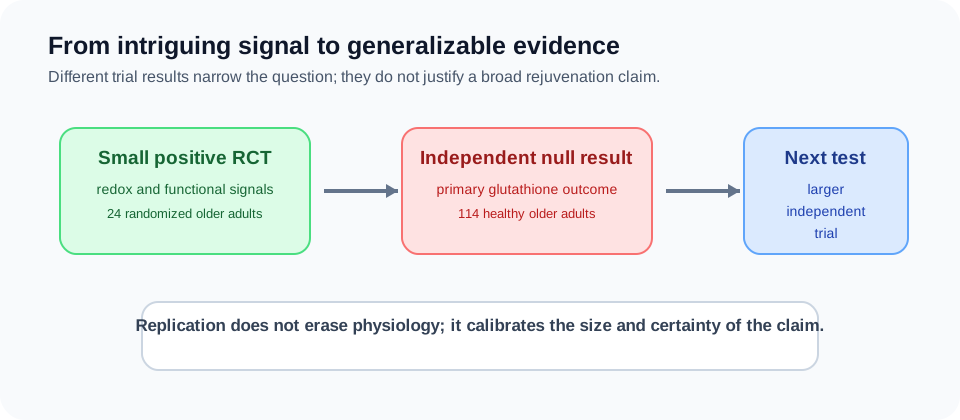
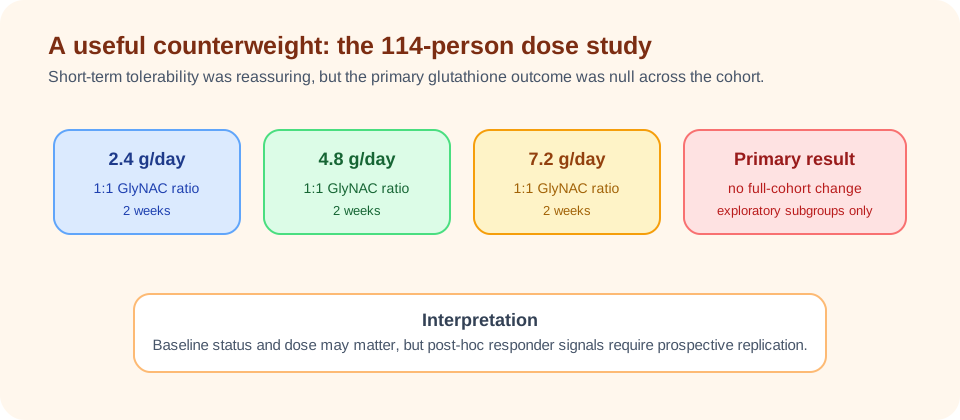
A randomized controlled trial in 114 healthy older adults examined three daily GlyNAC amounts for two weeks: 2.4, 4.8 or 7.2 grams per day in a one-to-one glycine-to-NAC ratio, compared with placebo. The trial found that the intervention was safe and well tolerated over the study period, but it did not improve the primary glutathione redox ratio or total glutathione across the full cohort.
Post-hoc analyses suggested that participants with higher oxidative stress and lower baseline glutathione might respond to the medium and high doses. That subgroup result is interesting but should be treated as exploratory because it was defined by baseline markers and not the same as a prospectively validated responder strategy.
The study provides an important counterweight to the smaller positive trial. It suggests that baseline status, dose and population may matter, and it shows why “GlyNAC raises glutathione” is too broad when the primary endpoint is null in a healthy older-adult cohort.
Evidence in special populations
GlyNAC has also been discussed in metabolic disease, chronic inflammation, frailty, brain health and exercise contexts. A 2026 review considered implications for brain, sarcopenia and frailty, but a review can synthesize evidence without resolving the limitations of the underlying trials. A result in a selected clinical population cannot be generalized to healthy adults without direct testing.
People with diabetes, kidney disease, liver disease, cancer, malnutrition or complex medication use may have different precursor requirements and different risks. They should not be treated as interchangeable with healthy older-adult volunteers. Medical context is part of the intervention evidence, not a footnote.
Can effects be assigned to glycine or NAC individually?
Usually not from the combination trials alone. If GlyNAC improves a marker, the effect could arise from glycine, NAC, their interaction, changes in glutathione synthesis, another pathway, or an unmeasured co-intervention. A factorial design or adequately powered component-specific comparison would be needed to identify independent contributions.
This is why the separate glycine and longevity page should not borrow GlyNAC results as glycine-only evidence. The distinction also prevents a result from a combined supplement from being used to market NAC or glycine separately. Ingredient-level claims need ingredient-level data.
Doses studied — reporting, not recommendation
Human GlyNAC studies have used different protocols. One 16-week older-adult trial used glycine and NAC at approximately 100 mg/kg/day each. The 114-person healthy older-adult study tested total daily GlyNAC amounts of 2.4, 4.8 and 7.2 grams for two weeks. These amounts are study details, not a universal dose and not individualized instructions.
Dose comparisons are complicated by duration, participant age, baseline glutathione status, diet, formulation, adherence and whether the outcome was measured after a washout or near the last dose. A higher dose that changes a biomarker is not automatically more effective or safer for a different population.
Before interpreting a protocol, ask which component amount was used, whether the ratio was fixed, how the placebo was matched, what the primary endpoint was and how adverse events were collected. A retail combination may not match the product, purity or supervision of the research intervention.
Safety and tolerability
Short GlyNAC trials have generally reported tolerability, but short-term tolerability is not the same as long-term safety for every person. NAC can interact with medical context and medicines, and glycine can have physiological effects beyond glutathione. Product quality, co-ingredients and dose accuracy also matter.
People with kidney or liver disease, diabetes, active cancer, pregnancy or breastfeeding considerations, complex medication regimens, or unexplained new symptoms should seek qualified clinical advice before using concentrated supplements. GlyNAC should not replace prescribed treatment, nutritional assessment, exercise rehabilitation or evaluation of a new decline.
Future studies should prespecify adverse events, organ-function monitoring where appropriate, medication interactions, adherence and reasons for discontinuation. A supplement trial that reports only favorable biomarkers is incomplete for real-world decision-making.
Replication, sponsor concentration and generalizability
Replication should be judged by more than repeating the same headline. Independent investigators should use transparent protocols, clinically meaningful primary endpoints, appropriate placebo control, complete adverse-event reporting and populations that differ from the original research network. Results should be reported even when the primary endpoint is null.
Funding and competing interests are part of context, not a verdict. The 114-person healthy older-adult dose trial included investigators affiliated with Nestlé organizations and disclosed patents or licenses related to glycine and NAC uses. That does not establish that the results are wrong; it makes independent replication and open methods more important.
Generalizability also requires testing people who are not unusually selected for adherence or health. Age, sex, baseline diet, activity, disease, medications, kidney function and socioeconomic context can change both response and feasibility. A supplement that works under intensive supervision may not have the same effect in ordinary care.
What GlyNAC has not proved
GlyNAC has not been shown in a completed long-term human outcomes trial to extend lifespan, reverse biological age, prevent dementia broadly, eliminate frailty or restore every aging hallmark. A small trial with favorable glutathione, mitochondrial or strength measures cannot carry those claims without larger, longer and independent evidence.
It is possible for GlyNAC to improve a specific physiological or functional outcome without being a general anti-aging intervention. That narrower result could still be useful. The evidence should be stated at the level the trial actually supports.
Evidence verdict and next trials needed
GlyNAC deserves its own evidence page because it is a combined intervention with human aging trials, not simply a synonym for glycine or NAC. Small randomized studies suggest that some older adults may improve glutathione status, oxidative stress, mitochondrial measures, insulin resistance, endothelial function or physical outcomes. A separate healthy older-adult dose trial found a null primary glutathione result across the full cohort, with an exploratory subgroup signal.
The balance is therefore intriguing but incomplete. Sample sizes are limited, follow-up is short, many outcomes are measured, and component-specific attribution is unresolved. Related trials and reviews also concentrate around particular investigators or commercial contexts, which heightens the value of independent replication.
The next decisive study should be adequately powered, independently led and preregistered. It should compare GlyNAC with placebo, prespecify a primary clinical or functional outcome, measure glutathione and redox biology, report component doses, monitor safety and follow participants long enough to distinguish transient pathway engagement from durable health benefit.
Until that evidence exists, GlyNAC is best described as a promising but under-proven combination for selected physiological questions—not a validated way to reverse aging or extend human life.