What fisetin is and what senolytic means
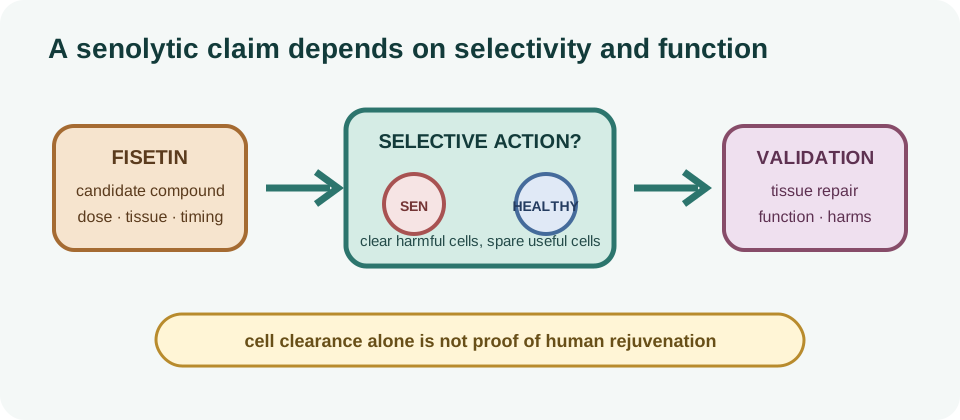
Fisetin is a naturally occurring flavonoid found in some fruits and vegetables. In laboratory and animal research it has been investigated for effects on senescent cells, inflammatory signaling and tissue function. A senolytic is a compound or combination intended to selectively eliminate senescent cells, which are cells that have entered a durable growth-arrested state and can release inflammatory signals.
Senescence is not one uniform cell type and is not always harmful. Some senescent states have roles in development, wound healing or tumor suppression. The therapeutic hypothesis is narrower: excess or persistently inflammatory senescent cells may contribute to disease in particular tissues, and selective removal might improve function. That requires selectivity, a defined target population and evidence that the tissue benefits after clearance.
The cellular senescence and aging page explains why senescence markers are not interchangeable with a senescent-cell count. A lower p16, p21 or inflammatory signal can reflect many processes. It does not by itself prove that fisetin removed harmful cells or improved health.
Why fisetin became a leading natural senolytic candidate
Fisetin gained attention after cell and mouse studies suggested that it could reduce selected senescence-related signals and improve some age-associated phenotypes. It is orally available and familiar as a plant-derived compound, which made it attractive for translation. Those features explain the interest; they do not solve dose, tissue exposure, selectivity, pharmacokinetics or long-term safety.
Preclinical senolytic selectivity can also be model-dependent. A compound may kill one senescent cell state in culture and behave differently in an aged organ with immune cells, extracellular matrix, vascular barriers and drug metabolism. A mouse dose or intermittent schedule should not be copied as a human protocol. The senolytics human-evidence page keeps those evidence levels separate.
Claims should distinguish intermittent high-exposure senolytic hypotheses from lower-exposure anti-inflammatory or signaling hypotheses. They are different experiments with different expected effects and risks. A label that says “senolytic” does not identify the schedule, tissue target or clinical endpoint.
How the human evidence should be staged
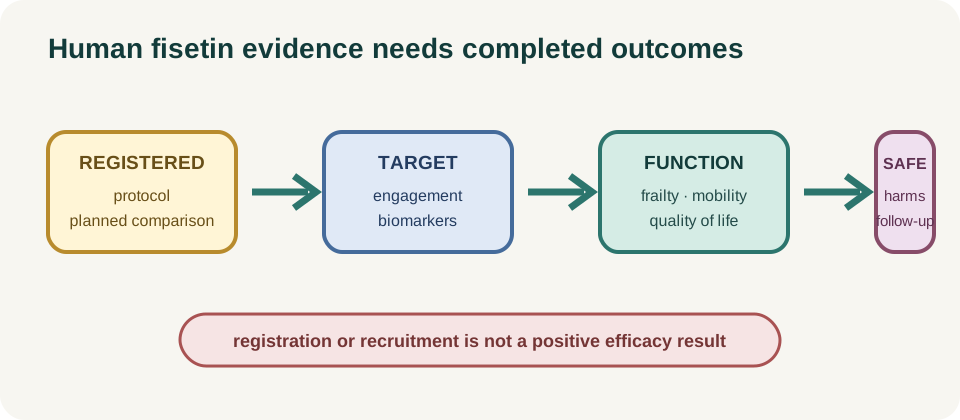
Human senolytic research has several distinct steps. Early work can ask whether a compound is tolerated and whether a candidate biomarker changes. A later study can test whether the intended cell population or inflammatory program is affected. Only then does it make sense to ask whether frailty, mobility, cognition, organ function or disease events improve. A single small pilot cannot answer all three questions. The sequence matters because senescent-cell assays are imperfect and because a lower inflammatory marker can arise from many causes. Investigators should define the primary endpoint before seeing the data, use a credible comparator, and specify whether the intervention is intended to remove cells, alter their secretory behavior or change a downstream tissue response. Without that definition, almost any molecular movement can be narrated as senolysis.
Trial design matters especially for fisetin because the desired action is selective cell removal, not simply a transient change in inflammation. Researchers need a reproducible preparation, a prespecified exposure schedule, adherence measurement and an assay panel that distinguishes senescent-cell burden from general stress. They should also measure cells and tissues that might be protected or harmed by the intervention.
Randomization and placebo control help address regression to the mean, expectation effects and background lifestyle changes. Blinding is important when outcomes include fatigue, pain, walking ability or other subjective symptoms. Objective measures such as grip strength, gait speed, physical performance, inflammatory markers and organ function can complement patient-reported outcomes but should not be cherry-picked after the fact.
Follow-up must extend beyond the dosing window. A short-term signal may disappear, while an abnormal clone or delayed toxicity may emerge later. A credible study reports withdrawals, missing data, adverse events and all prespecified endpoints. If a trial is stopped for futility, that is evidence about the tested question and population; it is not evidence that a different aging endpoint succeeded.
The current translational landscape is therefore encouraging but unfinished. The ten-person pilot offers an inconsistent biomarker signal. AFFIRM-LITE and other protocols show that frailty and inflammation are being tested. The 2025 aged-muscle study strengthens the animal rationale. None alone proves that fisetin selectively clears harmful human senescent cells or improves human healthspan. A complete interpretation also needs the negative space: which prespecified endpoints did not move, how many participants withdrew, whether the effect persisted after washout, and whether any adverse event emerged in a tissue not expected to benefit. These details determine whether a result is a reliable treatment signal or an attractive exploratory observation.
| Stage | Question | What success would mean |
|---|---|---|
| Safety | is the preparation tolerated at the tested exposure? | supports further study, not efficacy. |
| Target engagement | does the intended senescence-related signal change? | supports biological activity, not function. |
| Function | does frailty, mobility or organ performance improve? | supports clinical relevance in that population. |
| Durability | does benefit persist and remain safe after exposure? | supports a credible treatment effect. |
- name the preparation, schedule and target population;
- separate target engagement from functional benefit;
- measure harms after dosing ends;
- publish null and futility findings;
- require independent replication before broad claims.
| Question | Why it matters | Overclaim to avoid |
|---|---|---|
| Which cells? | senescence is heterogeneous across tissues. | all senescent cells are harmful. |
| Which exposure? | dose and schedule influence selectivity and toxicity. | an animal cycle is a human protocol. |
| Which endpoint? | biomarkers, function and survival answer different questions. | a lower marker proves rejuvenation. |
| Which population? | disease and age may alter benefit-risk. | healthy adults automatically benefit. |
Mouse and cell evidence
Cell studies can identify candidate senolytic activity, pathways and toxicity. Mouse studies can test frailty, grip strength, tissue markers and sometimes survival. A 2025 Aging Cell study reported that intermittent fisetin improved frailty and grip strength in old mice and favorably altered skeletal-muscle gene expression, with effects comparable in that model to genetic clearance of p16-positive cells or a synthetic senolytic approach.
That is useful proof-of-concept evidence, not a human efficacy result. The study used old mice, a specific intermittent schedule and skeletal-muscle outcomes. It does not establish that a retail fisetin product reaches the same tissues, clears the same cells or has the same safety profile in people.
Animal studies also need pathology, tumor surveillance, immune monitoring and long follow-up after exposure ends. A favorable grip-strength result can coexist with an unmeasured adverse effect in another organ. Preclinical success justifies the next experiment; it does not justify self-experimentation.
The 2024 ten-person biological-age pilot
A 2024 pilot administered 500 mg of fisetin daily for one week per month for six months to ten healthy adults over age 50. The report used a TruAge biological-age test and described four participants with a reduction in biological aging, five with an increase and one with no change. Telomere length did not statistically change, and no adverse effects were noted in the ten participants.
The individual pattern is important because it does not support a simple universal response. More importantly, the pilot was tiny, uncontrolled and not blinded. It cannot separate fisetin from regression to the mean, measurement variation, lifestyle changes, selection effects or placebo expectation. Its lack of reported adverse effects is also not a safety guarantee for larger populations or different exposure.
The correct reading is inconsistent early signal requiring controlled replication. Do not use the study as proof that fisetin lowers biological age, clears senescent cells or extends life.
AFFIRM-LITE and other registered human trials
AFFIRM-LITE is a phase-2 aging-related trial registered on ClinicalTrials.gov with frailty and inflammation-related endpoints. As of the September 2026 evidence snapshot, the record had not posted efficacy results. Trial registration defines a study’s design and intended outcomes; it is not evidence that the intervention worked.
A 2026 randomized low-dose fisetin trial protocol likewise shows that investigators are still testing basic human biomarker and safety questions. The protocol may be methodologically important, but its existence cannot be presented as a positive result. The longevity clinical-trials hub explains the difference between a protocol, recruitment update, completed analysis and published efficacy outcome.
COVID-FIS is a useful reminder about evidence discipline. That trial was not an aging-longevity endpoint study and was terminated for futility. It cannot answer whether fisetin improves frailty or biological age, but it does show why a registered intervention can fail to deliver its tested outcome. A result from one disease context should not be silently generalized to another.
Biomarkers versus meaningful function
Biological-age clocks, inflammatory markers and senescence-associated proteins can help researchers understand whether a candidate is doing something measurable. They are not interchangeable with frailty, strength, mobility, cognition, quality of life, hospitalization or survival. A biomarker may move because of cell composition, acute illness, assay variation or an off-target effect.
Human proof would require a prespecified population, standardized product, credible placebo, adequate follow-up and outcomes that matter to participants. If a clock changes, investigators need to know whether the change exceeds expected noise and whether it predicts durable function. A senolytic claim also needs evidence that the intended cells were affected without damaging regenerative or protective cell states.
The fisetin versus quercetin page should compare compounds by human evidence and safety rather than by marketing category. Fisetin is not interchangeable with quercetin, dasatinib or a prescription combination simply because all are discussed as senolytic candidates.
Safety uncertainty and why “senolytic cycles” are not recommendations
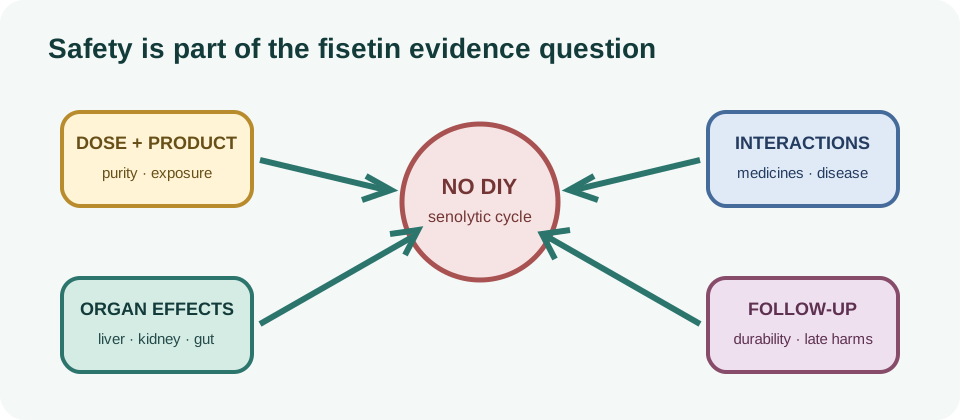
Fisetin supplements vary in formulation, purity and actual exposure. Human studies are too small or incomplete to define a safe senolytic regimen for healthy adults. Possible gastrointestinal effects, allergic reactions, interactions and effects on drug-metabolizing enzymes or transporters require more study. A compound intended to remove cells can also affect cells that are temporarily stressed but biologically useful. Safety assessment should include kidney and liver signals, blood counts when appropriate, immune effects, delayed adverse events and the possibility that a transiently senescent cell has a protective role. Absence of a reported event in a small pilot is not evidence that repeated high exposure is safe for older adults with multiple conditions or medicines.
High-dose or intermittent schedules promoted online are not established medical protocols. “Natural” does not mean selective, and a short cycle does not eliminate delayed toxicity. People taking anticoagulants, immunosuppressants, diabetes medicines or multiple prescriptions should not add fisetin without a clinician or pharmacist reviewing the full context.
Fisetin, quercetin and dasatinib are not class-equivalent
Quercetin is another flavonoid often described as senolytic, but a shared label does not prove shared selectivity, tissue exposure or efficacy. Fisetin and quercetin have different chemistry and pharmacology, and the best evidence for each may come from different models. A comparison should identify the exact intervention and endpoint.
Dasatinib is a prescription tyrosine-kinase inhibitor with clinically important adverse effects. Combining it with quercetin in an experimental senolytic study is not equivalent to taking a plant flavonoid supplement. Prescription-drug risks, monitoring and indication cannot be imported into a wellness protocol or ignored because the combination is described as intermittent.
For now, the scientifically honest comparison is about hypotheses and evidence gaps. The quercetin longevity page and senescence page keep those boundaries explicit.
Evidence verdict
Fisetin has plausible senolytic biology and encouraging cell and mouse findings, including recent preclinical muscle-function work. Human evidence remains sparse. The ten-person 2024 pilot was uncontrolled and inconsistent, and registered or protocol-stage trials do not establish efficacy. COVID-FIS was a different disease trial and its futility termination should not be misrepresented as an aging result. A trustworthy human claim would need a standardized preparation, a blinded comparator, a defined senescence-related target, direct functional outcomes and monitoring that continues after the dosing window. It would also need to explain whether the intervention removes a harmful cell population, changes its secretory behavior or merely shifts a downstream marker. Those are different biological claims with different safety implications.
The key milestones are completed randomized human studies, direct functional outcomes, validated senescence measures, tissue-relevant exposure, independent replication and long-term safety. A younger clock or a lower inflammatory marker alone is not proof that harmful senescent cells were selectively removed or that healthspan improved.
The responsible conclusion is preclinical senolytic candidate, human efficacy unproven and self-use not established. Follow the supplements hub and research hub for updates. The next credible change in this verdict would come from completed, well-controlled human data with prespecified functional and safety outcomes, not from a new product label or another uncontrolled clock result.
- keep cell and mouse evidence separate from human evidence;
- treat the 2024 pilot as an inconsistent uncontrolled signal;
- read protocols and registries as design information;
- require functional outcomes beyond clocks and biomarkers;
- do not recommend senolytic cycles or high-dose self-experimentation.