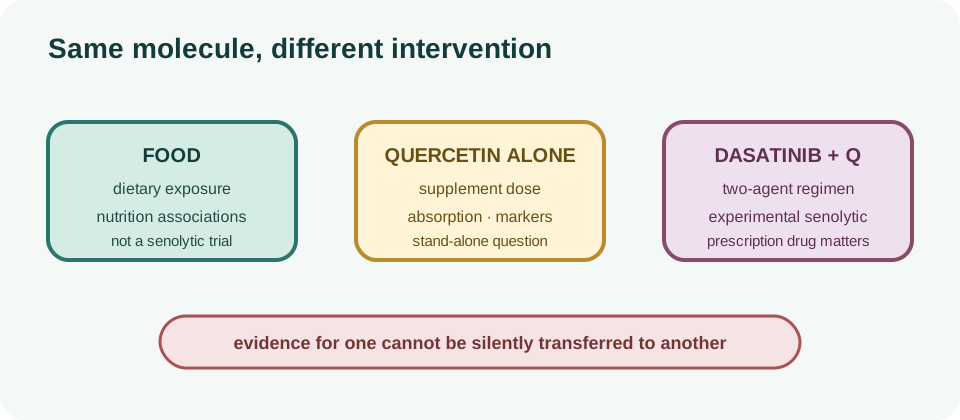
What quercetin is and where it appears
Quercetin is a flavonol, a subclass of plant polyphenols. It occurs in foods such as onions, apples, berries, capers, leafy vegetables, tea and other plant products. Food contains quercetin in several chemical forms, commonly as glycosides or other conjugates rather than as the isolated aglycone used in many supplement studies. The amount in a food depends on the plant variety, growing conditions, storage, processing and the part of the plant that is eaten.
That dietary origin explains why quercetin is often placed in a general “antioxidant” or “anti-inflammatory” category. Those labels are too broad to establish a clinical effect. In the body, quercetin is absorbed, metabolized and converted into circulating conjugates and metabolites. The form measured in a cell assay may not be the form present at a human tissue target. A food association, a capsule pharmacokinetic result and a senolytic experiment therefore answer different questions.
The cellular senescence and aging page describes why senescence is a biological state rather than a single disease or one universally harmful cell type. Senescent cells can have protective roles in development, wound repair and tumor suppression. A senolytic claim is narrower: a defined exposure is intended to selectively remove a harmful or persistently inflammatory population, and the removal should lead to a meaningful benefit without unacceptable harm.
Why quercetin appears in senolytic research
Quercetin became prominent in senolytic research because laboratory studies found that its effects can depend on cell type, stress state and signaling context. In some models, quercetin can interfere with pro-survival pathways that senescent cells use. That observation supported testing it with dasatinib, a tyrosine-kinase inhibitor already used as a prescription anticancer drug. The combination is commonly abbreviated D+Q.
The mechanistic rationale is not the same as proof of a consumer supplement effect. Cell culture concentrations may be difficult to reach safely in human tissues. Senescent cells are heterogeneous, and a compound that affects one model may not selectively remove the same population in an older person. Tissue distribution, metabolism, dosing schedule, immune response and off-target effects all matter. A lower inflammatory marker can also result from many processes besides selective senescent-cell clearance.
Animal findings can justify a human study, but they do not establish a human dose or a longevity benefit. The correct chain is mechanism, exposure, target engagement, function, durability and safety. Quercetin is scientifically interesting at the first steps. It has not completed that chain as a stand-alone human longevity intervention.
Stand-alone quercetin versus D+Q
This distinction is the central reading rule for the entire topic. A quercetin supplement is a nutritional product whose dose, chemical form and quality vary. D+Q is an experimental drug combination that includes dasatinib at a pharmacologic dose. Dasatinib is not a supplement and carries clinically important risks, including blood-count, bleeding, fluid-retention, cardiac and drug-interaction concerns that must be evaluated by clinicians. Intermittent dosing does not make it a wellness product.
When a D+Q study reports a change in senescence-associated markers, the result belongs to the combined intervention. It may reflect synergy, an effect of dasatinib, an effect of quercetin, or a context-dependent interaction. Without a quercetin-only comparator, the study cannot isolate the contribution of quercetin. Nor does a D+Q study establish that a retail quercetin product creates the same exposure or biological effect.
The senolytics human-evidence page uses this separation to prevent a common marketing error: turning a prescription combination tested in carefully selected research participants into a recommendation for high-dose flavonoid self-experimentation.
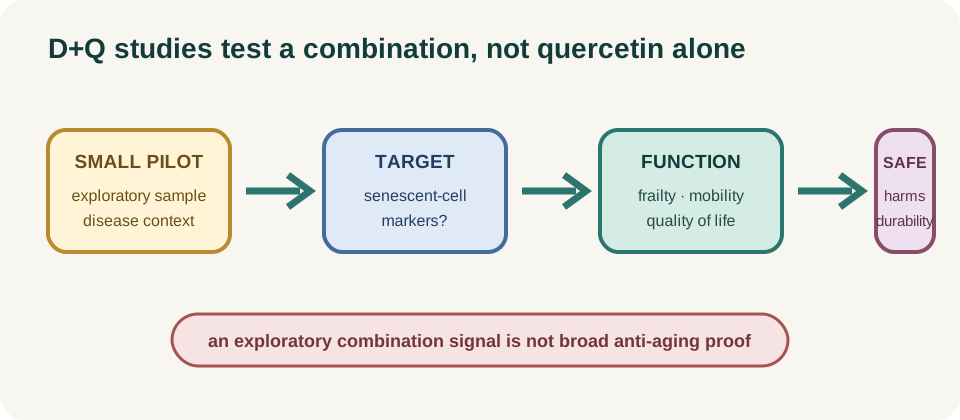
First-in-human D+Q work in idiopathic pulmonary fibrosis
Early human work tested D+Q in idiopathic pulmonary fibrosis, an age-associated and irreversible lung disease in which senescence has been proposed as one contributor to tissue dysfunction. The initial study was an open-label pilot without a control group. That design could suggest feasibility or generate hypotheses, but changes in function cannot be confidently assigned to the intervention because disease trajectory, expectation and measurement variation are not controlled.
A later randomized, placebo-controlled phase-I pilot enrolled 12 participants and focused primarily on feasibility and tolerability. Participants received intermittent D+Q for three weeks or matching placebo. All participants completed the scheduled dosing and assessments. The study reported no serious adverse events related to D+Q, but non-serious adverse events were more frequent in the D+Q arm, and sleep disturbance and anxiety appeared disproportionately in that group. Pulmonary, frailty and physical-function measures were exploratory and the study was underpowered to demonstrate efficacy.
The appropriate conclusion is modest: intermittent D+Q could be administered in this small, selected IPF sample and warranted further study. It is not evidence that quercetin alone improves lung disease, removes senescent cells throughout the body or extends life. It is also not a basis for copying the studied doses, because the intervention included prescription dasatinib and was delivered under a clinical research protocol.
Target engagement in diabetic kidney disease
A 2019 open-label phase-1 pilot studied D+Q in nine adults with diabetic kidney disease. The participants received three days of oral dasatinib and quercetin, followed by repeat sampling. Investigators measured tissue and blood markers associated with senescence, including p16, p21, senescence-associated beta-galactosidase and selected inflammatory factors.
The report found reductions in several measured markers and described lower adipose-tissue senescent-cell burden by the study’s assays. This was important because it provided preliminary human target-engagement evidence, rather than relying only on a blood biomarker or a mouse model. But the study was small, open-label and uncontrolled. It did not test quercetin alone, did not establish a durable functional benefit and did not establish a longevity outcome.
Markers are useful when they are validated, tissue-relevant and interpreted alongside clinical outcomes. They are not interchangeable with a direct count of every harmful senescent cell. The study’s result supports the proposition that D+Q can change selected senescence-related measurements in a particular human population. It does not support the proposition that a quercetin capsule is a proven human senolytic.
The 2024 randomized bone-metabolism trial
A phase-2 randomized controlled trial evaluated intermittent D+Q in 60 postmenopausal women. The study tested bone-metabolism outcomes, including the bone-resorption marker C-terminal telopeptide of type 1 collagen (CTx). Its primary endpoint was the percentage change in CTx at 20 weeks.
The primary endpoint did not differ between D+Q and control. The reported median change was −4.1% in the D+Q group versus −7.7% in control, with a P value of 0.611. A bone-formation marker, P1NP, increased relative to control at two and four weeks but was not different at 20 weeks. These are the prespecified overall findings and should anchor the interpretation.
The investigators also reported exploratory analyses suggesting that participants with a high senescence burden might have responded differently. In that subgroup, some bone markers and radius bone mineral density moved in a favorable direction. This is a hypothesis for future stratified research, not confirmation of a general D+Q effect. Subgroup findings can be unstable, especially when a trial is small, and should not replace the null primary endpoint.
Nothing in this trial isolates quercetin from dasatinib. It therefore cannot answer whether quercetin alone is senolytic, whether a retail formulation reaches the studied exposure or whether D+Q prevents fractures. It does demonstrate why endpoint hierarchy matters: a compelling exploratory signal does not overturn a null primary result.
| Finding | Evidence level | What it supports |
|---|---|---|
| Overall CTx at 20 weeks | primary endpoint | no significant difference between groups |
| P1NP at 2 and 4 weeks | secondary endpoint | short-term bone-formation signal requiring confirmation |
| High-senescence subgroup | exploratory analysis | hypothesis that baseline burden may modify response |
| Intervention | combined D+Q | cannot establish quercetin-alone efficacy |
The 2025 cognition and mobility pilot
A 2025 pilot examined intermittent D+Q in older adults at risk for Alzheimer’s disease. Twelve participants took 100 mg of dasatinib and 1,250 mg of quercetin for two consecutive days every two weeks over 12 weeks. The single-arm study evaluated feasibility, adverse events, cognition, mobility and biomarkers.
There were no serious adverse events attributed to the intervention in this small sample. Mean Montreal Cognitive Assessment scores increased by 1.0 point, but the confidence interval included no change. Participants with the lowest baseline scores showed a larger mean increase, and changes in TNF-alpha were correlated with changes in MoCA. Those findings are interesting but preliminary. Correlation is not proof that D+Q caused the cognitive change, and there was no appropriate control group.
The study’s value is translational: it shows that researchers are testing whether intermittent D+Q can be delivered and whether functional or inflammatory signals can be measured in a carefully defined older population. It does not show that the combination prevents Alzheimer’s disease, and it says even less about quercetin alone. A larger blinded randomized trial with prespecified cognitive, mobility, safety and durability outcomes would be needed.
What D+Q studies do and do not tell us about quercetin alone
Across these studies, the intervention is D+Q. The diabetic-kidney study provides preliminary target-engagement evidence. The IPF randomized pilot provides feasibility and tolerability information. The bone trial provides a null primary endpoint with exploratory subgroup signals. The cognition and mobility pilot provides an uncontrolled, preliminary functional signal. Taken together, they justify continued research into the combination in selected clinical populations.
They do not establish four stronger claims: that quercetin alone selectively clears senescent cells in humans; that a consumer supplement has the same pharmacokinetics as the research preparation; that intermittent D+Q prevents age-related disease; or that either intervention extends human lifespan. The absence of those findings is not a dismissal of the research. It is the correct boundary between what has been measured and what remains unknown.
A useful evidence table should therefore name the intervention before naming the molecule. “Quercetin study” is ambiguous when it could mean food intake, a quercetin-only capsule, a quercetin formulation with enhanced delivery or a prescription combination containing dasatinib. Those are not interchangeable exposures.
Human quercetin-alone evidence: blood pressure and risk factors
Quercetin-alone research does exist, but it usually addresses conventional cardiometabolic or inflammatory endpoints rather than senolysis or aging. A 2022 meta-analysis included 10 randomized trials with 841 participants. It reported a modest reduction in systolic blood pressure in the mixed population and subgroup-specific changes in systolic or diastolic pressure. The size and consistency of a blood-pressure change can be clinically relevant in context, but it is not a longevity endpoint.
These trials also illustrate why supplement evidence should be described precisely. Studies differ in dose, duration, participant health, baseline blood pressure, product form and outcome measurement. A pooled average does not tell a healthy person that a particular capsule will produce the same response. It also does not demonstrate that a lower reading resulted from senescent-cell clearance.
Quercetin may be investigated for endothelial function, exercise recovery, inflammation or other risk factors. Unless a study is randomized, adequately powered, clinically relevant and long enough to capture meaningful outcomes, the finding remains supportive or exploratory. Risk-factor evidence is not the same as evidence of slowed aging. The longevity clinical-trials hub explains why mortality, disability, function and disease events require separate evaluation from surrogate markers.
- name the exact quercetin form and dose;
- report the comparator and prespecified primary outcome;
- separate a risk-factor change from a patient-important outcome;
- avoid converting antioxidant language into a senolytic claim.
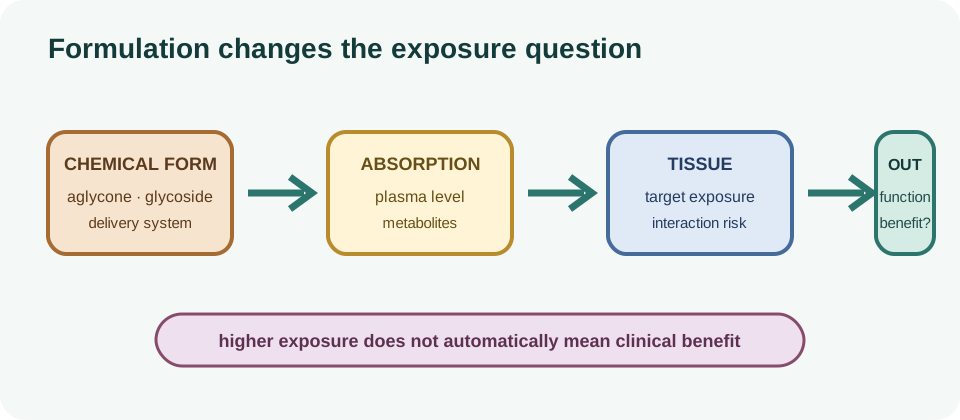
Bioavailability: glycosides, aglycone and formulation
Quercetin bioavailability is not one fixed number. The aglycone and glycoside forms can differ in solubility, absorption and metabolism. Food matrices can change exposure, and quercetin is extensively transformed before and after absorption. What reaches the circulation may be a mixture of conjugated metabolites rather than the unchanged compound used in an in-vitro experiment.
This matters for both efficacy and safety. A formulation that increases measured exposure may increase the chance of a biological effect, but it may also change interactions and tolerability. A product with a different salt, glycoside, particle size, lipid complex or delivery vehicle should not automatically be treated as equivalent to the preparation used in a trial.
It also complicates comparisons across studies. “500 mg quercetin” describes a nominal amount, not necessarily the same absorbed exposure. Researchers need to report chemical form, analytical quality, food or lipid context, timing, pharmacokinetic sampling and the relevant metabolite measurements. Consumers should be cautious with marketing that converts a formulation-specific blood-level result into a universal anti-aging claim.
| Variable | Possible effect | Interpretation limit |
|---|---|---|
| Aglycone versus glycoside | changes solubility, absorption and metabolism | same label dose may not mean same exposure |
| Food matrix | fat and fibre can alter uptake | capsule results may not generalize to food |
| Delivery system | emulsions, complexes and phytosomes may increase exposure | benefit and safety still require human outcome data |
| Quality and assay | actual content may differ across products | published trial cannot validate every retail product |
What the 2025 bioavailability review adds
A 2025 systematic review and meta-analysis evaluated 31 human intervention studies of methods intended to improve quercetin bioavailability through formulation or food-matrix changes. The review reported that chemical structure, physicochemical modification and food context all influenced exposure. It described higher exposure for some oligoglucoside or formulated preparations compared with quercetin aglycone, while emphasizing that simply improving solubility or stability does not guarantee a corresponding increase in bioavailability.
Some formulation comparisons in the review produced very large relative differences. Those numbers are useful for showing that delivery matters, but they should not be mistaken for proof that the best-absorbed product improves aging outcomes. Relative bioavailability is a pharmacokinetic result; it is not a validated senolytic endpoint. A future trial would still need to test a named preparation against placebo, measure a prespecified clinical outcome and monitor harms.
The practical conclusion is not that one formulation is universally “best.” It is that a quercetin product should be treated as a specific intervention. Formulation, dose, schedule and co-administered medicines should all be disclosed before evidence is transferred from one study to another.
Safety and interaction considerations
Quercetin is present in food, but food-level exposure does not establish that concentrated supplements are risk-free. Short human studies may not detect uncommon adverse events, delayed effects or interactions in people taking several medicines. Reported tolerability depends on dose, duration, formulation, participant health and how actively harms were sought.
Quercetin may affect drug-metabolizing enzymes or transporters, and interaction risk is especially important when a formulation increases exposure. People taking anticoagulants, antiplatelet drugs, immunosuppressants, chemotherapy, medicines with a narrow therapeutic range or multiple chronic prescriptions should obtain individualized advice from a clinician or pharmacist before using a concentrated product. Pregnancy, kidney disease, liver disease and planned surgery also change the risk context.
D+Q has a different safety boundary because dasatinib is a prescription anticancer medicine. The D+Q research doses are studied doses, not recommendations. Dasatinib can affect blood counts, fluid balance, the heart and drug metabolism. Anyone presenting D+Q as a “natural senolytic protocol” is obscuring the material risk introduced by the prescription component.
- check for prescription-drug interactions before concentrated use;
- treat a higher-exposure formulation as a different intervention;
- do not copy D+Q research schedules outside medical supervision;
- report delayed and uncommon harms, not only immediate tolerability.
Fisetin versus quercetin
Fisetin and quercetin are both plant-derived flavonoids discussed in senolytic research, but they are different molecules with different pharmacology, exposure questions and human evidence. A shared marketing label such as “natural senolytic” does not establish shared selectivity, tissue penetration or clinical effect.
Fisetin currently has a strong preclinical narrative and a limited, developing human evidence base. Quercetin has broader nutritional research and is part of the experimental D+Q combination, but that does not make quercetin alone a proven human senolytic. The fisetin longevity page and fisetin versus quercetin comparison should be read by intervention and endpoint rather than by product category.
Neither molecule should be compared with dasatinib as though all three were interchangeable supplements. Dasatinib is a prescription drug with a different clinical risk profile. Comparing a natural compound with a prescription combination requires separate columns for dose, schedule, formulation, target, evidence level, outcome and safety—not a single “senolytic strength” score.
Evidence verdict
Quercetin is a plausible dietary flavonol and a legitimate subject of laboratory, pharmacokinetic and clinical research. Human quercetin-alone studies suggest that some formulations may influence selected risk factors such as blood pressure, but those findings do not establish senescent-cell clearance or slowed aging. The bioavailability literature further shows why dose labels cannot be separated from chemical form, formulation and food context.
The strongest human senolytic evidence involving quercetin comes from D+Q studies. The diabetic-kidney pilot reported changes in selected senescence-related markers; the randomized IPF pilot established feasibility and tolerability but was underpowered for efficacy; the 2024 bone trial had a null overall primary endpoint with an exploratory subgroup signal; and the 2025 cognition/mobility pilot was small, single-arm and preliminary. All of those results belong to the combined D+Q intervention, not quercetin alone.
The responsible conclusion is quercetin senolytic activity remains an experimental claim in humans, and stand-alone quercetin is not a proven longevity therapy. The next meaningful change in this verdict would require a well-controlled human trial that isolates quercetin, uses a reproducible formulation, measures relevant target engagement and function, and follows participants long enough to assess durability and harm. A new supplement label, a larger relative-bioavailability number or another uncontrolled biomarker change would not be enough.
For updates, follow the supplements hub, the research hub and the linked human senolytics evidence review. The page should be revisited as larger D+Q trials or quercetin-alone senolytic studies report results.
- keep dietary, supplement and D+Q evidence separate;
- report primary endpoints before exploratory subgroup signals;
- treat human target engagement as different from clinical benefit;
- read formulation claims as exposure evidence, not longevity proof;
- do not recommend high-dose quercetin cycles or D+Q self-experimentation.