What sulforaphane is: glucoraphanin, myrosinase and sprouts
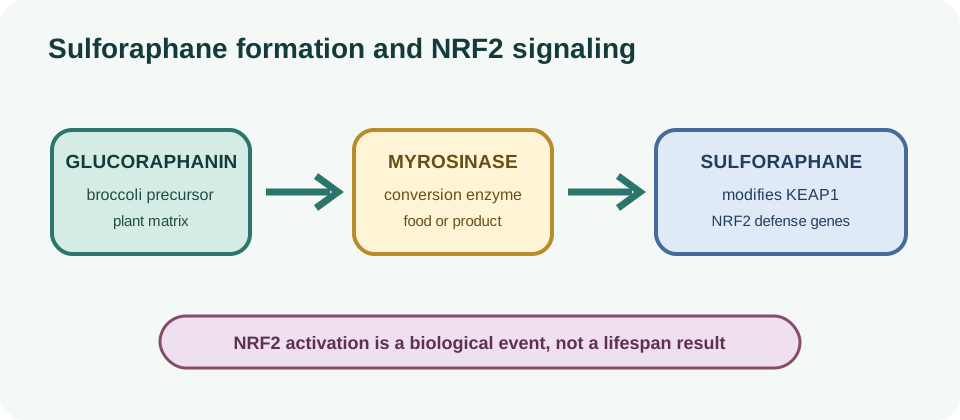
Sulforaphane is an isothiocyanate formed when the glucosinolate glucoraphanin is hydrolyzed. In a broccoli plant, tissue damage brings glucoraphanin into contact with the enzyme myrosinase, which can generate sulforaphane. Human preparations may therefore contain preformed sulforaphane, glucoraphanin with active myrosinase, glucoraphanin without reliable myrosinase or whole foods with variable amounts of both.
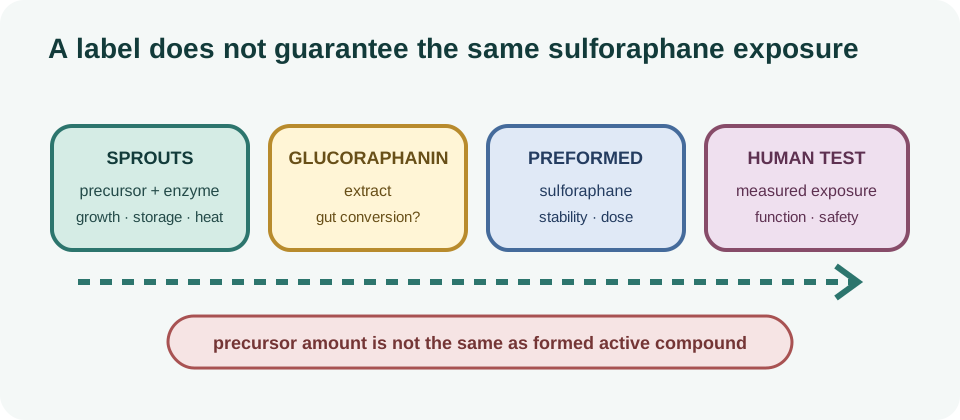
Broccoli sprouts are popular because they can contain substantial glucoraphanin and myrosinase, but their content varies with cultivar, growing conditions, age, storage, preparation and serving size. Heating can reduce plant myrosinase activity, while the gut microbiome may contribute to conversion. A label reporting glucoraphanin is not the same as a measured dose of sulforaphane reaching circulation.
This chemistry is central to interpretation. “Broccoli,” “broccoli-sprout extract,” “glucoraphanin,” and “sulforaphane” are related but different interventions. The supplements hub treats preparation and exposure as part of the evidence rather than as packaging details.
| Preparation | Main input | Key uncertainty |
|---|---|---|
| Whole broccoli sprouts | glucoraphanin plus variable plant myrosinase | cultivar, growth, storage and cooking |
| Glucoraphanin extract | precursor that relies on conversion | gut and product myrosinase activity |
| Preformed sulforaphane | active isothiocyanate | stability, dose and tolerability |
| Standardized combination | declared precursor and enzyme amounts | whether measured conversion matches the label |
KEAP1-NRF2 signaling in plain language
NRF2 is a transcription factor that helps cells respond to oxidative and electrophilic stress. Under resting conditions, the protein KEAP1 helps regulate NRF2 turnover. When reactive signals modify KEAP1, NRF2 can accumulate, enter the nucleus and increase expression of genes involved in antioxidant defense, detoxification enzymes, glutathione handling and other protective responses.
Sulforaphane can modify cysteine residues in KEAP1 and thereby stimulate NRF2-related gene programs. This is sometimes described as “turning on detox.” That phrase is imprecise. The pathway changes the expression of cellular defense and stress-response genes; it does not mean a supplement flushes named toxins from the body or protects against every exposure.
NRF2 is not an on-off switch with one ideal setting. Cells use redox signals for adaptation, immune communication, metabolism and repair. Excessive or poorly timed activation may not have the same consequences as a brief adaptive pulse. The mitochondrial aging page explains why redox balance is a regulated system rather than a simple contest in which more antioxidant activity is always better.
NRF2, oxidative stress and aging biology
Adaptive homeostasis can become less responsive with age. Older organisms may show altered responses to acute exercise, inflammation or metabolic stress. A compound that augments one stress-response pathway could therefore be useful as an experimental adjunct to exercise or disease treatment. That is a plausible biological rationale, not proof of longer life.
Oxidative stress also has context. Reactive molecules can damage proteins, lipids and DNA when poorly controlled, but controlled redox signals participate in adaptation. Exercise itself creates signals that help train tissues. Blocking every reactive signal could theoretically interfere with adaptation, while an appropriate hormetic stimulus might strengthen it. The effect depends on dose, timing, tissue, health status and the endpoint being measured.
Aging is a network of interacting changes that includes mitochondrial dysfunction, inflammation, proteostasis, stem-cell exhaustion and altered repair. NRF2 engagement may influence some of those processes without correcting the whole system. A lower oxidative-stress marker is not equivalent to a lower risk of disability, dementia, cancer or death.
Why activating a stress-response pathway is not automatically anti-aging
Stress-response pathways are valuable because they help cells adapt. But “more pathway activity” can be the wrong goal if it is chronic, mistimed or directed at the wrong tissue. A treatment can change a molecular marker without improving the process that matters to a person. It can also help one condition while producing an unwanted effect elsewhere.
Longevity claims require a higher bar than mechanistic plausibility. A study should define the population, preparation, dose, primary outcome and follow-up before results are known. If the intended benefit is resilience, the trial should measure recovery from a defined challenge or clinically meaningful function. If the intended benefit is cancer prevention, it should measure validated precursor lesions or disease events rather than assume that an NRF2 marker predicts them.
The right question is not whether sulforaphane has biological activity. It clearly does. The question is whether a reproducible exposure produces a durable net benefit in humans that exceeds its burdens and risks. That question remains open for healthy longevity.
What the human clinical-trial landscape shows
A 2025 comprehensive review mapped 84 registered sulforaphane or broccoli-derived clinical trials and identified 39 with peer-reviewed publications. The studies covered healthy participants, cancer, brain disorders, respiratory disease, metabolic and cardiovascular conditions, infections and other indications. That breadth makes sulforaphane an unusually mature human-research topic compared with many longevity supplements.
The same review shows why trial count should not be confused with proof. Preparations and outcomes vary, and only a subset of registered studies has published results. A trial can test absorption, a biomarker, safety, a symptom score or a disease endpoint. Those are distinct questions. The existence of 84 records does not mean that sulforaphane has been tested for lifespan or broad healthspan.
Publication status also matters. Registered, recruiting, completed and published are different states. A protocol can show what investigators intended to measure; it cannot supply a result. The longevity clinical-trials page provides the status framework needed to read this literature without turning a registry into a success claim.
| Question | Why it matters | Common overclaim |
|---|---|---|
| What preparation? | conversion and exposure differ across products | all broccoli products deliver the same dose |
| What endpoint? | biomarker, symptom and disease events answer different questions | an NRF2 marker proves longevity |
| What comparator? | controls address time, expectation and background change | pre-post movement proves efficacy |
| What follow-up? | durability and delayed harms need time | a short study proves long-term safety |
The 2026 older-adult exercise and NRF2 study
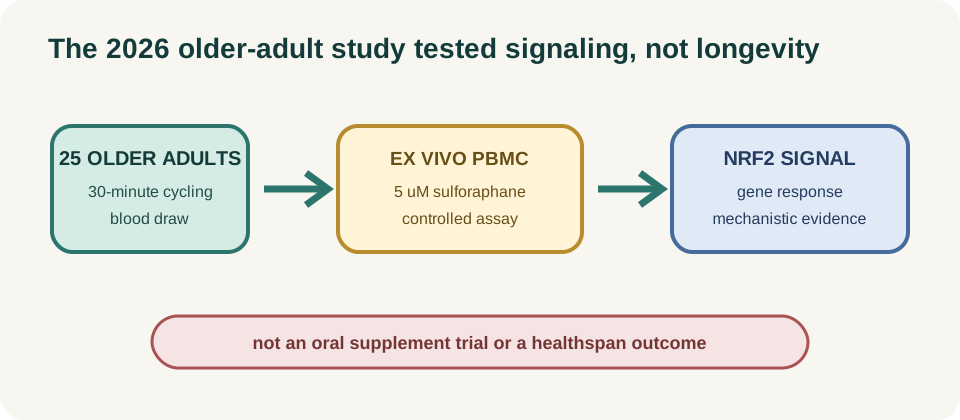
A 2026 Geroscience study enrolled 25 older adults with a mean age of about 67 years. Participants completed 30 minutes of cycling, and researchers isolated peripheral blood mononuclear cells from blood drawn before and immediately after exercise. Those cells were then incubated outside the body with sulforaphane or control conditions. The design combined an in-vivo exercise stimulus with an ex-vivo sulforaphane exposure.
Exercise, sulforaphane and the combination increased NRF2 activation compared with control. The exercise-plus-sulforaphane condition produced a larger NRF2 signal than either treatment alone in the assay, while gene-expression responses suggested a possible ceiling at the tested concentration. The study also measured targets such as NQO1, HO-1, glutathione reductase and GCLC.
This is useful aging-relevant mechanistic evidence. It suggests that PBMCs from older adults can respond to an ex-vivo sulforaphane stimulus and that exercise context may matter. It is not a supplement-outcome trial showing that participants ingested sulforaphane, became healthier, aged more slowly or lived longer.
Why the ex vivo component matters
Ex-vivo experiments are valuable because they allow investigators to control the concentration and timing of a stimulus and to compare cells from the same person under multiple conditions. They can reveal whether a pathway remains responsive after an in-vivo challenge. They also reduce some of the variability that occurs when a supplement is swallowed and metabolized.
That control is also the limitation. An ex-vivo 5 µM exposure is not automatically the concentration achieved in a person’s blood or tissue after eating sprouts or taking a capsule. Isolated PBMCs are not skeletal muscle, brain, liver or every cell type involved in aging. The assay measures signaling and gene expression, not mobility, cognition, hospitalization or survival.
The study therefore supports a carefully worded conclusion: exercise and sulforaphane can stimulate NRF2-related responses in cells from older adults under the tested conditions. It does not establish that an oral sulforaphane product amplifies exercise adaptation or improves healthspan.
Disease-specific human evidence is mixed
Sulforaphane has been studied in cancer-related prevention and treatment contexts, respiratory disease, metabolic health, brain disorders and toxicant-response research. A 2023 systematic review of randomized cancer trials identified eight studies across prostate, breast, pancreatic cancer and melanoma. Dosing was variable, some biomarkers changed and prostate-specific antigen results were inconsistent. The review concluded that heterogeneity prevented a quantitative meta-analysis.
A 2025 systematic review and meta-analysis in schizophrenia provides another caution. Across randomized trials, sulforaphane added to antipsychotic treatment did not show a consistent significant improvement in overall or positive symptoms or cognition. A strong mechanism does not guarantee efficacy in every clinical indication.
Reviews of toxicant and contaminant outcomes can support the biological plausibility of NRF2-mediated defense responses. They cannot be silently converted into a claim that sulforaphane prevents aging-related disease. The inflammaging page and muscle-aging page keep disease and function endpoints distinct from pathway markers.
Mixed results are not a contradiction of the mechanism. They may reflect differences in baseline disease, microbiome conversion, preparation, adherence, timing, concomitant treatment and outcome sensitivity. A compound can engage a pathway consistently while producing benefits only in a defined context—or no meaningful clinical benefit at all.
- read cancer studies as cancer studies, not general longevity trials;
- separate biomarker changes from symptoms and disease events;
- check whether the study used food, precursor or preformed sulforaphane;
- look for replication across populations and preparations.
Formulation, conversion and bioavailability
The main formulation problem is that sulforaphane is often delivered indirectly. A product may contain glucoraphanin and rely on endogenous conversion, or it may include active myrosinase, a stabilized extract or preformed sulforaphane. Conversion can vary with processing, storage, gut microbes, meal context and the integrity of the enzyme. These differences alter the exposure even when labels appear numerically similar.
Broccoli sprouts can be a nutritious food, but a serving cannot be assumed to reproduce a capsule used in a pharmacokinetic trial. A standardized product may improve consistency but still needs evidence that its nominal precursor amount produces the intended exposure. A preformed compound may avoid one conversion step while introducing different stability and tolerability questions.
For cross-study comparison, investigators should report glucoraphanin content, myrosinase activity, measured sulforaphane or dithiocarbamate metabolites, preparation stability, dose timing and adherence. Consumers should be wary of “detox” claims that hide whether the product contains the active compound or only a precursor.
Safety, tolerability and hormesis
Human trials generally report that tested sulforaphane or broccoli-derived preparations are tolerable, but tolerability is preparation- and population-specific. Gastrointestinal symptoms, taste, adherence, allergic reactions and interactions may matter. A short study in healthy adults cannot define chronic safety for people with cancer, liver disease, thyroid conditions or multiple prescriptions.
Sulforaphane’s hormetic framing also needs care. A transient stress signal can induce protective adaptation, but the dose-response curve may not be linear. More exposure is not automatically better, and chronic pathway stimulation may have different effects from a brief pulse. Hormesis is a useful concept for designing research, not a license to escalate a supplement.
People taking anticoagulants, chemotherapy, immunosuppressants or medicines with narrow therapeutic ranges should ask a clinician or pharmacist about concentrated products. Do not replace cancer treatment, smoking cessation, prescribed medication or evaluation of symptoms with broccoli-sprout extracts. Food advice and supplement advice are not interchangeable.
Evidence verdict and what an aging trial would need
Sulforaphane has one of the clearer nutrient-to-stress-response stories in longevity research. Glucoraphanin and myrosinase can generate sulforaphane, and the compound can engage KEAP1-NRF2 signaling. Human research is extensive enough to provide absorption, tolerability and disease-specific evidence. That is a stronger starting point than a purely cellular hypothesis.
It is still not proof of slower aging. The 2025 trial map shows breadth and heterogeneity rather than a single established healthspan effect. The 2026 older-adult study strengthens the mechanistic case but used an ex-vivo exposure to isolated blood cells after exercise. Cancer and schizophrenia reviews show that clinical results can be mixed despite a plausible pathway.
A credible sulforaphane aging trial would need a reproducible preparation, measured conversion and exposure, a randomized comparator, a prespecified functional or disease-related primary endpoint, clinically meaningful follow-up and safety monitoring. It should explain whether the intended benefit is exercise adaptation, infection resilience, cancer prevention, cognition, mobility or another defined outcome. “NRF2 activation” alone cannot carry the claim.
The responsible conclusion is human-studied stress-response compound, longevity efficacy unproven. Broccoli sprouts can fit a healthy diet, but no supplement dose or “detox cycle” is established as a way to extend life. Follow the research hub for updates as geroscience-focused trials report results.
- distinguish glucoraphanin from formed sulforaphane;
- treat NRF2 activation as mechanism, not outcome;
- read ex-vivo studies as mechanistic evidence;
- judge disease-specific trials by their own endpoints;
- require standardized exposure and durable function for longevity claims.