Waterpik Not Working? Safe Troubleshooting and Repair Options
Waterpik water flossers usually need little routine maintenance. However, after months or years of use, some issues may occur. It is a wise decision to know how to perform Waterpik water flosser troubleshooting and how to solve the problem. Here, we will guide you through the process.
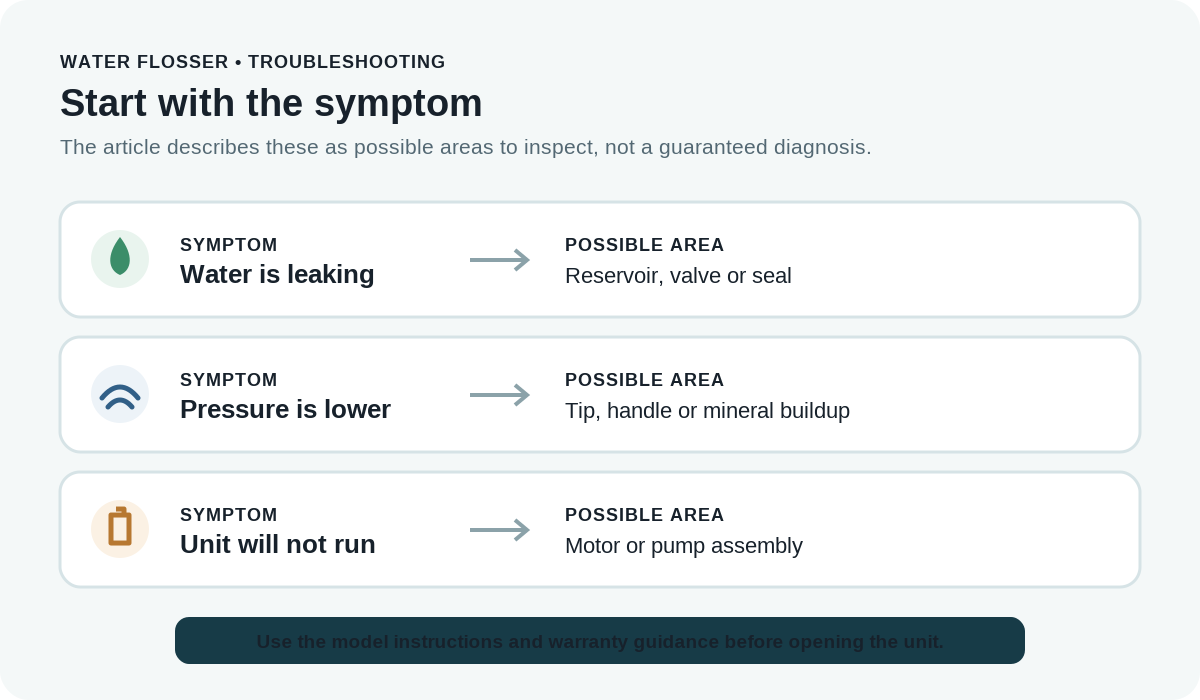
These are starting points for inspection described in the article, not a definitive diagnosis.
Waterpik Water Flossers: Main Components
Waterpik Aquarius Water Flosser WP 660It is essential to know what the main elements of a water flosser are, which helps you to diagnose and repair possible issues easily and in less time. In a case Waterpik water flosser not working you will have to know the main role of each element! Luckily, there are 3 main elements and all of them are easy to distinguish. They are:
Electric Motor and Pump
Basically, these two elements are implemented into the case you will see and which will sit in your bathroom. This is the main and therefore the largest component of each water flosser. The main purpose is to produce pressure and send it to the tip. Motor or pump problems are possible, but low flow is also commonly caused by a clogged tip, mineral buildup, reservoir-valve issues, or incorrect assembly.
Water Reservoir
This is a component where you will pour warm water. In simple words, it is an ordinary tank which stores water before it reaches the water pump. Although it is a simple part, it is linked with a few issues, usually related to the valves and smaller elements inside a tank.
Water Flosser Tip
iHealthia Replacement Orthodontic Periodontal IrrigatorsThis is the component which will spray water into your mouth. There are a few tips available, but all of them are attached to a small handle. Both of them can cause some issues, but they are very rare. Keep in mind that tips should be replaced after 3 or 6 months of use, depending on a model!
Now when you know the main components of each water flosser, you can deduce and discover the main issue which has occurred to your product. Just to add, Waterpik warrantycoverage depends on the model, purchase date, cause of failure, and product terms. Limited warranties vary by product; check Waterpik’s warranty guidance for covered defects and exclusions.
Caring For Your Water Flosser
Waterpik WP 100 Handle Assembly KitIn order to make sure issues don’t occur, it would be a wise decision to care about your water flosser. Yes, it is a simple process which takes no more than 5 minutes of your time, but it truly has an impressive result to the overall condition of your unit. Anyway, all of it should begin with proper cleaning. Clean only removable, user-serviceable parts described in the model manual. Do not open the motor housing or electrical handle for routine cleaning.
Use the cleaning method specified for your model. Pay particular attention to the tip and handle. Visible mold or a persistent odor calls for cleaning the removable parts; it should not be treated as normal.
Waterpik RES WP 100 Replacement Reservoir AssemblyTo clean internal mineral deposits, Waterpik recommends mixing one part white vinegar with two parts warm water, running the mixture through the flosser, then flushing it with a full reservoir of clean warm water. Follow the instructions for your model; do not substitute bleach, arbitrary disinfectants, mouthwash, or other cleaners.
The last, but not least is the prevention of further damages. If you travel and you are planning to go to parts of the world where temperatures are below zero, make sure to remove all the water from the reservoir and from the device. This can prevent ice development which will cause severe damage to your unit.
Now, the time is to mention the most common issues and how to fix them. Waterpik troubleshooting and fixing are easier than you may believe. Go to our How to use a Waterpik article to read more about proper use.
Archived product information. Listed prices, ratings and availability reflect the original snapshot.
Waterpik Aquarius Professional Flosser ReplacementThe most common type of issues is related to water leaking. In general, it can come from the tip, handle, hose, base or a reservoir. Don’t forget that all Waterpik water flossers operate at high pressure, meaning that all of the components we have just mentioned must withstand it at all times. The next step depends on which user-serviceable part is leaking.
Fix:Depending on where the leaking comes, make sure to remove that component. Usually, you will need to perform Waterpik hose repair. Use a manufacturer-supplied, user-replaceable hose/handle assembly only with the correct part and instructions; otherwise contact Waterpik support. For a leaking reservoir valve on applicable countertop models, remove it from below, rinse and massage under warm water for about 30–40 seconds, then reinstall it dome-side up. Replace it if it continues to leak. Addition: You cannot repair Waterpik hose using duct tape, it simply won’t last!
If your reservoir or the entire unit dropped to the floor, the reservoir may have cracked. If a reservoir is cracked, replace it with a compatible part when available. Do not glue a cracked water-contact component and rely on it as a permanent repair.
If the leaking comes from the tip, remove it and reinstall it. If it still leaks, install another one. If there is no leaning anymore, the problem is in the tip itself. Replace it.
Mineral Deposits Or Mold
Waterpik Plaque Seeker Tip PS 100EIf you have performed weekly cleaning, which we mentioned at the beginning, chances are low you will get this issue. In any other way, it is just a matter of time when you will have to deal with it. Mold and mineral debris will appear at the tip, hose, reservoir and even in order components. Mineral buildup can occur over time, especially with hard water. Visible mold or a persistent odor calls for cleaning removable parts.
Fix:For internal cleaning, use the manufacturer’s model-specific vinegar-and-water method, then flush the unit with clean warm water. Do not assume concentrated hydrogen peroxide is suitable for the reservoir. Waterpik describes a diluted vinegar soak for certain removable tips and countertop handles.
Lower Pressure Than Usual
Waterpik Classic Countertop Flosser WP 60Waterpik low pressure can have several causes. If you hear the electric motor while the device is turned on and you still get a pressure on the tip, this alone does not identify the cause. Keep in mind that all units have a variety of pressure settings, so this refers only to the highest pressure setting. The causes are related to the black valve in a reservoir, the reservoir itself and clogs.
Fix:First of all, inspect the device. Make sure all the components are installed properly and there are no damages. Make sure the black valve in a reservoir is properly cleaned and fitted as well. The last, but not least, check the tip and the opening on it. There should be sufficient amount of room for the water to pass.
In a case, a tip is clogged or something else is, make sure to clean it properly and to remove any obstacles. In addition, leaking may cause the low pressure as well, but you will have to perform inspection and fixes from the leakage section.
Waterpik Not Working
Waterpik Not WorkingIn this section, we will mention and explain all, the main malfunctions which can cause your Waterpik not to operate properly. The most common symptoms include not charging, switch on the handle doesn’t work or tip is worn out. Here we should add that in rare cases electric motor can stop working as well. If the unit does not power on, confirm the battery, charger or power connection, model-specific indicators, and charging instructions. If it still fails after official troubleshooting, contact Waterpik support. Failure to charge can involve the cable, adapter, contacts or port, water intrusion, or internal battery; symptoms alone do not identify the failed part.
Fix:The main issue here is in the charger. It can get damaged due to water exposure. The charging port may be damaged as well. Always check the cable for damages.
If a switch, pause button, handle control, or charging system fails after external cleaning and the manual’s troubleshooting steps, contact Waterpik support. Opening the unit can void warranty coverage. If a tip doesn’t work properly it will have to be replaced. Waterpik recommends replacing many water-flosser tips every 3–6 months; check the instructions for specialty tips.
At the end, we can only say that the Waterpik warranty repair is one support option; warranty coverage varies by model, failure, and product terms. A good thing is a fact all Waterpik water flossers guarantee a high quality and they are well-made, specifically for longer usages. In addition, they are optimized for flossing once or two times per day, which is recommended by dentists. Anyway, now you will be ready to solve any problem which may occur at some point. And yes, it is easier than it sounds.