What immunosenescence means
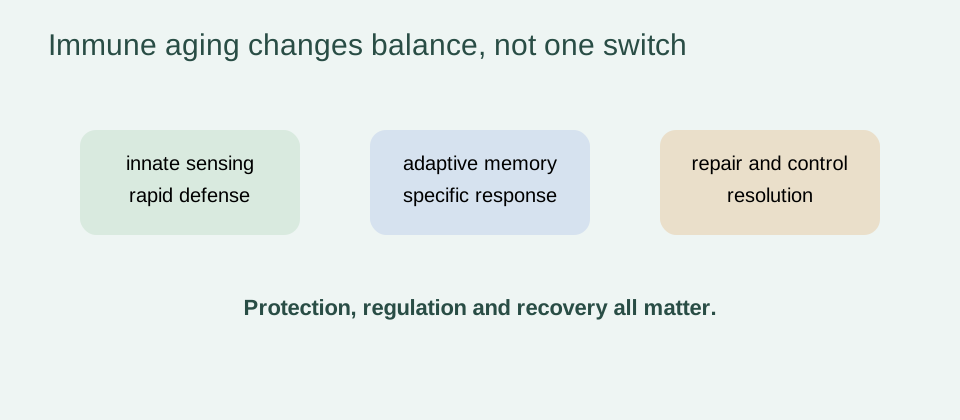
Immunosenescence describes age-related changes that reduce the immune system’s ability to recognize, control and remember new threats. It includes changes in physical barriers, immune organs, hematopoietic stem cells, lymphocytes and innate immune cells. It is not the same as a single inherited immunodeficiency.
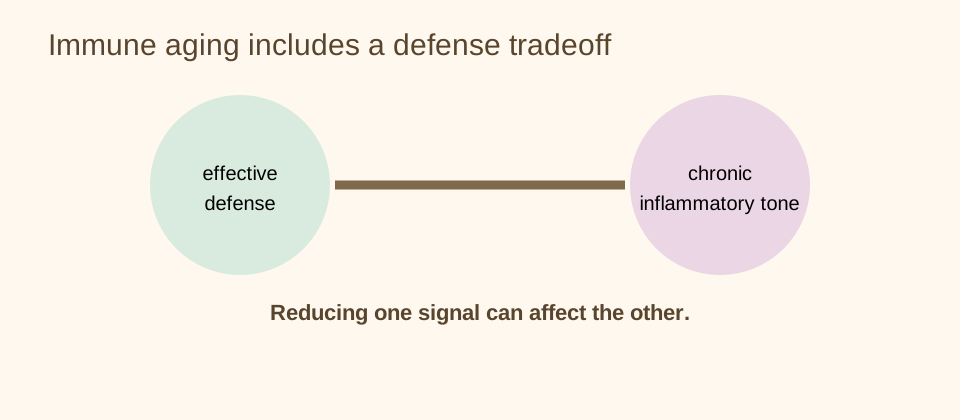
Inflammaging is the related pattern of persistent, low-grade inflammatory signaling. The two processes can coexist: protective responses may become less coordinated while basal activation remains elevated. The inflammaging page explains why a lower inflammatory marker is not automatically immune rejuvenation.
People age differently. Infection history, vaccination, chronic disease, nutrition, sleep, physical activity, medication, smoking and socioeconomic conditions all shape immune function. A chronological age is therefore a poor substitute for a detailed immune profile.
Thymic involution and declining naïve T-cell output
The thymus trains developing T cells to recognize foreign antigens while limiting dangerous self-reactivity. With age, thymic tissue is progressively replaced by fat and connective tissue, and thymic epithelial support declines. This process, called thymic involution, reduces the production of naïve T cells that can respond to antigens not encountered before.
Thymic size on an image is not the same as thymic function. A small residual thymus may retain activity, while a larger structure may not produce a normal output. Functional measures such as recent thymic emigrants, T-cell receptor diversity and immune response are needed to interpret structure.
Thymic decline is important but not sufficient to explain immune aging. Existing memory-cell expansion, chronic antigen exposure, HSC aging, metabolic stress and inflammation also change the available immune repertoire.
A practical interpretation therefore starts with the question being asked. If the question is recent thymic output, TRECs and naïve-cell subsets may be informative. If the question is protection from influenza, SARS-CoV-2 or another pathogen, neutralizing activity, memory formation and clinical outcomes are more relevant. These measurements can disagree without any of them being defective.
| Component | Age-related change | Clinical relevance |
|---|---|---|
| Thymus | less naïve T-cell output | fewer cells available for new antigens |
| T-cell repertoire | diversity can contract as memory cells accumulate | altered vaccine and infection responses |
| B cells | changed production and antibody quality | weaker humoral responses in some settings |
| Hematopoietic stem cells | self-renewal and lineage balance change | myeloid bias and altered immune output |
T-cell receptor diversity, memory cells and B-cell aging
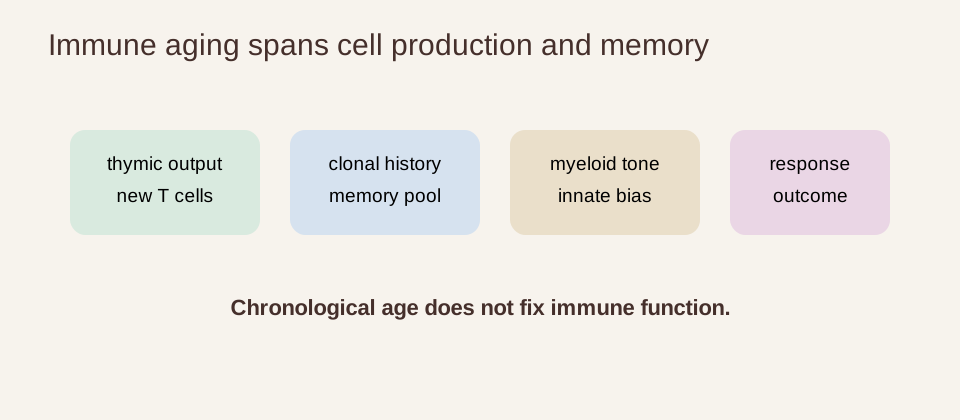
As naïve T-cell production falls, the balance between naïve and memory or highly differentiated cells can shift. Repeated exposure to pathogens and latent viruses can expand particular clones. A broad repertoire may contract, leaving less flexibility for a new antigen even when total T-cell numbers appear stable.
B-cell aging can affect the generation of new antibody responses, affinity maturation and the quality of vaccine protection. Age-associated B-cell populations may also contribute to autoantibody production in selected contexts. These changes are not identical in every person or every infection.
Counting cells is not the same as measuring function. T-cell receptor sequencing, antibody titers, neutralization, memory formation and clinical protection each answer different questions. An intervention that changes a cell count may not improve protection against disease.
Natural killer cells, monocytes and innate remodeling
Innate immune cells can become less responsive to some pathogen signals while producing dysregulated inflammatory responses. Natural killer cells may increase in number yet show altered cytotoxicity or receptor expression. Monocytes and macrophages can change phagocytosis, antigen presentation and inflammatory polarization.
These changes influence how quickly an older person clears infection, resolves tissue injury and removes abnormal or senescent cells. Local tissue context matters: a cell that is protective in one environment can amplify damage in another.
Innate remodeling is not proof that immune stimulation is always beneficial. Stronger activation could increase autoimmunity or tissue injury. The goal is appropriate response, not maximal response.
Interpretation also depends on timing. A high cytokine value during an acute infection is not equivalent to persistent baseline activation, and a low ex vivo response may reflect recent medication or illness. Longitudinal sampling, standardized challenges and clinically meaningful endpoints are needed before an innate signature can guide a rejuvenation claim.
Hematopoietic stem-cell aging and cellular senescence
Hematopoietic stem cells maintain blood and immune cell production. With age, their self-renewal, stress response and lineage balance can change, often producing a relative myeloid bias. Bone-marrow inflammation and altered metabolic signaling can reinforce the shift.
Senescent cells can accumulate within immune and supporting tissues. Their secretory factors may influence inflammation, while senescent immune cells may become less effective at surveillance. The cellular-senescence page separates this mechanism from the much stronger claim that senolytics rejuvenate the entire immune system.
Chronic antigen exposure, including latent viral stimulation, can occupy immune resources and alter T-cell differentiation. This helps explain why immune aging is a history of exposures as much as a simple clock.
Clinical consequences: infection, vaccination, cancer and autoimmunity
Older adults are more vulnerable to severe infection partly because barrier integrity, innate responses, adaptive repertoire and recovery from inflammation can all change. Vaccine responses may be smaller or less durable, although vaccination remains an important protective tool and responses vary by vaccine, health status and prior exposure.
Immune surveillance also matters for cancer. Stimulating or suppressing immunity changes the balance between detecting abnormal cells and avoiding collateral tissue damage. Immune aging can increase cancer risk while making aggressive immune stimulation more hazardous.
Autoimmune and inflammatory disease can emerge or change with age. A therapy that improves one immune response could worsen autoantibody production or chronic inflammation. Clinical endpoints therefore matter more than a generic “younger immune system” label.
How immune aging is measured in humans
There is no single validated immune-age test for routine use. Researchers may combine thymic output, naïve and memory T-cell fractions, receptor diversity, antibody responses, NK-cell function, inflammatory markers, HSC characteristics and response to vaccination or infection.
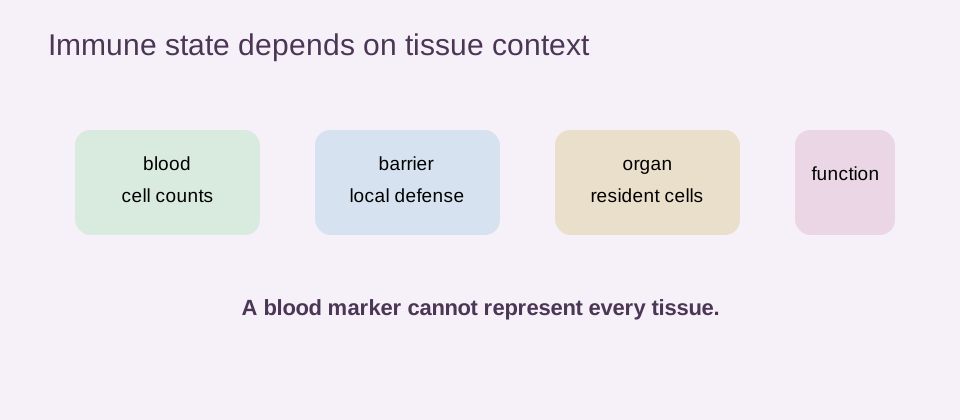
Flow cytometry, T-cell receptor sequencing, cytokine assays, imaging and functional challenge tests each have strengths and limitations. Blood measurements may not capture lymph-node, marrow, gut or tissue-resident immunity. A cross-sectional difference can also reflect infection, medication or cell composition.
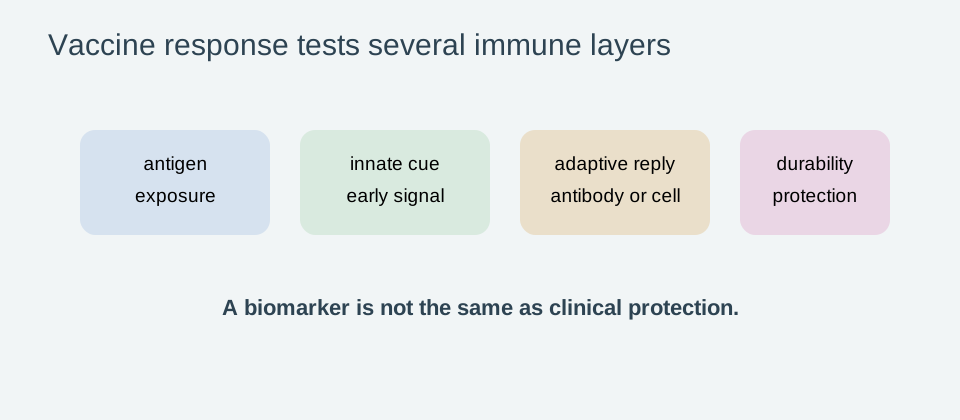
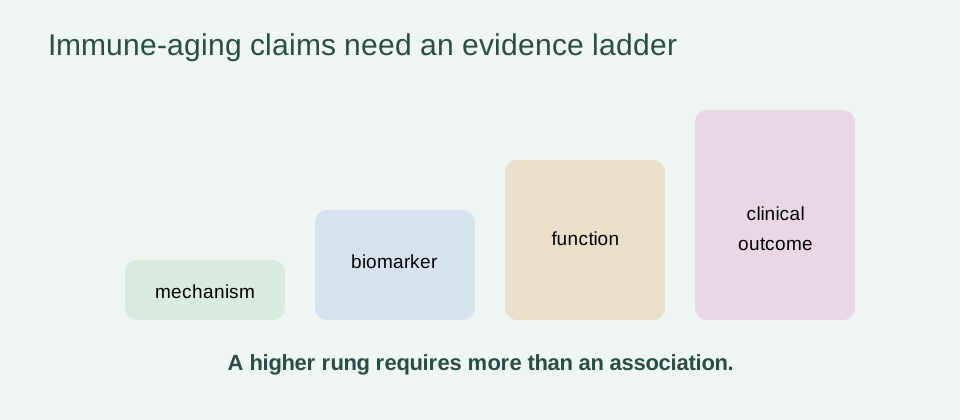
A useful immune-aging endpoint should be reproducible, linked to a meaningful outcome and responsive to an intervention that improves protection without increasing autoimmunity or cancer risk. A biomarker panel that changes without better clinical resilience is not validated rejuvenation.
Researchers also need to separate biological signal from measurement noise. Cell percentages can move because one compartment expands while another stays constant; sequencing diversity can change with sampling depth; and antibody titers can reflect prior exposure rather than newly restored immunity. Pre-specified analyses and replication across cohorts make an apparent rejuvenation effect more credible.
Thymic imaging, TRECs and naïve T-cell biomarkers
Thymic imaging can describe anatomy, but involution and fat replacement are not direct measures of output. T-cell receptor excision circles, or TRECs, are used as a proxy for recent thymic emigrants. TREC levels depend on cell division, dilution, sampling and the composition of the blood compartment, so they are not a complete thymic function test.
Naïve T-cell percentages and repertoire diversity add functional context, but they also depend on infections, vaccination, lymphocyte counts, immunosuppressive treatment and chronic disease. The best studies combine several measures and specify which one was primary.
Thymus-restoration reviews and experimental strategies
Recent reviews discuss FOXN1, growth-hormone and IGF-related approaches, cytokines such as IL-7, sex-steroid ablation, mTOR modulation, HSC interventions, cell therapies, gene delivery and tissue-engineered thymic structures. These strategies show how broad the research field is, not that one has become standard care.
Some approaches improve thymic architecture, T-cell output or immune markers in animals. Others are being considered for selected immunodeficiency or recovery settings. A model result or a review proposal does not establish safety or lifespan benefit in healthy adults.
The rapamycin evidence page illustrates why dosing and immune tradeoffs cannot be borrowed from a mechanistic review. This page intentionally gives no growth-hormone, sex-steroid-blockade or rapamycin dosing guidance.
Cell, gene and tissue-engineering strategies
Engineered thymic organoids, stromal-cell approaches, gene delivery and HSC manipulation aim to restore the environments that produce or support immune cells. These approaches may eventually be useful for defined diseases, transplantation recovery or severe immune dysfunction.
They also carry substantial translational requirements: delivery to the correct compartment, control of cell identity, avoidance of abnormal growth, immune rejection, durable function and monitoring for autoimmunity. A regenerated structure is not necessarily a correctly educated immune system.
In healthy aging, the acceptable risk threshold is especially high. A therapy that might be justified for a life-threatening immunodeficiency cannot be assumed appropriate as a general longevity treatment.
Why preclinical thymus regeneration is not a human longevity therapy
Animal studies can show that a manipulation changes thymic structure, naïve T-cell production or survival under defined conditions. They cannot by themselves establish that an older human will have better vaccine protection, fewer severe infections, lower cancer risk or longer life.
Human trials would need a well-defined population, a reproducible intervention, appropriate controls, immune-function endpoints, clinical outcomes and long-term safety. They would need to monitor autoimmunity, infection severity, vaccine response and malignancy, not just thymic size.
Even a successful immune-restoration therapy may improve healthspan without extending lifespan. That would still be important, but it would be a narrower claim than rejuvenating the whole organism.
The same distinction applies to safety. A short study may miss delayed autoimmunity, abnormal lymphoid growth, infection susceptibility or cancer effects. Healthy adults have a high opportunity cost for uncertain interventions, so a longevity protocol would need unusually persuasive durability and safety evidence before broad use.
Evidence verdict and safest translational claims
Immunosenescence is real and clinically relevant. Thymic involution reduces naïve T-cell output, but T-cell repertoire, B-cell function, innate remodeling, HSC aging, senescence, chronic antigen exposure and inflammaging also contribute. Thymic size alone cannot describe immune age.
Current reviews of growth-hormone/IGF, cytokine, mTOR, sex-steroid, HSC, cell, gene and tissue-engineering strategies identify promising research directions. They do not establish a standard thymic-regeneration protocol or prove that immune biomarker changes reduce mortality.
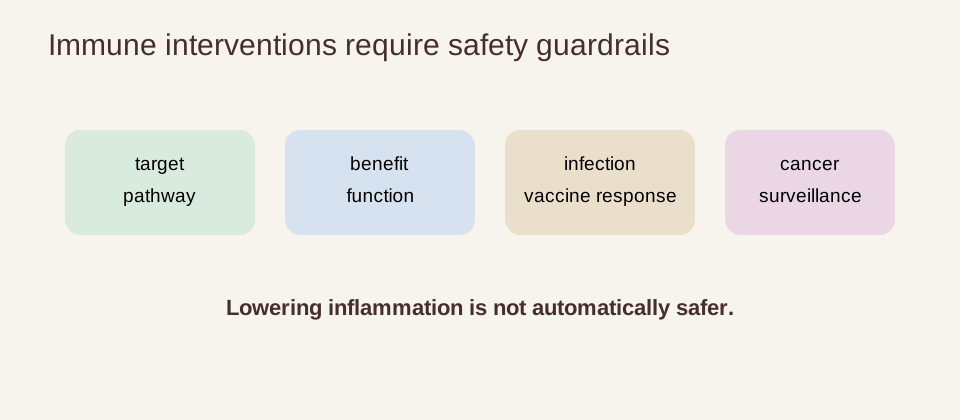
The responsible conclusion is immune rejuvenation is an active research field, while human lifespan extension is unproven. The strongest claims should be limited to a named intervention, a defined immune function, a defined population and a measured clinical outcome. Any proposed stimulation must be balanced against infection, vaccine, cancer-surveillance and autoimmune risks.
- keep immunosenescence distinct from generalized immunodeficiency;
- separate thymic anatomy from functional output;
- measure immune protection rather than cell counts alone;
- avoid growth-hormone, sex-steroid or rapamycin dosing advice;
- do not translate preclinical regeneration into human longevity.