“Fake teeth” can mean very different things. A dental prosthesis is a professionally planned device or restoration that replaces or restores teeth—such as a complete denture, removable partial denture, bridge, implant-supported tooth, crown or veneer. A costume tooth or generic snap-on cosmetic cover may only change appearance temporarily. It is not a functional replacement tooth and should not be treated as one.
If you want to replace missing teeth or restore chewing, start with a licensed dentist. The right option depends on which teeth are missing or damaged, gum and bone health, your bite, medical history and goals. Product photos, star ratings and online shade charts cannot establish whether an appliance fits safely.
Which options replace or restore teeth?
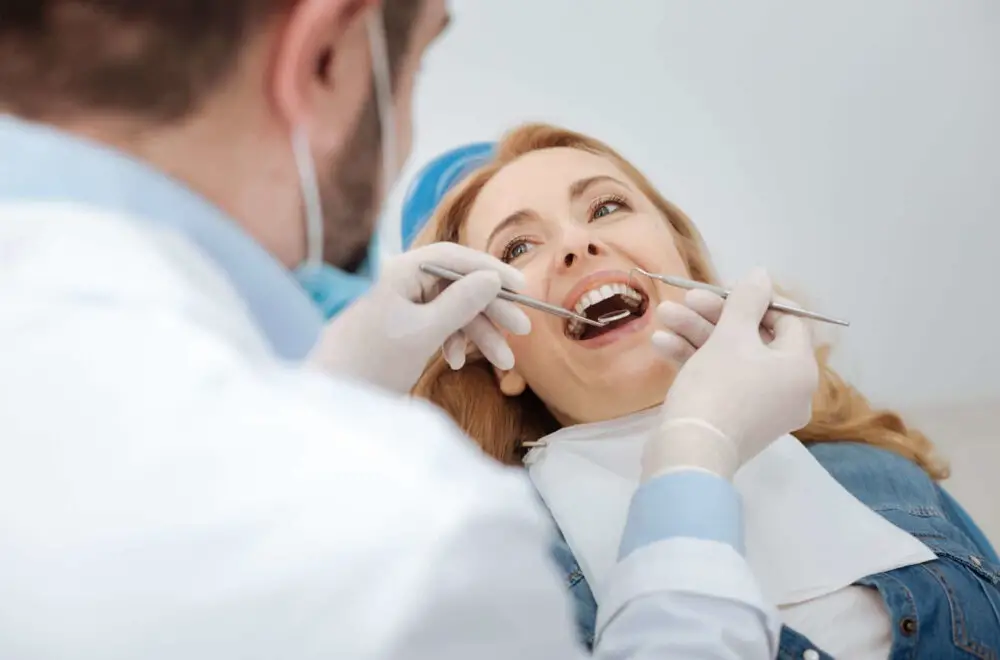
Several treatments can look natural, but they do different jobs. A denture is removable. A bridge is fixed in place and uses neighboring teeth or implants for support. An implant-supported crown replaces one tooth above a dental implant. A dental crown or veneer covers or restores an existing tooth; it does not replace a missing one by itself. A dentist explains what is suitable after examining the mouth and reviewing any needed images.
For a single missing tooth, possible options may include an implant-supported crown, a tooth-supported bridge or a selected removable partial denture. Several missing teeth may be replaced with a partial denture, bridge or implant-supported design. If all teeth in an arch are missing, a complete denture or an implant-retained option may be discussed. See our guides to implants versus dentures and bridges and implants for more background.
What makes a dental prosthesis look natural?
Appearance is planned with fit and function
Natural-looking replacement teeth are chosen to suit the person’s face, surrounding teeth, smile line, gum display and bite. A dentist and dental laboratory may use clinical photographs, scans or impressions, shade information and design instructions to coordinate shape, color and position. A color swatch viewed online cannot show how a shade will look beside a person’s teeth in different lighting.
Appearance should be considered alongside comfort, stability, speech, chewing, cleaning and the health of teeth and gums. An appliance that looks convincing in a product photo may be too bulky, put pressure in the wrong place or interfere with the bite. A well-planned removable denture may feel unfamiliar at first and need professional adjustments; that does not mean the wearer should reshape or force it themselves.
Where should you get realistic replacement teeth?
For a functional prosthesis, contact a licensed dentist or prosthodontic practice. The clinician examines the teeth, gums, bite and supporting structures; discusses treatment goals and alternatives; and creates a plan. Dental laboratory technicians then fabricate many dentures, bridges, crowns and veneers from the dentist’s written instructions, impressions or scans. A laboratory is an important part of care, but it is not a substitute for the clinician who diagnoses, prescribes, fits and follows the prosthesis.
The American Dental Association warns that direct-to-consumer dental-laboratory services can leave diagnosis, treatment planning and supervision out of care. An appliance can appear realistic while covering untreated decay or gum disease, pressing on tissue, or fitting the bite poorly. A self-taken impression or online questionnaire is not equivalent to a dental exam. The ADA describes its concerns in its policy on direct-to-consumer dental services.
Mass-market marketplaces and costume shops should not be presented as sources for functional dentures, bridges or other prostheses. If your goal is only a costume effect, treat decorative teeth as props: follow the product’s safety directions, do not use them to eat, and stop if they cause pain, pressure or irritation. Do not try to convert a cosmetic cover into a tooth replacement.
How dental laboratories fit into treatment
Dental technicians make custom devices, including complete and partial dentures, fixed bridges, crowns, veneers and some appliances. They use a range of materials and fabrication methods, and they generally work from a dentist’s prescription, impressions or digital scans and design instructions. The dentist-provider remains responsible for the patient’s diagnosis, treatment plan, delivery, fit and follow-up. The ADA’s overview of the dental laboratory technician role describes this dentist-laboratory relationship.
That division of work does not make laboratory-made prostheses less personal. It is how a custom device can be built to an individual plan. If a device feels loose, rubs, causes sores or changes the way the teeth meet, contact the dentist for an assessment. Do not file, bend, glue or reshape it at home; an attempted repair can damage the appliance or create a new fit problem.
Materials depend on the kind of prosthesis
There is no single “best fake teeth material.” Complete and partial dentures may use acrylic resin bases and polymer or porcelain teeth; partial dentures may also include a metal framework. Crowns and bridges may use ceramics, zirconia, metal alloys, resin-based materials or metal-ceramics. Each material has different properties, manufacturing requirements, appearance, wear behavior and clinical uses.
Porcelain denture teeth can provide an appealing appearance and wear resistance, but they are not automatically preferred for every denture. Acrylic or other resin teeth are also widely used. Crowns and veneers are another category: ceramic options may be chosen for color, while metal or metal-ceramic options may be considered in selected cases. A dentist evaluates material choices for the particular tooth or prosthesis rather than ranking them in a universal list. The ADA’s guide to materials for indirect restorations explains that composition, strength, fabrication and clinical indications differ.
Ask the dentist what material is proposed, why it suits your case, how it will be maintained and what repair options are available. If you have a known sensitivity or allergy, mention it before treatment so the clinician can consider the materials and your history. The final shade and shape should be selected with the surrounding teeth and the planned function in mind, not just a photograph of a “perfect” smile.
What should the fitting process involve?
Expect evaluation, fitting and follow-up
Planning begins with an examination and discussion of your goals. The dentist may take images, scans or impressions when clinically useful and may coordinate with a laboratory. The steps and number of visits differ by treatment: a removable denture needs fitting and adjustment, while an implant-supported restoration also depends on implant planning and healing. A temporary or provisional tooth may be used during some treatment plans, but it should be provided and monitored as part of care.
A removable partial denture should seat with relative ease. The ADA advises patients not to force it into position by biting down, because doing so can bend or break clasps. A new partial may feel awkward at first, and follow-up adjustments can help address sore spots. For advice specific to partial dentures, see the ADA’s partial denture guide.
- Evaluation: discuss missing or damaged teeth, oral health, comfort, appearance, budget and treatment goals.
- Design and fabrication: the dentist chooses an approach and coordinates any scans, impressions or laboratory work.
- Delivery and adjustment: fit, bite, speech and comfort are checked; follow-up is arranged if adjustment is needed.
The cost and timeline depend on the design, materials, laboratory, number of teeth, supporting procedures and local fees. Ask for a written treatment plan that separates the proposed prosthesis from any imaging, extractions, implants or other procedures. If affordability is a concern, ask the office about staged care, insurance coverage or local low-cost services. Our pages on implant treatment and accessing dental care offer related information.
Care for the specific device
Removable dentures and fixed restorations need different routines
Removable dentures and partials should be cleaned and stored according to their material and the dentist’s or manufacturer’s instructions. Dentures are commonly kept moist when they are out of the mouth; hot or boiling water can warp them. Use a suitable nonabrasive denture cleanser if recommended, and rinse it off before wearing the appliance. The ADA’s denture-care guidance explains cleaning, storage, and why an adhesive should not replace professional correction of a poor fit.
Crowns, bridges and implant-supported restorations stay in the mouth and need daily plaque control around their margins and supporting teeth or implants. Your dentist or hygienist can demonstrate how to clean around the design. A routine intended for a removable denture may not be appropriate for every fixed restoration, so follow the instructions for the specific device.
- Remove and clean: follow the instructions for a removable denture or partial; do not use harsh household cleaners or make home repairs.
- Store safely: use the recommended water or soaking method when a denture is out of the mouth; avoid hot or boiling water.
- Keep follow-up: a changing mouth can affect fit. See a dentist if the appliance becomes loose, painful, cracked or difficult to wear.
If adhesive is needed repeatedly to eat or keep a denture in place, arrange a fit check. A dentist can assess whether adjustment, relining or replacement is appropriate. Never use household glue, superglue or a do-it-yourself repair kit on a denture.
Questions to ask before choosing an option
Before committing to a functional tooth replacement, ask the dentist:
- Which teeth or structures will this device replace or restore?
- What alternatives are suitable, and what are the trade-offs for function, appearance, cost and maintenance?
- Who will diagnose, prescribe, fit and adjust the appliance?
- What materials will be used, and how should the device be cleaned and stored?
- What should I do if it causes soreness, feels loose or changes my bite?
These questions help distinguish a device designed for your mouth from a decorative product sold to a broad audience. A realistic look is valuable when it matches your goal, but safe fit, oral health and a clear repair path are part of the decision too.
Common questions
Takeaway
The safest way to get realistic replacement teeth is to match the device to the clinical need and have it professionally planned and fitted. Dentures, partial dentures, bridges, crowns and implant-supported teeth have different roles. Costume teeth and generic snap-on covers are not equivalent substitutes. Avoid choosing a functional appliance from Amazon, eBay, Walmart or a self-impression service solely on appearance, retailer ratings or reviews. A dentist can discuss materials, fit, cost, care and follow-up for your situation.