State of the field · evidence reviewed September 2026
Why longevity research is different from ordinary preventive medicine
Preventive medicine usually asks a relatively bounded question: does an intervention reduce the risk of a defined disease or event in a defined population? Longevity research asks a wider question about the rate and consequences of aging across many systems at once. A credible answer must therefore connect molecular change to organs, function, independence, quality of life and, eventually, survival. That is a much longer chain of inference than “this marker changed after treatment.”
The breadth is scientifically valuable, but it creates familiar traps. A study may show that people with a particular protein pattern have higher future risk, while saying little about whether changing that protein would improve outcomes. An animal experiment may extend lifespan under carefully controlled conditions without telling us whether the same intervention is safe, tolerable or effective in people. A short trial may detect a biomarker response but be far too brief to establish fewer fractures, less disability, delayed multimorbidity or longer life.
Geroscience is the research field that tries to understand and modify biological processes that influence multiple age-related diseases. It does not replace conventional diagnosis or evidence-based prevention. It adds a systems-level hypothesis: if a shared aging process can be altered safely, several downstream diseases or functional losses might be delayed together. That hypothesis is plausible enough to test, but plausibility is not proof.
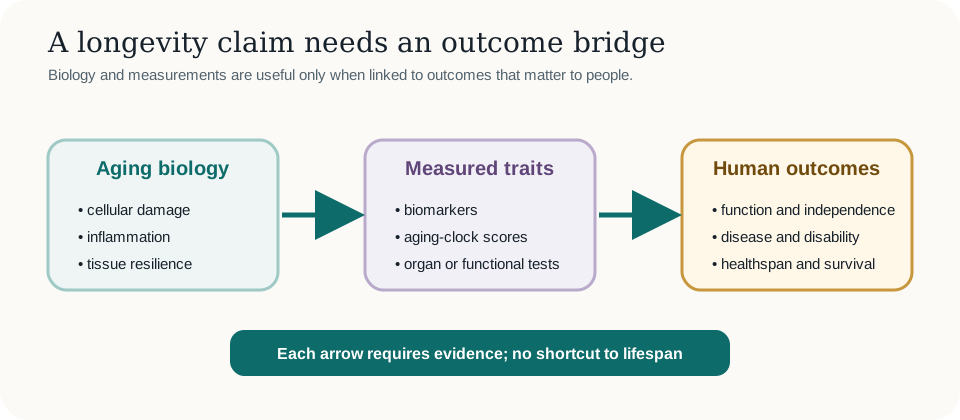
Define the outcome before judging the claim
Lifespan is time until death. It is objective, but a lifespan trial in humans would require very large cohorts, long follow-up and careful control of competing causes of death. Healthspan is the period of life spent in good health or without major functional limitation. It is more relevant to lived experience, yet it needs a precise operational definition. Frailty describes reduced physiological reserve and vulnerability to stress; it can be measured with phenotype-based criteria or a deficit-accumulation index, but those approaches are not interchangeable.
Biological age is a model-derived summary of features associated with aging. It may be built from clinical chemistry, DNA methylation, proteins, metabolites, imaging, physical performance or several data types. The result is not a second birthday. It is an estimate whose meaning depends on its training data, calibration, population, sampling conditions, endpoint and intended use.
Geroscience is the framework for studying biological processes that contribute to multiple age-related conditions. It includes nutrient sensing, cellular senescence, mitochondrial function, proteostasis, inflammation, stem-cell exhaustion and changes in intercellular communication. These hallmarks are useful organizing concepts, not a checklist proving that an intervention slows human aging.
What can actually be measured today?
Clinical outcomes and function
The strongest measures are outcomes people can feel or that clinicians can define consistently: mortality, hospitalization, incident disease, disability, falls, walking speed, grip strength, exercise capacity, cognition, activities of daily living and patient-reported quality of life. These outcomes are not perfect. They can be slow, noisy and affected by social context, baseline disease, access to care and learning effects. They are nevertheless closer to the purpose of healthspan than a laboratory score alone.
Frailty and multimorbidity
Frailty and multimorbidity capture the fact that aging is not one disease. A trial that reduces one laboratory marker while leaving mobility, cognition or treatment burden unchanged has not necessarily delivered a meaningful healthspan gain. Composite outcomes can make trials more efficient, but only when their components are clinically coherent, prespecified and reported separately enough to reveal what actually drove the result.
Omics clocks and organ-specific age

Epigenetic clocks estimate age from patterns of DNA methylation. Proteomic, transcriptomic, metabolomic and imaging models use other feature sets. Some predict mortality or disease risk in particular cohorts; some are designed to track biological change over time; others describe organ-specific differences. The 2026 Nature Medicine review on biological aging clocks emphasizes that clocks can help stratify risk and may support intervention research, while their interpretation requires attention to validation, transportability and what the model is actually measuring.
Newer models are also becoming more tissue-aware. A model trained on histological images can capture structural signals that a blood-based clock may miss, while a blood proteomic model can be easier to repeat. Better prediction does not by itself establish causal biology. A model may learn disease burden, treatment exposure, socioeconomic patterning or technical batch effects alongside aging-related signal.
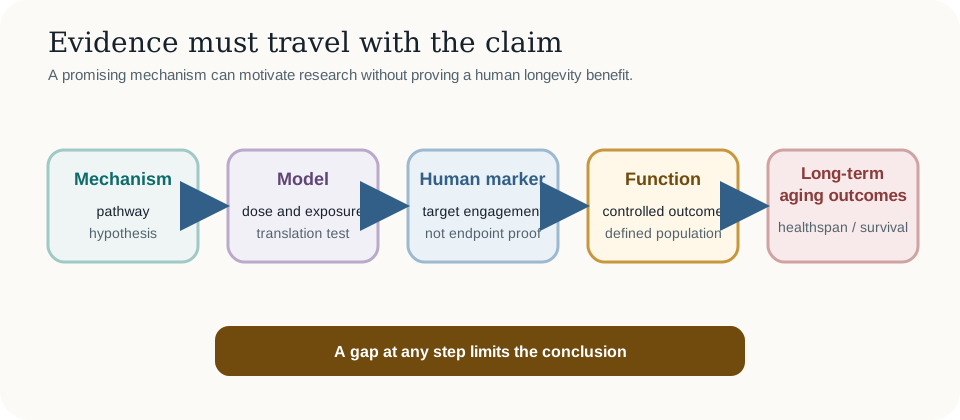
Why aging clocks are useful but not proof of lifespan extension
A clock can be useful in at least four ways. It can describe differences between people of the same chronological age, help identify risk strata for research, provide a potentially responsive intermediate measure and reveal which biological systems may be changing. Those are meaningful scientific uses. They are not equivalent to demonstrating that a treatment adds healthy years of life.
Surrogacy requires more than correlation. To use a biomarker as a surrogate endpoint, investigators need evidence that the intervention changes the biomarker, that the biomarker predicts the clinical outcome and that the treatment effect on the outcome is captured adequately by the biomarker. The last requirement is especially demanding. An intervention could move a clock while affecting pathways that the clock does not represent, or the clock could move because of short-term physiology without a durable reduction in disease or disability.
Clock estimates can also be sensitive to sex, ancestry, chronological age range, tissue, assay platform, preprocessing and the reference population. A person can receive different “biological ages” from models that were trained for different purposes. A result should therefore be reported with the model name, sample type, timing, uncertainty and intended interpretation—not as a universal verdict about how old the body “really is.”
What can actually be intervened on in humans?
There is already a large evidence base for reducing risk factors and preserving function: avoiding tobacco, treating hypertension and diabetes when indicated, maintaining physical activity, supporting sleep, receiving recommended preventive care and eating a nutritionally adequate diet. These actions can improve health outcomes even when they are not labeled “geroprotectors.” The evidence should be described in its proper category: risk reduction, disease prevention or functional preservation—not proven reversal of biological aging.
Experimental geroscience asks whether an intervention changes a shared aging process. Candidate areas include mTOR and autophagy biology, cellular senescence, mitochondrial function, NAD metabolism, metabolic drugs, immune regulation and tissue repair. Human studies exist, but they differ widely in design and maturity. Some assess tolerability or a narrow biomarker; others test a disease-specific endpoint in a selected population. A promising mechanism and an early signal justify better trials, not a universal consumer recommendation.
| Evidence layer | What it can support | What it cannot establish alone |
|---|---|---|
| Cell or mechanistic | Plausible pathway, target engagement hypothesis | Human benefit, dose, safety or durability |
| Animal lifespan | Whole-organism experimental signal and model-specific causality | Equivalent human lifespan extension |
| Human observational | Associations, prognosis and population patterns | That an intervention caused the difference |
| Small human trial | Feasibility, short-term effects and safety signals | Long-term healthspan or mortality benefit |
| Large randomized trial | Effect in the tested population and endpoint | Universal benefit or effects not measured |
Where pharmacologic geroscience stands
mTOR and rapamycin: nutrient-sensing biology and rapamycin-related compounds are central to aging research, with strong mechanistic and animal interest. Human studies must balance any potential aging-related signal against immunologic, metabolic and other adverse effects. Evidence from one indication, dose or age group should not be generalized to healthy adults.
Metformin: its established clinical role is treatment of type 2 diabetes. Observational longevity associations and the rationale for a dedicated aging trial are scientifically interesting, but diabetes treatment data should not be relabeled as proof that metformin extends lifespan in otherwise healthy people.
Senolytics: drugs intended to reduce selected senescent-cell populations remain an active experimental area. Senescent cells are heterogeneous and can have context-dependent roles, so a “senolytic” label does not guarantee selective clearance, clinical benefit or safety.
NAD precursors and related supplements: NMN, NR and other approaches may change NAD-related metabolites in some settings. Biomarker movement does not establish improved function, delayed disease or longer life. Product quality, dose studied, duration and interactions also matter.
Metabolic drugs and other candidates: therapies developed for obesity, diabetes or cardiovascular disease may produce important health benefits in indicated populations. Whether those benefits reflect a broad modification of aging is a separate question that requires appropriate endpoints and analyses.
A 2026 review of longevity pharmacology describes the field as mechanistically mature but clinically incremental: many candidates remain preclinical or lack long-term validation, while biomarker, safety, heterogeneity, regulatory and animal-to-human translation barriers remain. That is a productive research position, not a reason for cynicism; it is a reason to match the claim to the evidence.
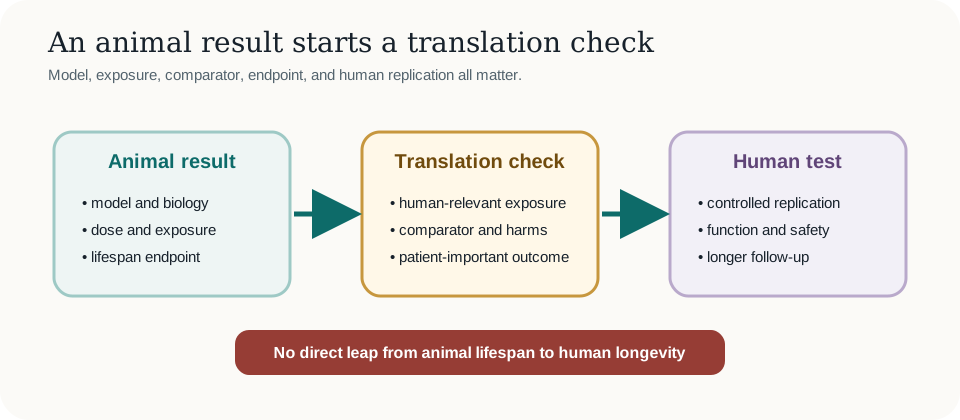
Why animal lifespan extension does not automatically translate to humans
Animal models allow controlled diets, genetics, environments and lifespans. They can reveal causal biology that is difficult to isolate in people. But model organisms age on different timescales, have different disease patterns and may respond to doses that are not clinically practical. Sex, strain, housing, microbiome, temperature, timing and background diet can change the result. Publication bias and selective reporting can further inflate the apparent consistency of positive findings.
Translation needs a chain of confirmation: reproducible effects across relevant models, a plausible exposure and safety margin, human pharmacology, a prespecified clinical endpoint and enough follow-up to test durability. Animal data can prioritize experiments; it cannot substitute for human outcome evidence.
How longevity trials should define success
Mortality is rigorous but often impractical as the sole primary endpoint. A well-designed geromedicine trial may instead use a hierarchy that gives the greatest weight to major clinical events, then to function or validated healthspan outcomes, and finally to biomarkers. The 2026 Nature Aging perspective on hierarchical endpoints and win statistics describes this as a way to preserve clinical priorities while capturing multidimensional effects. Such methods are useful only when the hierarchy, tie rules, estimands and analysis plan are prespecified and clinically justified.
Success should be judged on more than statistical significance. Ask: Was the effect large enough to matter? Was it consistent across key subgroups? Did function or quality of life improve? Were harms balanced against benefits? Did the effect persist after treatment? Was the result replicated? Did the intervention change the outcome that motivated the claim, or only a correlated marker?
The DentalsReview evidence ladder
Our default hierarchy gives the greatest decision weight to human systematic reviews and well-designed randomized trials, followed by smaller human trials, high-quality observational evidence, animal studies and mechanistic or computational work. This does not make lower layers unimportant. Mechanistic evidence can explain why a result might occur; animal work can test causality under controlled conditions; observational research can reveal patterns and generate hypotheses. The ladder prevents those useful roles from being mistaken for direct proof of human benefit.
We also separate three judgments that are often collapsed: does it change a measured feature? does it improve a patient-important outcome? and is it safe and practical for the intended population? An intervention may receive different evidence grades for each question. A page should say so plainly.
What would count as a genuine human longevity breakthrough?
A breakthrough would not need to make someone look younger on a single clock. It would need to show a durable, clinically meaningful improvement in an appropriate population, with acceptable harms and an interpretable mechanism. Depending on the intervention, that might mean fewer major age-related events, delayed multimorbidity, preserved mobility or cognition, lower frailty progression, better quality of life or a convincing composite that prioritizes severe outcomes.
The claim would be stronger if it were preregistered, adequately powered, independently replicated, robust to missing data and subgroup analysis, and supported by a validated measurement strategy. A biomarker could help make the trial feasible, but it would need evidence that it is a reliable surrogate for the outcome being claimed. Commercial availability, social-media popularity, precision-looking numbers and a compelling pathway would not replace these requirements.
2026 state-of-field verdict
Longevity research is more measurable and more methodologically serious than the old “anti-aging” promise suggests. Researchers can quantify multiple dimensions of biological aging, test interventions in humans and design trials around function and multimorbidity rather than one disease at a time. The field is also learning that a clock is a tool, not a certificate of rejuvenation.
The near-term progress is most likely to come from better risk-factor modification, improved functional preservation, safer disease-specific therapies and trials that connect biological measures to outcomes people value. Experimental geroprotectors remain worth studying, but most do not yet have definitive evidence that they extend human lifespan. The responsible conclusion is neither “nothing works” nor “aging has been reversed.” It is that the questions are becoming sharper, the measurements more useful and the proof standard still appropriately high.
