A water flosser is not a proven tonsil-stone treatment, and high pressure should never be directed at tonsil tissue. Some medical sources describe a low-pressure irrigator as an option, while other guidance advises against water-jet removal because of injury and aspiration risks. Start with watchful waiting or warm salt-water gargling; ask a clinician before trying an irrigator.
What are tonsil stones?
How stones form and what they can feel like
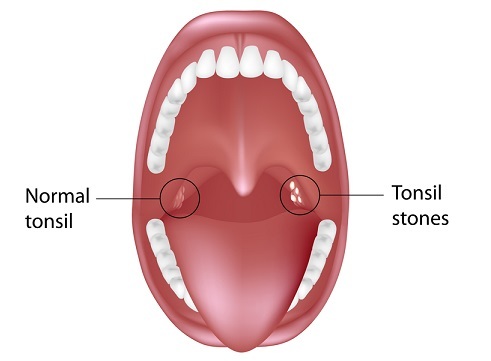
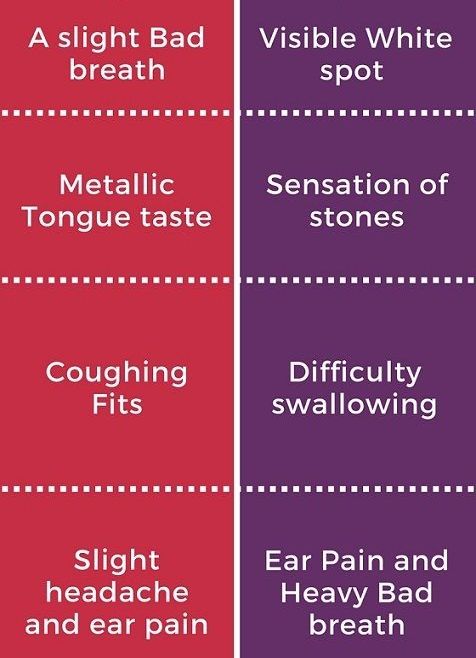
Tonsil stones, or tonsilloliths, are small hardened deposits that form in pockets and folds of the tonsils. They contain mineral material, food debris and microorganisms. Small stones are common and often cause no symptoms. When symptoms occur, people may notice bad breath or taste, a visible white or yellow speck, throat irritation, cough, a feeling that something is caught, ear discomfort or difficulty swallowing.
Tonsil stones are not the same as tonsillitis. Tonsillitis means inflammation or infection of tonsil tissue; a tonsillolith is material lodged in a crypt. The two can coexist, but finding or suspecting a stone does not establish a bacterial infection. Antibiotics do not dissolve stones or reliably prevent them from returning. A clinician may prescribe antibiotics when an infection is diagnosed, not simply because a stone is present.
Many stones can be seen by looking in the mouth, although some are deeper. A clinician can examine the tonsils and decide whether imaging or another evaluation is needed when the appearance or symptoms are unclear. Routine CT or X-ray is not required for every suspected tonsil stone. Persistent one-sided swelling, severe pain or swallowing trouble should not be self-diagnosed as a stone.
For background on keeping teeth and gums clean, see our guides to oral hygiene, cleaning between teeth and mouthwash. These can support oral care, but they do not change the shape of deep tonsil crypts or guarantee that stones will not recur.
Can you use a Waterpik or water flosser?
There is no basis for calling a particular Waterpik model the “best” device for tonsil stones. Waterpik products are designed as oral irrigators, and the American Dental Association Seal evidence for powered interdental cleaners concerns removing plaque between teeth and helping prevent or reduce gingivitis between teeth. That dental evidence does not establish safety or effectiveness for flushing tonsil crypts.
Professional advice about water jets is not uniform. Mayo Clinic describes a low-pressure water irrigator as one possible way to rinse a tonsil crypt. In contrast, MyHealth Devon, an NHS service, advises avoiding water-jet irrigation and manual removal because of potential damage, bleeding, infection and inhalation of a foreign body. Cleveland Clinic lists a water pick among possible home measures, but does not make a product-specific recommendation. Because tonsil tissue is delicate and the sources differ, the cautious choice is not to point a consumer water flosser at the tonsils unless a healthcare professional has advised you to do so for your situation.
If a clinician specifically recommends trying irrigation, ask what type of device and technique they mean. Use only a genuinely low setting and a gentle stream; do not use a high-pressure setting, a forceful jet, a periodontal tip, or “massage mode” as a substitute for medical advice. Do not raise the pressure to reach a deeper or larger stone. Stop immediately if you feel pain, gagging, coughing, bleeding or worsening irritation. If the stone is not easy to reach, leave it alone and seek advice.
Water flossers can still have a role in ordinary oral hygiene between teeth when used as directed. Read our water-flosser guide for that use, or our article on when to use a water flosser in a dental routine. Those product comparisons are not recommendations for tonsil-stone removal.
Safer first steps and what to avoid
Start with gentle care
If a stone is not bothering you, treatment may not be needed. Tonsil stones can loosen and fall out on their own. For mild symptoms, warm salt-water gargling is a reasonable first step; it may ease irritation and help loosen debris. Maintain routine toothbrushing, clean between teeth, gently clean the tongue and stay hydrated. These habits may reduce oral debris or bad breath, but no home routine guarantees prevention.
- Try warm salt-water gargling if you can do so comfortably.
- Keep up normal toothbrushing and interdental cleaning.
- Drink fluids regularly and gently clean the tongue if that is comfortable.
Stop attempts that irritate the throat
Do not use toothpicks, pins, fingernails, metal tools or other sharp objects to dig at a tonsil. Do not scrape or press forcefully. Even a soft object can irritate tissue if pushed into a crypt. Avoid repeated attempts, especially if you are gagging, coughing or cannot see the stone clearly. Never put a loose part or small tool near the back of the throat where it could be inhaled.
Do not use antiseptic mouthwash, peroxide, vinegar or concentrated salt solutions to try to dissolve a stone. A rinse may freshen breath, but it is not a guaranteed tonsillolith treatment. Avoid treating every white patch as a stone: infection and other conditions can look different and need assessment.
- Stop if any attempt causes pain, bleeding, persistent coughing or significant gagging.
- Do not repeat unsuccessful removal attempts or probe a crypt you cannot see clearly.
- Do not use leftover antibiotics or borrow someone else’s prescription.
When to contact a clinician or ENT
Arrange an assessment for persistent or recurrent symptoms
Ask a doctor or ENT specialist for an assessment if stones are frequent or troublesome, home care is not helping, or you are unsure whether a spot is a stone. Get prompt medical advice for significant or worsening swallowing difficulty, persistent one-sided tonsil enlargement, fever or severe sore throat, tonsils that look very red or bleed easily, ear pain with throat symptoms, or a stone that is deep and cannot be reached safely. Trouble breathing, inability to swallow saliva, rapidly increasing swelling or substantial bleeding needs urgent care.
A clinician can confirm what is causing the symptoms, check for tonsillitis or another condition, and discuss safe removal if needed. Do not infer that antibiotics are required from bad breath alone. Persistent bad breath can have dental, oral or other causes; a dentist or physician can help evaluate it. Our related pages cover mouthwash choices and water flossers for teeth and gums.
Is tonsillectomy necessary for recurrent stones?
Discuss benefits, recovery and risks with an ENT
Tonsillectomy removes the tonsils and therefore prevents future stones from forming in them, but it is not a routine first step for every tonsillolith. An ENT can discuss it when symptoms are persistent or significantly troublesome, other management has not helped, or there is another medical reason for surgery. The likely benefit should be balanced against recovery and surgical risks for the individual.
Tonsillectomy is generally performed under general anesthesia. A sore throat and painful swallowing during recovery are expected, and bleeding is a recognized complication that can require urgent treatment. The procedure and recovery are not accurately described as trivial or risk-free. Ask the surgeon about the reasons for recommending surgery, alternatives, expected recovery, bleeding risk and when to seek emergency help. Do not decide on surgery solely to prevent an occasional small stone.
Bottom line
A Waterpik or other water flosser should not be marketed as the best or a proven treatment for tonsil stones. Never aim high pressure at tonsil tissue or increase pressure for larger stones. Medical guidance on low-pressure irrigation differs, so warm salt-water gargling or watchful waiting is the more cautious starting point, and any attempt to irrigate should be discussed with a clinician. Avoid toothpicks and sharp tools. Recurrent, painful, bleeding or difficult-to-reach stones deserve clinical advice rather than stronger water pressure.
Frequently asked questions
Are tonsil stones the same as tonsillitis?
No. A tonsillolith is hardened material in a tonsil crypt. Tonsillitis is inflammation or infection of the tonsils. A clinician can assess fever, severe sore throat, swelling or other symptoms that may indicate infection.
Can I use a Waterpik on low pressure?
Sources differ. Mayo Clinic describes low-pressure irrigation, while an NHS service advises against water jets because of potential complications. Ask a clinician before directing a water flosser at tonsils; never use high pressure.
Should I use antibiotics for tonsil stones?
Antibiotics do not dissolve tonsilloliths or reliably prevent recurrence. A clinician may prescribe them when a bacterial infection is diagnosed.
Will I need my tonsils removed?
Usually not for an occasional uncomplicated stone. An ENT can discuss surgery when symptoms are recurrent and troublesome or there is another indication, including recovery and bleeding risks.