Supplements and molecules · evidence reviewed September 2026
What nicotinamide riboside is
Nicotinamide riboside, or NR, is a form of vitamin B3-related molecule and a precursor that cells can use to make nicotinamide adenine dinucleotide, or NAD+. NAD+ participates in redox metabolism and in signaling reactions involving sirtuins, PARPs and other enzymes. NR became popular because it offers a plausible route to alter NAD-related biology without administering NAD+ itself.
NR is not a treatment for aging. It is a research compound and supplement ingredient whose effects depend on absorption, tissue distribution, intracellular conversion, baseline metabolism and the rate at which NAD+ is consumed. These factors make a biomarker response easier to demonstrate than a durable clinical benefit.
Our parent review of NAD+ metabolism and aging explains why the same molecule can behave differently in blood, muscle, brain, liver and mitochondria.
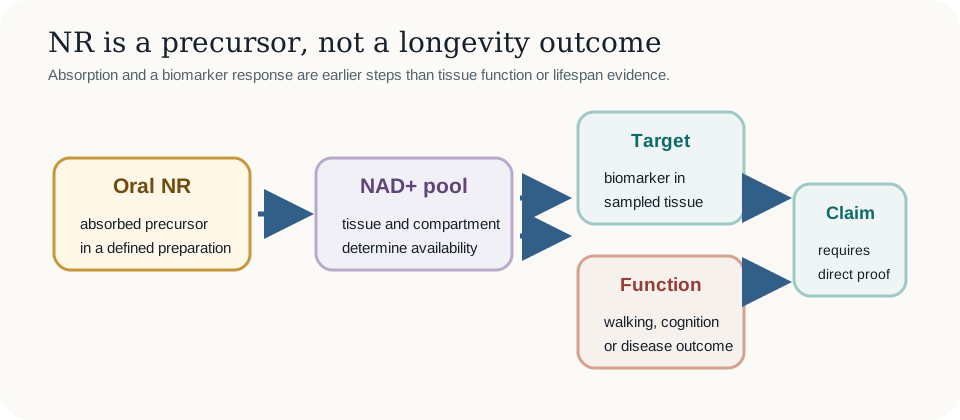
How NR enters NAD metabolism
After oral intake, NR is absorbed and handled through pathways that can contribute to the cellular NAD pool. The exact route and relative importance of extracellular breakdown, transport and intracellular conversion depend on tissue and experimental conditions. A capsule’s labeled amount is therefore not the same as the amount available to a specific organ.
NAD+ is continually made and consumed. Salvage pathways recycle nicotinamide, while sirtuins, PARPs and CD38 use NAD+ in signaling reactions. The effect of NR depends on whether synthesis or consumption is the limiting step. Increasing an intermediate may change a blood or peripheral-cell measurement without correcting a mitochondrial or tissue-specific bottleneck.
Measurements should identify the molecule and sample: NAD+, NADH, a precursor, a catabolite, whole blood, plasma or a cell population. “NAD increased” is incomplete unless the assay and compartment are clear.
NR versus NMN, niacin and nicotinamide
NR and nicotinamide mononucleotide, or NMN, are both NAD precursors but differ in chemistry, transport and the clinical evidence available. Niacin and nicotinamide are vitamin B3-related compounds with different pharmacology and tolerability considerations. A milligram-for-milligram comparison across these ingredients does not establish equivalent exposure or effect.
Cross-trial comparisons are especially uncertain when studies use different assays, populations, formulations and durations. One product can produce a larger blood response in one trial while a different intervention has better evidence for a particular clinical endpoint. The comparison must begin with the outcome, not the marketing label.
For a focused comparison, see NMN and longevity and NMN versus NR.
What human trials consistently show
The most repeatable human finding is that oral NR raises NAD-related biomarkers in blood and, in some studies, peripheral cells. This establishes that a studied preparation was absorbed and changed a measurable part of the pathway. It does not show that all tissues respond or that a person’s healthspan will improve.
A 2026 systematic review of NAD+ supplementation identified 33 human intervention studies, including randomized and nonrandomized designs. It reported consistent biochemical target engagement for oral NR and NMN, generally favorable tolerability over weeks to months, and heterogeneous or often null functional, metabolic and vascular outcomes. The review concluded that clinical effectiveness for anti-aging or wellness outcomes remains inconclusive.
That synthesis is more informative than an isolated positive experiment because it preserves the pattern: the biomarker result is comparatively consistent, while downstream clinical results are not.
- Identify the tissue and assay.
- Check whether target engagement was primary or exploratory.
- Separate statistical significance from clinical importance.
- Look for replication and adequate follow-up.
| Level | Example | What it does not prove |
|---|---|---|
| Exposure | NR is taken and tolerated during a protocol. | Long-term safety for every user. |
| Biochemical | Blood NAD-related metabolites rise. | Tissue rejuvenation. |
| Functional | Walking, blood pressure or cognition is measured. | A broad longevity benefit from one endpoint. |
| Clinical | Disease events or quality of life improve durably. | Human lifespan extension without long follow-up. |
Cardiovascular and blood-pressure studies
Cardiovascular research has tested whether NR can complement exercise or alter vascular measures. A 2025 pilot randomized trial enrolled 54 sedentary adults aged 55 or older with elevated daytime systolic blood pressure. Participants received 1,000 mg/day NR plus supervised walking, placebo plus the same exercise, or NR alone for six weeks.
The primary comparison did not show that NR plus exercise reduced daytime systolic blood pressure more than placebo plus exercise. A pulse-wave-velocity measure and nighttime blood pressure in a subgroup without antihypertensive medication showed trends that the authors described as requiring further investigation. Trends and post hoc subgroup findings are not equivalent to a confirmed treatment effect.
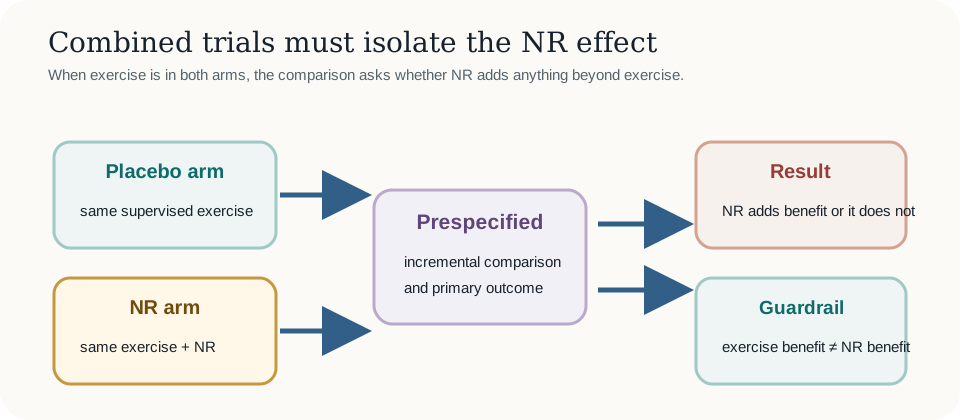
This trial illustrates why the control matters. Exercise itself was part of the intervention, and the clinically important question was whether adding NR improved the prespecified outcome. A pathway or blood-metabolite change cannot replace that comparison.
Metabolic outcomes
NR has been studied in obesity, insulin resistance, older age and other metabolic contexts. Some trials report changes in NAD-related metabolites, muscle signaling or selected metabolic measures, while others find no meaningful change in insulin sensitivity, body composition or related outcomes. Differences in baseline status and exercise can change the signal.
Metabolism is also a network. NR may alter a cofactor without correcting mitochondrial dysfunction, inflammation, diet-related energy balance or a disease process. A small change in a laboratory measurement should be interpreted as that measurement, not as proof of improved metabolic health.
The 2026 systematic evidence review supports this cautious reading: target engagement is more consistent than healthspan outcomes. Larger trials need prespecified endpoints, longer follow-up and enough participants to distinguish a clinically meaningful effect from noise.
Brain and cognition studies
Brain studies are particularly important because NAD biology is relevant to neuronal metabolism, blood flow and neurodegenerative disease models. They are also difficult to interpret. A blood response does not establish brain exposure, and a biomarker change does not establish improved cognition.
Cognition is not one measurement. Processing speed, memory, executive function, daily activities and caregiver-reported change can respond differently, and practice effects can make repeated testing look better even without a treatment effect. A credible trial should prespecify its primary cognitive outcome, account for missing data and report whether secondary digital or imaging signals survived appropriate correction.
In a 2024 randomized placebo-controlled pilot, 20 older adults with mild cognitive impairment received dose-escalated NR to a final studied dose of 1 g/day over 10 weeks. Blood NAD+ increased about 2.6-fold in the NR group, while cognition remained stable and there was no between-group difference in adverse-event reporting. Exploratory imaging and epigenetic measures require cautious interpretation, particularly in a small pilot.
That result supports target engagement and short-term tolerability in the studied group. It does not show that NR improves cognition or prevents dementia.
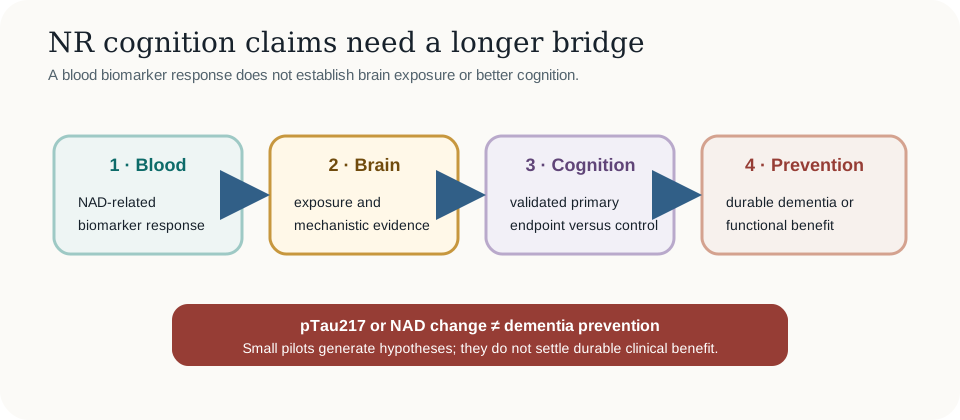
2025 SCD/MCI trial: pTau217 versus cognition
A later crossover, double-blind randomized trial studied 46 older adults with subjective cognitive decline or mild cognitive impairment; 37 completed the trial. Participants received eight weeks of NR at a studied dose of 1 g/day during the active phase. The primary cognitive outcome was the Repeatable Battery for the Assessment of Neuropsychological Status.
Between-group analysis found a 7% reduction in plasma phosphorylated tau 217 during the NR phase and an 18% increase during placebo, with a reported p-value of 0.02. Conventional cognition, digital-game scores and step counts did not show significant between-group differences. The trial reported no difference in adverse events between phases.
pTau217 is an interesting Alzheimer’s-disease-related biomarker, but changing it is not the same as preventing dementia or improving cognition. Small crossover trials can generate important pharmacodynamic hypotheses; they require larger, longer validation with clinical outcomes.
NR combined with exercise
Exercise can change energy demand, blood flow, mitochondrial signaling and physical performance, making it a logical context for an NAD precursor study. But combining NR with exercise creates an attribution problem: the result must show whether NR adds anything beyond the exercise program.
The same principle applies to other combinations. If participants change diet, training, sleep or medication at the same time, an observed improvement cannot be assigned confidently to NR. Trial protocols should keep the background intervention comparable between groups and define which interaction is being tested.
In the 2025 hypertension pilot, the NR-plus-exercise group was not superior to the placebo-plus-exercise group for the primary daytime systolic-blood-pressure outcome. Adherence to the supervised walking and supplementation protocol was high among completers, yet the pilot remained too small to settle subgroup trends.
This is a useful model for future trials. They should prespecify the interaction, compare the same exercise dose, define the primary endpoint and follow participants long enough to observe whether a change persists. “NR plus exercise” is not a shortcut to proving that NR improves aging.
Doses studied in humans
Human NR studies have used different amounts and schedules. The MCI safety pilot escalated to 1 g/day over 10 weeks. The SCD/MCI crossover trial studied 1 g/day for eight active weeks. The 2025 exercise and hypertension pilot studied 1,000 mg/day for six weeks. These are doses studied, not recommendations.
Comparing doses across trials requires more than comparing numbers. Formulation, purity, food timing, adherence, baseline NAD metabolism and the duration of exposure affect results. A commercial product is not automatically equivalent to the preparation used in a peer-reviewed study.
| Report | Reason | Do not infer |
|---|---|---|
| Amount and schedule | Defines the research exposure. | A personal dose. |
| Duration | Bounds efficacy and safety evidence. | Indefinite tolerability. |
| Population | Defines whose response was measured. | Universal benefit. |
| Preparation | Allows product and assay comparison. | Brand equivalence. |
Safety, tolerability and evidence limitations
Short-to-medium NR trials generally report favorable tolerability. In the 20-person MCI pilot, there was no between-group difference in adverse-event reporting. The 2025 SCD/MCI trial likewise reported no difference between NR and placebo phases. These findings are reassuring within the studied intervals but do not establish long-term safety for every person or product.
The evidence base has recurring limitations: small samples, short duration, heterogeneous endpoints, different assays, incomplete tissue measurements and occasional secondary or post hoc findings. Funding and product relationships should also be read in the original paper. A declared conflict does not invalidate a result, but independent replication strengthens confidence.
NR may be biologically active in people with disease, medication use or altered metabolism. This article cannot assess interactions or individual risk. A supplement should not replace indicated care, and a clinical trial result should not be turned into self-treatment advice.
- Small samples limit precision.
- Short studies limit durability claims.
- Heterogeneous assays limit comparisons.
- Exploratory endpoints need confirmation.
Does NR slow biological aging?
NR has not been shown in adequately powered long-term human outcomes trials to slow biological aging, prevent dementia, reduce cardiovascular disease broadly, reverse mitochondrial decline or extend human lifespan. A change in an epigenetic clock, pTau217, blood NAD+ or another surrogate does not establish those outcomes.
Even a validated surrogate would need a demonstrated relationship with a patient-important outcome in the population and context being studied. A result that is statistically detectable may be too small to change how a person functions, and a result in a disease cohort may not apply to healthy adults buying a supplement online.
Longevity claims also require time. A short trial can test whether a marker moves or whether participants tolerate an exposure, but it cannot observe most age-related diseases or mortality outcomes directly. The honest conclusion should match the time horizon and the endpoint that was actually measured.
Biological-age measurements are themselves endpoints that require validation. Even if an intervention changes a clock, the result must be connected to future function, disease events and quality of life before it can support a longevity claim. Our biological-age test guide discusses that distinction.
Evidence verdict and ongoing research
NR is a biologically active NAD precursor with consistent human biomarker engagement and generally favorable short-term tolerability. Cardiovascular, metabolic, exercise and cognitive findings remain mixed or null for many primary outcomes. The 2025 SCD/MCI study’s pTau217 signal is a useful hypothesis, not proof of cognitive improvement or dementia prevention.
The next decisive trials should be larger, longer and clinically anchored. They should measure target engagement in relevant tissues, prespecify primary endpoints, report adverse events and product quality, and distinguish primary results from exploratory signals. Independent replication is especially important when a biomarker changes without a conventional functional benefit.
Until then, NR should be described as a research-supported precursor with demonstrated biochemical activity—not as a proven anti-aging intervention.
That conclusion can change with high-quality evidence, but it should change because a meaningful human outcome was replicated, not because a new marketing claim used stronger language.