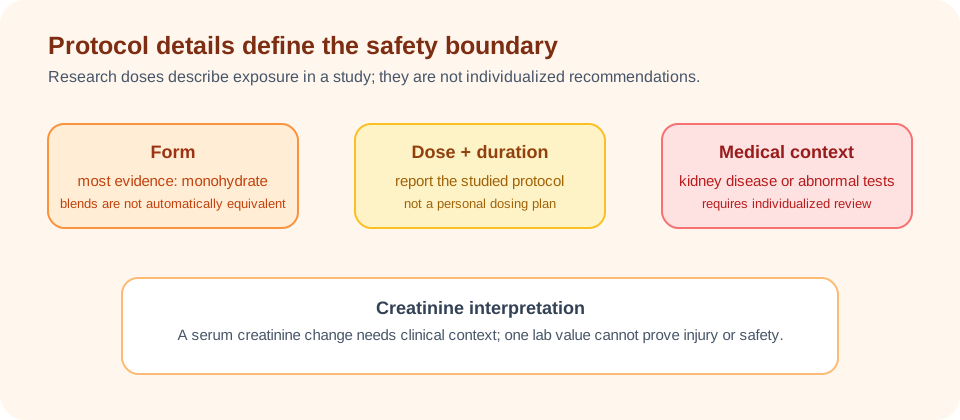
The 2025 meta-analysis: eight randomized trials
A 2025 systematic review and meta-analysis pooled eight randomized controlled trials involving 482 older participants. The comparison was creatine plus resistance training versus resistance training plus placebo. That design is important: the pooled estimate tests an addition to exercise, not creatine as a replacement for exercise.
Compared with placebo plus resistance training, creatine plus resistance training improved lower-limb strength with a standardized mean difference of 0.29 (95% CI 0.00 to 0.57; P = .05) and lean tissue mass with a standardized mean difference of 0.27 (95% CI 0.02 to 0.53; P = .03). Upper-extremity strength was not significantly improved in the overall analysis. Shorter interventions of 32 weeks or less showed larger subgroup estimates for some upper-limb and lean-tissue outcomes, but subgroup findings are not the same as a single prespecified primary endpoint.
| Outcome | Pooled result | Boundary |
|---|---|---|
| Lower-limb strength | SMD 0.29; 95% CI 0.00 to 0.57. | modest average effect with a confidence limit at the null. |
| Lean tissue mass | SMD 0.27; 95% CI 0.02 to 0.53. | does not distinguish contractile muscle from every component of lean tissue. |
| Upper-limb strength | no significant overall improvement. | not evidence that every strength domain responds equally. |
| Intervention | creatine added to resistance training. | not a test of replacing exercise with a supplement. |
Why resistance training remains the stronger intervention
Resistance training directly loads muscle and can improve strength, power, balance and function when the program is appropriate to the participant. Creatine supports phosphocreatine energy buffering and may help training adaptations, but it does not provide progressive loading, coaching, mobility practice or the behavioral structure of exercise.
This distinction matters clinically. An average supplement effect can be real while being smaller than the effect of starting or maintaining a well-designed exercise program. Trials should therefore report adherence to both the supplement and the training, baseline function, protein intake, energy balance and changes in activity outside the study.
The permanent creatine and longevity page should frame creatine as an adjunct to defined goals such as strength or lean mass. The relevant muscle-aging page provides context for sarcopenia and functional outcomes.
2026 trial: creatine with and without exercise and diet
A 2026 randomized trial examined creatine monohydrate in healthy sedentary adults aged 45–65 years. Of 73 enrolled participants, 64 completed the 12-week intervention. Participants were assigned to a non-exercise condition or an exercise-and-diet intervention and randomized in a double-blind, counterbalanced manner to placebo or two doses of 5 g per day.
The study reported increases in lean tissue mass, strength and muscular endurance with creatine without the structured exercise-and-diet intervention. In the exercise and weight-loss condition, creatine was associated with lean-tissue retention, greater reduction in body-fat percentage and improvements in strength and endurance. Selected blood lipids, HbA1c and cognitive or memory markers also moved favorably in parts of the analysis.
The authors explicitly described individual cognitive and biomarker findings as exploratory. That wording is essential. Multiple outcomes and a 12-week design can identify signals without demonstrating durable cognitive protection, metabolic disease prevention or an effect on biological age. The trial was reported as well tolerated, but its findings do not establish long-term safety for every person or product.
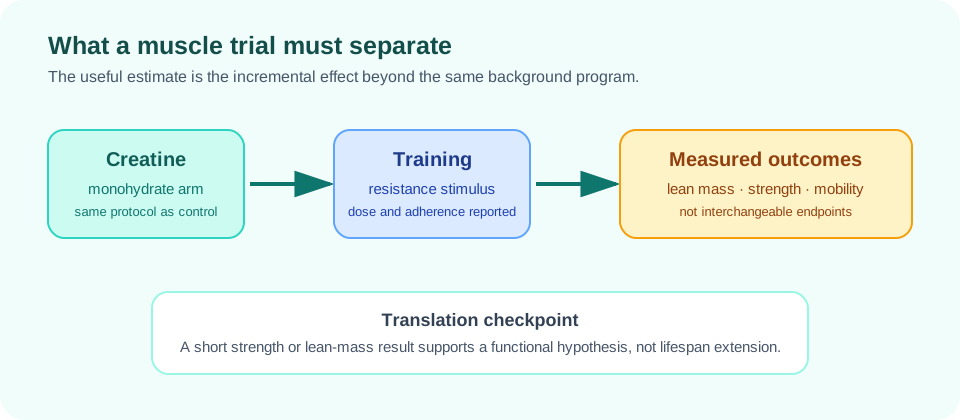
2026 older-adult resistance-training trial
A second 2026 randomized study examined 103 community-dwelling older adults undertaking high-load resistance training with creatine or placebo. The brief reports selected benefits in functional, inflammatory and neuroplasticity-related outcomes. Those results broaden the research question beyond lean mass, but they still need to be read endpoint by endpoint.
Inflammatory markers and neuroplasticity measures are not interchangeable with fewer infections, better cognition, preserved independence or longer survival. A functional result can be meaningful without proving that the supplement changed an aging mechanism. Conversely, a biomarker signal can guide future work without being evidence of clinical efficacy.
The study also disclosed supplier, consulting or other industry relationships. Such relationships do not automatically invalidate results. They do increase the value of prespecified endpoints, transparent statistical reporting, access to the full dataset and independent replication. Readers should be able to see which outcomes were primary, which were exploratory and how missing data were handled.
What the cognition review adds
A 2026 systematic review of creatine and cognition in adults aged 55 years or older included six studies with 1,542 participants. Five studies reported a positive relationship with cognition, especially memory and attention, but four of the six were cross-sectional dietary studies and only two were double-blind interventions. The review rated one sample as good quality, two as fair and three as poor.
This pattern is suggestive rather than definitive. Cross-sectional dietary estimates can be confounded by overall diet, activity, education, health and socioeconomic factors. Supplement trials can be small or short and may not measure brain creatine directly. The review calls for higher-quality trials in people with meaningful cognitive deficits and for objective exposure measures.
The related brain-aging page should therefore describe cognition as a research signal, not a settled indication. Creatine may be more informative in groups with lower baseline creatine availability or greater metabolic stress, but that remains a hypothesis to test.
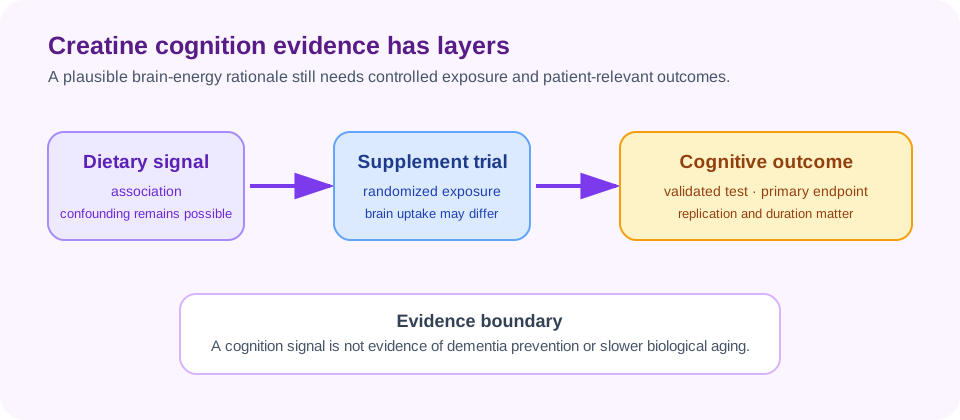
What the new evidence still does not show
The new studies do not show that creatine lowers a validated biological-age measure, prevents sarcopenia independently of exercise, prevents dementia, reduces major disease events or extends human lifespan. They also do not show that a selected inflammatory or neuroplasticity marker is a surrogate for longer healthspan.
They do support a narrower conclusion: creatine can be biologically active in older and middle-aged adults, and the most reproducible practical question is whether it adds modest muscle benefit to appropriate training. The size and consistency of cognitive, metabolic and inflammatory signals remain less certain.
- keep resistance training and supplement effects analytically separate;
- treat cognition and biomarkers as exploratory when the trial does;
- report studied products and doses without turning them into personal instructions;
- look for independent replication and longer follow-up;
- do not convert muscle outcomes into biological-aging or lifespan claims.
What this changes on the permanent creatine page
The durable evidence page should update its muscle section with the eight-trial meta-analysis and distinguish lower-limb strength and lean tissue from upper-limb outcomes. It should add the two 2026 trials as evidence updates, preserving their population, exercise context, primary-versus-exploratory endpoint distinction and declared relationships.
It should also make the reader’s decision boundary clearer: creatine research may be relevant to strength, lean mass or selected cognitive hypotheses, but the evidence does not justify a claim that it slows biological aging. Future updates should prioritize larger trials with validated function, cognitive endpoints, objective tissue exposure and independent funding or replication.